
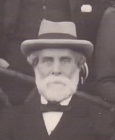
 John Smith was born in Foleshill, Coventry on October 5th 1831, fourth child of John Smith, a ribbon weaver, and his wife, Priscilla Bayle. He was, at the age of fifteen, on March 25th 1847, apprenticed for a period of five and a half years to Messrs Sawbridge & Browett of Atherstone, and he lived with Mr and Mrs Sawbridge for the duration; on his 21st birthday, he returned home, finally, a free man.
On October 3rd 1854, he married Anne Collins and, just under a year later, their daughter Ellen Morrison was born: for some reason, Ellen chose to refer to herself as ‘Della’ and the name stuck. Anne gave birth to another, stillborn, daughter but whether Anne died as a result, is unknown. What is recorded is that Anne died when Della was only twenty months old.
Less than two years later, in October 1858, John married Philadelphia Wright; their first child, Sarah Elizabeth was born in 1860. There followed two more daughters, but each died within a matter of days of their birth with ‘Delphia’ dying in April 1863.
In June 1868, John was married for the third time, his bride being Mary Anne, eldest daughter of James Fowle. She was a year and three weeks older than John, being born on September 14th 1830.
Their first daughter, Grace Marion, was born on July 15th 1870 and their second, Edith Adeline, on February 8th 1872.
Mary Anne, who John Smith always called ‘Polly’, died on September 15th 1901, leaving both her daughters, and her husband, distraught.
John lived with both Grace and Adeline until Grace’s marriage, in 1909, to Will Williams, of Hobart. After that, he was cared for by Adeline until his death on December 12th 1916.
John Smith I (1797 – 1866)
Ribbon weaver
Walsgrave-on-Sowe and Foleshill, Warwickshire
JOHN SMITH, the elder, was born at Walsgrave-on-Sowe, Warwickshire – commonly known as Sowe – on November 5th 1797 but he was not, apparently, baptised there.
Of his early life, nothing whatsoever is known but that he lived in Foleshill. As he was later a ribbon weaver, and the overwhelming majority of the population, male and female, were also, it is likely that he took to this trade from his earliest working days, after whatever schooling he may have received.
In 1824, at the age of twenty-six, as a bachelor, he was married on 9th February at St Lawrence, Foleshill, by the assistant curate, the Rev W S Bagshawe, to Priscilla Bayle, aged twenty, spinster, also of that parish. The church register tells nothing more of them, or their families, but while he signed his name in the register, neither she, nor their two witnesses, James Roade and Mary Dalton, did more than make their mark.
However, we know, most interestingly, that she was born on the 17th October 1803 at Shoreditch in Middlesex. The questions of how this distance of eighty-five miles, as the crow flies, was bridged by this union. A possible explanation comes to mind with the knowledge of John’s occupation as a (silk) ribbon weaver. The parish of Shoreditch lies immediately to the north west of that of Spitalfields, which was, of course, noted for its own silk weaving industry, stemming from the settlement of Huguenot (ie protestant) refugees there from France, following the revocation of the Edict of Nantes in 1685 (which had protected them for almost a century before). It is on record that the masters were the Frenchmen (albeit with anglicised surnames, where translatable), while the workers were English.
Just under a year after their marriage, the first born, William arrived on January 21st 1825.
Nearly three years were to pass before the next child, Sarah Elizabeth, was born on November 20th 1827. And a further year and a half later came Charles, born on June 29th 1829.
The younger John (ie John Smith II), was born over two years later, on October 5th 1831 and he was baptised at St Lawrence, Foleshill on November 6th following.
Thereafter came Jane, born February 3rd 1833, who died the following year.
The next, Henry, arrived on November 1st 1835. At his birth, his surviving siblings were ten and three quarters, almost eight, six and four. These five were, effectively, John and Patricia’s whole family for the two later children died in their infancy. They were Mary Jane, who lived from March 22nd 1839 to February 1840 and David, from June 19th 1841 to June 15th 1842.
It was probably the practice for the children, so soon as they were able, to assists in the silk weaving, where this was undertaken at home. It is on record that this was substantially a ‘cottage’ industry, where the looms were in the houses of the weavers, sometimes a number of them being worked from the same power source or engine house. Reference has been made to this having been the case in Stoney Stanton Road, where they were at one time living. But this is a long road, so this is not very persuasive evidence.
When the children were not old enough, it would clearly have been necessary to keep them from the danger of the powered loom, both for their own safety and for that of the product that was the life blood of the family and the whole area. These were still relatively prosperous days of the industry, which supplied the whole country, but was in competition with the superior quality of the French product.
After what, at a distance, may seem an uneventful twelve years, but which encapsulated the busy life of a growing family of at least seven souls, a very eventful period followed.
The next milestone of the family was the marriage of their first born, William, aged about twenty or twenty-one, in about 1846, as may be supposed but of which event no record has been preserved within the family (but which could be resolved by obtaining a Marriage certificate. The two children of this marriage were William, born about 1847 and Hannah, in about 1849. They are believed later both to have travelled to the USA, where they had both died, certainly by 1930. Their mother died, when they were only about seven and five, in 1854.
It must have become increasingly apparent, as he grew up, that the son John was not cast in the same mould as his elder brother, William. The younger son was more restless and adventurous. He did not see his future continuing in the locality, as has his forebears. Every year, the country was opening up and becoming more exciting. Distant places intruded into local thoughts and national prosperity was noticeably increasing, with industrial development throughout the land. The means of travelling was on the brink of astonishing development and undreamt freedom for all people: to journey across the shires at unthinkable speeds on ever-increasing rail networks. There was no question in his mind – this was no time to sit at home. The world was calling. But, in all fairness, it might be said, William, as eldest, perhaps felt his responsibility to remain near at hand.
The stay-at-home weavers supplied the drapers, who sold their products – and many others. This was how their livelihood was realised. The ribbons joined a great many other manufacturers to fill the shops and supply the necessities and luxuries of the prospering classes. This was the route followed by their goods, and, clearly, this was the route to the outside world offered, if not actually dictated, by their own circumstances.
One may speculate on whether individual weavers of ribbons, or even groups of them, traded directly with retail drapers – probably not. There was likely to have been some selections and collecting agents, a wholesaler, in between. But even if this were so, there might well have been some contact between the weaver and the draper, whereby John Smith, the elder, contacted Messrs William Sawbridge of Coventry and his partner, Henry Browett of Atherstone, drapers. Atherstone lies on Watling Street, about twelve miles to the north of Coventry, beyond Nuneaton and, clearly, was a place within easy reach of Foleshill and, probably, quite well known to the family.
Thus it was that, on Lady Day (March 25th) 1847, John Smith the younger, son of John Smith the elder, weaver of Foleshill, was bound apprentice to Messrs Sawbridge & Browett for the period of five and a half years, as evidenced by the surviving parchment ‘indenture tripartite’. Undoubtedly at the business premises of the masters, father, son and drapers two signed and sealed the Deed with Mr Browett’s initial seal, in the presence of HH Pearson, Clark of Mr Thomas Browett, with formal receipt for the twelve pounds consideration for the contract.
John was to learn their art after the manner of an apprentice; to serve his masters faithfully; to keep their secrets; gladly do their lawful commands; not do damage to their goods, or suffer others to do so, and warn them of the same; not waste their goods nor lend them unlawfully; not commit fornication or contract matrimony within the said term; or play at cards or dice tables or any other unlawful games whereby his masters may have any loss, with his own goods or others. He shall neither buy, nor sell; he shall not haunt taverns or playhouses; or absent himself, day or night, unlawfully but in all things as a faithful apprentice shall behave himself towards his masters. For their part, the masters undertook to teach and instruct ‘finding unto him’ sufficient meat, drink and lodging – but his father was to find sufficient clothing, washing and all other necessaries.
This is a solemn document binding a fifteen year old for years of diligence and application within a framework of suppression and strict rules, the observance of all of which was vital to his stepping, in due course, into the world a ‘free’ man, to travel and then be subject only to the restrain of his own character and of those he permitted to influence him.
It is worth observing closely the signatures of the contracting parties. Mr Sawbridge’s hand showed some individuality and was clearly that of a man well accustomed to signing his name; to a greater extent this was the case with Mr Browett and is so with their clerk, with a flourish. But John Smith, the elder, wrote as he had been schooled, with no sign at all that his pen had ever given him the opportunity to introduce any personal touch whatsoever in writing his name. It was firm and clear and exactly as many others of his name might well have attested their consent. Son, John, at fifteen, had clearly been taught the same hand but the pen on the parchment was unfamiliar and there is uncertainty and irregularity – not helped by the solemnity of the occasion and the presence of his new masters, who were to rule his every movement for what must then have seemed like a lifetime, in prospect. But this hand was to develop and settle down to a personal style in due time, as his letters and journals show to this day.
The original interpretation of the Deed was that John was to be at Atherstone, but this was evidently not the case. At first, he could not be traced there and then he was found on the 1851 census in Coventry or, more precisely, at 48 Cross Cheaping (later Lipton’s), in Holy Trinity parish. Here lived Mr and Mrs Sawbridge and their two children, with five apprentices, four assistants and four servants, seventeen in all.
‘Indenture tripartite’ is, perhaps, a little obscure. The form of contract (with spaces for names and dates to be written in) was printed three times on one sheet, not in a row, but with all three being next to each other. Once all had been signed, sealed and delivered, the three copies were cut apart from one another, not in a straight line but an irregular, wavy – or ‘indented’ one. Where the cuts were to be, there was perhaps first a free-hand wavy line drawn. The idea behind all this was that at any later date, the copies could be exactly matched with one another, to prove their genuineness – cuts and lines had to line up perfectly.
Coventry being so short a distance away, home visits were possible with little or no expense, and the chance to see his family, so show off a little, perhaps, to his friends, would eagerly be taken when permitted.
The 1851 census shows the family still in Red House Road and a household of nine persons. John and Priscilla, fifty-four and forty-seven, are both ribbon weavers; daughter, Sarah, is, at twenty-three, a dressmaker; son Charles, twenty-one, a wood turner; and son Henry, fifteen, a ribbon weaver. There are three ribbon weaver lodgers, aged fifteen to eighteen, and a general servant of twelve, who is probably the sister of one of the lodgers.
Brother Charles married and had two children, Jane Marion and Eliza. Their family life was sundered by their father’s death on July 30th 1854 of a ‘mechanical injury in the back’ (as the family record shows). The details of this are not known.
A death certificate was ordered, which seemed from the GRO index, to be the correct one. However, upon receipt, it was found to record a death, on July 31st (not the 30th) and of a wood turner, whose cause of death is said to be a ‘diseased liver certified’. This did not appear to relate to the correct person. However, it was then learned, from the 1851 census, that Charles was, indeed, a wood turner which settled the matter. There is no trace of an inquest and, if there had been, it would have been mentioned on the certificate; so we can only presume that there had, at some time, been some accident which was thought to be the cause of his death at a later date and that the liver trouble perhaps stemmed from that.
Sarah Elizabeth also married, on Mary 11th 1851, to Henry Sheward, a bacon and cheese factor, of Coventry. By him, she had issue, both born in Coventry: Henry in about 1852 and Sarah Elizabeth, in about 1854. This family’s life, too, was broken up by their mother’s three years of consumption, from 1855 leading to her death on November 23rd 1858, a few days after her thirty-first birthday.
There was a very special celebration in October 1852 when John returned from Coventry, a free man and an adult, when his apprenticeship ended on his twenty-first birthday.
The re-marriage of William, on September 17th 1854, was at Aston, Warwickshire to Hannah Bloxham. She had been born on July 16th 1836 at Chacomb, Northants, supposedly in a large house as later observed by the family, being the daughter of Thomas Bloxham of Duddeston, Birmingham, a police constable, by his wife Elizabeth Blencowe, apparently of the celebrated family long-seated at Marston St Lawrence, Northamptonshire. The witnesses were John Bloxham of her family and (perhaps his sister) Elizabeth Sheward.
The birth dates of the eleven children of this union are not in our records, save for the penultimate, in 1863, or 1865.
Only sixteen days later, and two days before his twenty-third birthday on October 5th, John the younger was married at the Foleshill parish church of St Lawrence. His bride was Anne, twenty year old spinster daughter of Samuel Morrison Collins of Foleshill, a manufacturer. It is likely that he, like the elder John, also a ‘manufacturer’ was a ribbon weaver.
Quite why John the younger should describe himself as ‘manufacturer’ when he appears to have been more a manufacturer’s agent, by then in Glasgow, is uncertain. This is our first information of his having left his home county. Their witnesses were John Collins, perhaps a brother, and Mary Anne Gutteridge, maybe a family friend.
Just under a year later, their beloved daughter, Ellen Morrison, was born. But she had not long been used to calling herself ‘Della’, to the amusement of her parents, when her mother died in Partick, down the Clyde from central Glasgow, on May 28th 1857 after a marriage of only two and a half years.
Henry, the youngest of John and Priscilla’s family, aged twenty-two, died of a consumption of six month’s duration on July 1st 1858.
With a small child to care for, it was not surprising that, within eighteen months, John re-married, in Nottingham, to Philadelphia Wright, on October 12th 1858. By now he called himself a merchant, rather than a manufacturer. But two years passed before they were blessed with a daughter, named Sarah Elizabeth, perhaps in compliment not only to her maternal grandmother but also to John’s sister of the same names, whose thirty-second birthday it would have been, had she not died about a year before.
A tableau, as it were, of the family is presented by the census of April 1861. This finds the family in Stoney Stanton Road in St Paul’s district of Foleshill. There are five in the household: John (the elder), sixty-four; Priscilla, fifty-seven (a silk winder); and the Sheward children, nine and sevem, whether permanently, following their mother’s death, or just temporarily on holiday, we cannot say. The fifth in the household was no member of the family, but a local girl of eighteen, a silk weaver named Harriet Williams. What is intriguing is that her relationship to the head of the house was ‘assistant’, which makes us sure that there was a loom in the house and that she was employed there as well as being housed. As assistant to John, the elder, it also tells us that he had not retired from weaving
It was a short roll call in 1861 for a family that had numbered eight children – for three had died in infancy in the 1830s and 1840s and three others had died; in 1854, aged twenty-five; in 1858, aged twenty-two and, later in the same year, aged twenty-one. This left only John the younger (both to his father and brother), aged twenty-nine, in Glasgow with his second wife and two daughters, and the ever faithful, William
And William, in 1861, was in the next house, aged thirty-six, with his second wife, Hannah, both being silk weavers of ribbons, with the two children; William, fourteen, a bookseller’s assistant, and Hannah, twelve,
a shute-filler. This simple sounding occupation was almost certainly connected with the ubiquitous local trade and was, perhaps, the invariable first step on the ladder.
William, having remarried in 1858 had, as yet, none of the ten children that Hannah Bloxham was to bear him.
Almost five years later, on February 8th 1856, John Smith felt the years weighing heavily upon him and saw the end of the road ahead. He resolved to leave his, albeit simple, affairs in order and laid the foundation for the settlement of his few possessions among his beloved family. This he clearly did with proper professional advice, as the formal wording shows.
In testimony that there was yet harmony in the family, he appointed his two sons and his son-in-law as his executors. A God-fearing man, no doubt, the years had passed when a testator commenced with the words ‘In the name of God, Amen….’ and averred that although still sound of mind, his body was frail. Now it was the more matter of fact declaration: ‘This is the last Will and Testament …..’
Himself, he describes at: ‘John Smith, the elder, of Red House Road, Foleshill, weaver.’
And his executors as: ‘My son, William Smith, of Red House Road, warehouseman; my son, John Smith, of 139 Cheapside, London, commission agent; and my son-in-law, Henry Sheward, of Earl Street, Coventry, bacon and cheese factor.
It was his will that:
His wife, Priscilla, should receive the whole income benefit during her life. Upon her death, the proceeds of the sale of his estate, he divided into equal portions:
- His son, William
- His son, John
- (His grandchildren) Henry and Sarah Elizabeth, the children of Henry Sheward by his late wife, his own daughter, Sarah Elizabeth, in equal shares
- (His grandchildren) Jane Maria and Eliza, children of my late son, Charles, equally, with benefit of survivorship.
And his witnesses were: Thomas Bloxham and William Quinney, both of Stoney Stanton Road, Foleshill.
Having thus arranged his affairs in this life, he survived five weeks, dying at Foleshill on March 13th 1866, aged sixty-eight. He was buried at St Paul’s, Foleshill, on March 18th, supposedly seventy years old.
Probate was granted, on May 7th 1868, by the principal probate registry to the three named executors, for an estate of under £100, after a remarkable two year delay.
His sorrowing widow, Priscilla, survived him by ten years, dying aged seventy-two, in Coventry on May 10th 1876, and was also buried, on May 13th, at St Paul’s.
The eldest son, William, died on February 15th 1902, aged seventy-seven and his widow, in Coventry, on February 22nd 1915.
Henry Sheward, the younger, died August 21st 1914, being about sixty-two years old.
DIARY 1914
OCT 5 1903
I thank my heavenly Father for his tender forbearing love in sparing my life to see the return of this, my 72nd birthday and for the love of my dear children; my heart is full of praise and thanks.
Oct 5 1904
I thank the, O my Father, for all thy loving care over me for the past 73 years. Verily Thou art my Shepherd; my soul would bless and praise thy name, now and forever, Amen
Oct 5 1906
God’s goodness and mercy has brought me through another year. Today I reach my 75 birthday. My soul would magnify the Lord and my spirit rejoice in God, my Saviour. Hallelujah!
Oct 5 1907
Ernest left us today. I thank my heavenly Father for permitting me to see the return of this, my 76th birthday. His love and mercy has been with me all my days. My hope and trust is in Him for all my future. He will not fail me.
Oct 5 1908
Glory be to God. I cannot speak my thanks for all his love and mercy during my long life on earth; for 77 years he has taken care of me and, in my old age, I am surrounded with every comfort and blessing. All praises be but to my loving God.
Oct 5 1910
Thanks be unto my heavenly Father for sparing me to see the return of this day. God is my Shepherd; He has led me all through my past life and He will lead me on through the future of my life here below and afterwards I will dwell is his upper house for ever.
‘Each sweet Ebenezer I have in review
Confirms His good pleasure to help me quite through.’
Trot spent the day with us. George and Nellie came to dinner; received many tokens of love; a happy day. Excelsior!
Oct 5 1913
Anniversary of my 82nd birthday; Praise God from whom all blessings flow, His ways are part finding out, Glory be to His holy name; Trot, George, Nellie, Arthur and Kitty had tea and supper with us; a very happy day. At 7pm, we heartily joined the great multitude of worshippers in singing ‘All hail the power of Jesus’ name.’
Oct 5 1915
Glory be to God for permitting me to see this day; my heart is full of thankfulness and praises, my cup runneth over, overflows with spiritual and earthly blessing; gifts and tokens of love are showered upon me in lavish abundance. Oh, Jesus, thou art the fountain of all love, all glory be to thee; Trot and Mr and Mrs Williams dined with us; Miss Hunter called this evening; weather dull and mild; Trot returned home.
MEMORANDA
Mrs Bentley Claughton, 1338 Twenty Sixth Street, Edmonton, Alberta, Canada
A B Smith – Bert – 45 Centaur Road, Earlsdon, Coventry
Ernest W Smith – 28 Denbigh Street, London, SW
Mrs Harold Stokes (Della) – 4 Parkfield Mount, Beeston Hill, Leeds
Milsted & Son, 73 Golden Lane, EC
W R Millar, Solicitor – 22 St Thomas Street, Borough
Mrs Stacey – 21 Alexander Mansions, West End Lane, Hampstead
James B Overall – 114 Kooyong Road, Malvern, Melbourne
James Robinson – Thorncliffe, Eastbourne Road, Seaford
Paul Milum, Bowsman River, Manitoba, Canada
Mrs Cropper – 73 Park Hall Road, East Finchley
A G Cade – 2 Middlesex Refiment, Floriana Barracks, Malta
Rev G L Robinson, 1 The Avenue, Hornsea
Rev O S Walkins, 14 Field Ambulance, 5th Division, British Expeditionary Force
__
Unwritten sayings of our Lord:
‘In whatsoever employments I may surprise you, in these also will I judge you.’
‘His love in time past forbids me to think
He’ll leave me at last in trouble to sink!
While each Ebenezer I have in review
Confirms his good pleasure to help me quite through.’
__
January
T 1 Trot, Cecil and Theo came to see us; Fanny Testar came with Ronald to have tea with us; cold, seasonable day.
F 2 Arthur and Kitty came in to dinner and whist afterwards; cold, dull, seasonable day; cough troublesome.
S 3 Not so cold today; George came in this evening and hung up some pictures for us.
S 4 Arthur and Kitty came to tea this afternoon; George came in for supper.
M 5 Weather mild; Adeline went to Croydon this afternoon.
T 6 Ernest came this afternoon and stayed to tea and dinner; cold winter day; have a cold and called in Dr Cressy.
W 7 George came this evening; paid dentist’s bill 17/6
T 8 Dr Cressy called to see me; after he left, I had the worst attack of coughing yet experienced.
F 9 Very mild weather; George came in this evening for an hour.
S 10 Another very mild day
S 11 George and Nellie came in for supper; cold, wintery day; Arthur and Kitty called in on their way from chapel.
M 12 Snow this morning, a beautiful white world outside; paid the paper bill 13/7½ and played Bezique with Adeline.
T 13 Very wintery weather, cold with a little snow; George came in for an hour.
W 14 Cold and dull
T 15 Gordon came to see us – his last visit before going on the 24th to Malta.
F 16 Miss Giles came to see us and have a chat about Lillie; George came in for an hour; Kitty called in and had tea with us; dull, cold weather.
S 17 Weather dull but not so cold; Mr Cheshire came this afternoon and stayed all night.
S 18 Cheshire took the morning sermon at Bandon Hill and returned home in the afternoon; Arnold and his wife came to tea this afternoon and stayed for supper.
M 19 Cold, dull and wintery; Agnes came in this evening and Mrs and Miss Bessie Hay called.
T 20 Dull, cold day – chess with Adeline in the evening; the Rev W Rees called this afternoon.
W 21 Sunshine this morning, dull in the afternoon and very cold; George and Arthur came in this evening.
T 22 A very cold day – no callers.
F 23 Parton and his wife come to dinner and tea and had a very happy time with them; weather intensely cold.
S 24 Not so cold today – no callers
S 25 George and Nellie came in to supper.
M 26 Trot came to see us and will stay the night; Mr Latham called this afternoon; Nellie came in to see Trot, as did George.
T 27 Adeline went to see Lillie; Trot returned home; Eddie came in this evening for a game of chess.
W 28 A warm summer day! Went round the garden in my bath chair; no callers; bought two 4% Japanese bonds.
T 29 Went round the garden in my bath chair
F 30 Mr R J Moffatt came to see me – had a very pleasant time with him.
S 31 No callers
February
S 1 George and Nellie came in to supper. Went round the garden in my bath chair with Arthur. Had a very happy time with Adeline
M 2 Went round the garden in my bath chair; Adeline went to see Mrs Wood, who is very ill; a mild, winter day; had two loads of manure delivered for the garden; George called with a clock from Bentinks.
T 3 Three times in the garden today – quite a summer day; paid the paper bill
W 4 Dot came to see us today; Agnes came in to dinner and went afterwards; a fine summer day – in the garden three times; put in our sweet peas.
T 5 Seeds for the garden arrived – a beautiful summer day, out in the garden twice; George came in this evening.
F 6 A fine day but a cold wind – went once round the garden; no callers but played bezique with Adeline.
S 7 A cold day, with rain.
S 8 A happy day with Adeline – George and Nellie came in to supper
M 9 Trot came to see us a brought us a Persian cat; Violet came to see us – Trot returned home and took the cat with her for exchange.
T 10 Opening of Parliament; a bright, fine day – George came in this evening.
W 11 A very wet day; Mr Cheshire came to see us.
T 12 A cold, windy day – Arthur came in for an hour this evening, as did Agnes
F 13 Strong wind, cold and rain; Gladys came to see us.
S 14 Weather very changeable – had our three gasoliers fixed.
S 15 No callers today except Arthur and Kitty on their way back from chapel; a peaceful, happy day with Adeline.
M 16 Dull, cloudy day – sent Rev W Rees class and ticket money 20/-; George came in to dinner; Mr Lovegrove called and we audited the Mill Lane Mission accounts – 21/-
T 17 Mr Latham called this afternoon; Miss Leach and Miss Hunter came in to tea; a fine day but rather a cold wind.
W 18 Cold, seasonable weather – no callers but played chess with Adeline
T 19 George came in in the evening.
F 20 Miss Giles came to see us this afternoon; cold, changeable weather
S 21 Weather cold with some rain and snow; George came in this evening as did Agnes.
S 22 Agnes came to tea and left at 6pm; a quiet, happy day with Adeline.
M 23 Adeline went to Beckenham to see Charles; Edie spent the afternoon with me; went once round the garden
T 24 Mr Stewart called and arranged for painting the house, etc etc; George came in this evening with silk for Adeline
W 25 Rev W Rees called upon us this afternoon
T 26 Adeline went to an RSPCA committee meeting at Sutton
F 27 A busy day – the weather fine, out in the garden twice; George came in this evening.
S 28 Another fine day – put three times in the garden; Arthur came in for an hour this evening.
March
S 1 Mr and Mrs Latham came to tea this afternoon – one of our church stewards for the poor; a quiet evening with Adeline
M 2 Painters engaged on the outside of the house; weather cold and breezy; Mr Moffatt came to see us; George and Agnes came in this evening.
W 4 Mrs Wilmot called and George came in to dinner
T 5 Trot came to see us and stayed the night; RSPCA meeting at public hall; Arthur and Kitty dined with us.
F 6 Returned the bath chair to Mrs Austin, The Mount, Monmouth. Trot returned home – carriage of bath chair to Monmouth 5/8d
S 7 George called this afternoon, as did Miss Hunter; a cold, dull, wet day.
S 8 Arthur, Kitty and Dorothy called on their way from chapel. Mr Rees and Mrs Rees and their son came in to tea. George and Nellie came to supper
M 9 Very wet, cold, dreary day – chess with Adeline in the evening
T 10 Had the billiard table brought from the top room into the dining room; George and Arthur came in this evening.
W 11 Went to Epsom for the opening of the new Wesleyan chapel. Fine weather today
T 12 Wet and windy
F 13 Much wind and rain – Agnes came in this evening
S 14 Rough and stormy day – Mr Cheshire came to see us
S 15 George and Nellie came in to supper; weather windy and changeable
M 16 A very rough, stormy day
T 17 George came in the evening; went round the garden today – and played billiards
W 18 Very changeable weather – played bezique with Adeline
T 19 Cold, changeable day; George came in the evening; played billiards
F 20 Rain, snow and dull all day
S 21 Weather still changeable
S 22 Mr Child and his son, Leslie, came to tea; George and Nellie came in to supper
T 24 Rev G E Robinson had dinner with us today – left about 6pm
W 25 Fine this morning – round the garden before lunch but it came on cold in the afternoon
T 26 Kitty called today; weather cold and changeable; George came in this evening
F 27 Trot came in to see us today; weather not so cold – round the garden in a bath chair; wrote to Harry inviting him to spend Easter with us; Edie came in for a game of whist.
S 28 Fine most of the day – round the garden before lunch and played billiards afterwards
S 29 George, Nellie and Mr Brown came in to supper – weather changeable.
M 30 Weather mild with some rain; Mr Moffatt came to see me and Agnes came in this evening
T 31 Dot came to spend a few days with us; Adeline went to see Mrs Wood and Violet; beautiful summer weather, out in the garden twice for half an hour each time.
April
W 1 Another fine day; went out for an hour in the bath chair; Adeline went to London with Nellie to do some shopping.
T 2 Dot returned home; Charles and Miss Giles came to see us; George came in the evening; weather fine – out in the garden in my bath chair.
F 3 A fine day – out in the garden in the bath chair twice; billiards with Adeline; Arthur came in this evening.
S 4 Cold today, with some rain
S 5 George and Nellie came in to supper
M 6 Strong wind and bright sunshine all day; Ethel and dear little Betty came to see us; Lillian came to spend four days with us.
T 7 Cold, windy and raining; no callers
W 8 Fine but cold and windy with some rain; the Bampfylde people all went to Westgate for the Easter holidays.
T 9 Cold with some rain and a strong wind; Arthur came in this evening and Adeline and Lillie went to a musical entertainment. Mr Cheshire came in to tea and dinner – Agnes called; Lilian returned home.
F 10 Fine day – out twice in the bath chair; Arthur and Kitty came in to supper
S 11 Harry came to stay a day or two with us; weather fine all day – once out in the garden.
S 12 Another fine day; Arthur and Kitty called; Morris Champness came to see me and stayed to tea with us; a very happy day.
M 13 A beautiful fine holiday day; Harry returned home; out this afternoon for an hour in the bath chair; Miss Leach and Miss Hunter called
T 14 Gladys, Theo and Cecil came to see us; beautiful weather – out in the garden in the bath chair.
W 15 Another fine day; Miss Leach and Miss Hunter called; George came in this evening – out in the garden in the bath chair.
T 16 Another fine summer day; in the garden twice in the bath chair; played billiards with Adeline.
F 17 Cold east wind but bright sunshine – out in the garden twice.
S 18 Another fine day – out in the garden for an hour; Fanny Milum came to spend the weekend with us.
S 19 A fine summer day – Arthur and Kitty called on their way home from chapel; a happy, quiet evening with Fanny and Adeline.
M 20 Adeline went to Beckenham – a very warm, summer day and spent much time in the garden in my bath chair. Mr Moffatt called to see me – had a nice chat with Fanny
T 21 Another bright, warm, summer day; out in the garden; Fanny returned home; flowers’ first blossom – very lovely; George dined with us and stayed all night; Rev W Rees came in to tea with us.
W 22 Weather fine, but colder – the garden wants rain; Trot came to see us on her return home phoned us to say that she had got a tabby kitten for us.
T 23 A little rain during the night; fine today with a cold wind so in the garden for only a short time; played billiards with Adeline.
F 24 Fine weather with a cold wind; Nellie called this afternoon; played chess with Adeline.
S 25 Weather fine with a cold wind; out in the garden for half an hour; not feeling too well so called in Dr Cressy.
S 26 Very unwell all day; George and Nellie came in to supper; received letters and diary from Grace and Will, posted at Marseilles.
M 27 Fine summer day – Trot came this morning and brought us a tabby kitten; Master Dick Mann called this afternoon; Kitty called and we had tea in the garden.
T 28 Fine weather but the wind was in the east; went to Croydon to do some shopping; in the evening, played bezique with Adeline.
W 29 Another fine summer day – out in the garden for a long time; Mr Cheshire came to tea and dinner; Agnes called this evening.
T 30 Grace and Will arrived by ‘Medina’ on a visit to us; Praise God for bringing them in safety; both quite well; the Bampfylde people called in.
May
F 1 Fine weather with a cold, east wind; Grace and Will went to the West End to the shops.
S 2 Weather fine, cold east wind. Will went to the City; Ray went to Newbold and put in the new geraniums.
S 3 George and Nellie came in to supper; Arthur called in.
M 4 Strong wind all day; Will went to the City and Adeline went up in the afternoon to go with Will to the great Missionary meeting; played billiards with Grace.
T 5 Beautiful rain – Will and Grace gone to London; played cards with Adeline
W 6 Cold weather – dull and hazy; Will gone to business in town; Grace gone to Bampfylde this afternoon; George, Arthur and Kitty came in to see Grace and Will
T 7 Cold, windy and much rain; played billiards.
F 8 Very rough and stormy day; sunshine between showers; Grace and Will pay a visit to Charles
S 9 Quite a cold, wintery day – wind in the east; dull with no sunshine; Adeline goes with Will to spend the weekend in town.
S 10 Adeline and Will in London; George and Nellie had supper with us; weather dull with some rain; Arthur, Kitty and Dot called on their way from chapel.
M 11 Adeline returned this afternoon, having much enjoyed her weekend outing with Will; played billiards with Will.
T 12 Trot came to see us and stayed the night; very cold weather all day; music, etc, during the evening.
W 13 Dull weather; Trot returned to home; Mr Cheshire came for tea and dinner; Mr and Mrs Childe called this evening; Adeline went to Bampfylde.
T 14 George came in this evening as did Agnes.
F 15 Fine, warm, summer day; went down to Bampfylde in the bath chair; Grace and Will went to the opera at Covent Garden theatre.
S 16 Had a beautiful 1½ hour drive. Arthur and Kitty came in to supper.
S 17 Fine summer weather, out in the garden an hour; no callers this evening; a quiet, peaceful, happy day.
M 18 Very warm summer day – out in the garden and, in the afternoon, went up Woodcote Road in the bath chair; Adeline went to Beckenham and I played cribbage with Will.
T 19 Very hot and sultry weather; a good deal in the garden; Grace and Will gone to Trot’s till Thursday evening.
W 20 Warm summer day; Miss Giles came this afternoon and we had a drive to Rose Walk.
T 21 Another warm, summer day; took the herbaceous walk, bought some plants and went to Croydon in a cab and played whist.
F 22 A very hot day with a pleasant breeze; Adeline went to town shopping; Rev G C Robinson had dinner with us; some thunder and beautiful rain this evening.
S 23 Beautiful rain – some thunder; Grace and Will gone to London for the weekend; Adeline went to Croydon this morning.
S 24 An east wind and changeable weather; George came in to supper; gave Will a pepper mill.
M 25 Weather fine –but cold; Mr Moffatt called this afternoon; Will went to the annual dinner of the Colonial Institute; Grace came home this evening with a very bad cold.
T 26 Wind still in the east; Agnes called this evening.
W 27 Will and Grace went to the Derby – weather fine but the wind in the east and cold.
T 28 Adeline left for Scotland by the 10am train from Euston and arrived in Glasgow at 6.20. Will took her to Euston; weather fine but cold – gave Adeline £8 for her journey.
F 29 Dull weather all day; Mr Rees came in this evening; wire from Adeline saying she arrived safely at Skelmorlie – class and tickets 20/-.
S 30 Still very dull and cloudy
S 31 Went to Bampfylde to tea; came on rain and had to return home in a cab; George and Nellie came in to supper.
June
M 1 Will went to town to have a look round alone; weather fine but rather dull; went round the garden in my bath chair; Mr Cheshire came in this evening.
T 2 A cheery letter from Adeline; weather cold and dull – out for an hour in the bath chair exploring Wallington and Carshalton
W 3 Grace took one or two hours’ drive to Rose Walk and Woodmansterne with Mr and Mrs Childe and her father; George came in this evening; wrote to Adeline.
T 4 Trot came to see us and stayed the night; Grace went to a concert in London; out in the garden in my bath chair.
F 5 Trot returned home; cold, dull and some rain; called in Dr Cressy; George and Nellie dined with us today.
S 6 Will left this morning for Paris to attend the International Congress of Chambers of Commerce.
S 7 Arthur and Kitty called; Adeline in Skelmorlie; Will in Paris; no visitors today – a quiet day with Grace; weather dull and cold.
M 8 Dull and cold again; very unwell; George called in this evening.
T 9 Weather dull, but warmer; in the garden in my bath chair; Arthur and Kitty came in for a game of cards.
W 10 Weather warmer today; Nellie called this afternoon and went with us into Carshalton Park; George called on his way home from the station.
T 11 Once round the garden; Marian came to dinner with us; Adeline left Skelmorlie and went on to Balmoral
F 12 Will returned from Paris – I went out in the bath chair for an hour; weather warm and rather dull.
S 13 Drove round Rose Walk with Grace
S 14 Much thunder and rain all day. George and Nellie came in to supper.
M 15 Beautiful fresh air after yesterday’s storms; out for an hour in the bath chair
T 16 Weather dull and cloudy
W 17 Trot came to see us and stayed the night; Will displayed, to Trot’s delight, fashionable garments from Paris.
T 18 Trot returned home this afternoon; Grace took me for an hour’s drive.
F 19 Very dull with some thunder but no rain; Grace went to London
S 20 Called on Kitty and Arthur this afternoon; mild, summer weather; Grace and Will went to London for the weekend.
S 21 A quiet, peaceful day with Adeline
M 22 In the garden in the bath chair; Ray, the gardener, putting in plants from Miss Gilchrist; George came in this evening.
T 23 Some beautiful rain today; in the garden in the bath chair; Will and Grace went to a grand reception in London
W 24 Grace calls on Mrs Ainsworth at Surbiton and this evening took The Rev M Bowring and Miss Bourne to a colonial meeting; Miss Leach called and had tea with us; played billiards with Adeline; out in the bath chair for an hour this afternoon.
T 25 Will, Grace and Trot started off today on a week’s motoring tour to the English Lake District; went for an hour’s drive with Adeline; Miss Leach had tea with us.
F 26 In the garden for over an hour; weather very fine; Arthur came in for an hour this evening.
S 27 Fine, warm summer day; in the garden in the bath chair; Friend Cheshire came in for an hour this evening.
S 28 Fine summer day; in the garden for an hour in the bath chair this evening; a quiet, peaceful day with Adeline; Will, Grace and Trot are at Windermere lake today.
M 29 A very hot summer day; in the garden in the evening; Percy called to tell us his mother’s eye was operated on in hospital; wire from Chester from Will and Grace, all well.
T 30 Very hot all day; Gladys came to see us; Mr Moffatt came to see me this afternoon.
July
W 1 Grace and Will returned from their motor trip to the English lakes; weather still very hot.
T 2 Rev Rees and Mrs Rees came; Arthur came in for an hour afterwards.
F 3 Quite a change in the weather, very cold with much rain; Trot came to see us and brought us a nice lot of sweet peas, garden produce and eggs; Eddy came in for a game of whist.
S 4 A fine summer day; took Will and Grace and Adeline to Rose Walk, etc; Agnes came to see us.
S 5 A quiet, peaceful day; George came in to supper.
M 6 Charles and Florence came to see us; fine weather, out in the garden in the bath chair.
T 7 Will, Grace and Violet spent the day together in London; Mr Rees called in the afternoon; went through Beddington Park in the bath chair.
W 8 Will went over various warehouses of the Port of London and was entertained to dinner afterwards.
T 9 Grace went to Surbiton and Will and she dined at the Bampfyldes; beautiful summer weather.
F 10 Drive, via the Oaks, to Banstead Downs and home by Sutton; fine summer weather
S 11 Fine weather; Will took Adeline to see the zoo
S 12 A beautiful rain today; Arthur and Kitty came in to supper; gave Kitty 10/- for the Mill Lane Mother’s meeting.
M 13 Fine warm summer’s day
T 14 Mrs Main and her son came to tea; Adeline went to see Fanny and Dot; Mr Cheshire came to dinner; out in the garden in the bath chair for two hours
W 15 Grace and Will left us this morning for the Wesleyan conference in Leeds; weather dull and cooler; Arthur and Kitty came in for an hour this evening
T 16 Weather cold, but fine; George came in the evening for an hour.
F 17 In the garden for an hour and a half in the bath chair; George came in for an hour this evening.
S 18 Fine, seasonable summer day; in the garden for an hour in the bath chair; Agnes came in the evening.
S 19 Very unwell today.
M 20 In bed
T 21 Ditto
W 22 Ditto
T 23 Ditto
F 24 Ditto
S 25 Ditto
S 26 Ditto
M 27 Ditto
M 27 Trot came to see me
T 28 George called for an hour this evening
W 29 Came downstairs for the first time since the19th; Grace and Will go and see Trot
T 30 Came down for lunch; Fannie had tea with us; J H Champness dined with us; Arthur called in to see me.
F 31 Downstairs for lunch; Grace and Will dine with Arthur and Kitty; out in the garden for a short time; Agnes came in the evening
August
S 1 Will took Adeline to town this afternoon; weather very warm but in the garden this afternoon
S 2 Grace and Will this afternoon went up to London to hear an American preacher; quiet, happy time with Adeline; much heavy rain today
M 3 Weather fine but showery; our old servant, Mavis, and her two year old daughter called to see us; Agnes came in to tea this afternoon.
T 4 Out in the garden for a short time; Miss Hunter came in to tea; Marion dined with us and stayed all night; England declared war against Germany
W 5 Weather very showery; Adeline went to see Mrs Wood
T 6
F 7 Adeline very poorly and in bed all day
S 8 My old friend, G Statham passed away at home this morning, aged 92; Mr Cheshire came to see me; Adeline came down this afternoon.
S 9 George, Nellie, Edie, Reine, Eddy and Fanny came to tea and supper; weather fine; a pleasant evening; Adeline very poorly.
M 10 Weather fine, in the garden in the bath chair for an hour; Adeline in bed, very poorly; gather a few pears and a few Victoria plums
T 11 Weather fine – spent a short time in the garden; Adeline a little better but very poorly; Grace and Will got to Bromley to dine with some Hobart friends; buy a wreath for Mr Statham.
W 12
T 13 Mr Latham dined with us; a pleasant evening, talk on the war; weather very fine so out in the garden in the bath chair.
F 14 Will went to Derby; Charles and Miss Giles came to see us;.
S 15 Weather dull with some rain; Grace and Will went up to London to post their letters.
S 16 Fine weather; call at our chapel for Prince of Wales war distress fund; Will and Adeline went up to a service in Westminster Abbey.
M 17 Violet came to see us and stayed the night; weather fine, in the garden in the afternoon, gathering apples; whist in the evening.
T 18 Fine weather, garden much in need of rain; in the garden for more than an hour in the bath chair; Adeline went to Sutton; Grace and Will go up to London to tea and a concert; Arthur came in for an hour.
W 19 Trot came to see us; Mrs Moffatt called this afternoon, as did Miss Leach; whist in the evening; fine weather and the garden in much need of rain.
T 20 Grace went up to London; George came in this evening, as did Agnes
F 21 Weather hot and sultry; out in the garden in the bath chair; Harry Sheward departed this life.
S 22 The weather still oppressively hot; much in want of rain.
S 23 No visitors today, except for Arthur, Kitty and Dot on their way from chapel; a quiet day talking over and reading about war news; still no rain.
M 24 No rain – weather very hot; gathered a nice lot of apples; George came in this evening; serious war news.
T 25 German victories in France; Agnes had dinner with us.
W 26 Mr Latham called this afternoon; Will took Adeline up to town to see ‘Drake’ performance t Her Majesty’s Theatre.
T 27 Beautiful rains today; Gladys and Fritz Hugo came to see us.
F 28 Grace took me out in the bath chair for half an hour; Grace and Will went to Beckenham to say goodbye to Charles; Mrs Wilmot called to see Adeline.
S 29 Trot, Cecil and Theo came to see us; out in the garden in the bath chair for three hours; news of great naval victory; Arthur and Kitty came in for an hour.
S 30 Very warm, fine summer day; George and Nellie came in for supper.
M 31 Another warm summer day – out in the garden in the bath chair for an hour; Marian and Violet came and stayed all night; Arnold came to supper; Will went to Cambridge to see Gipsy Smith.
September
T 1 Sent Trot a dozen of our peaches; fine summer weather
W 2 Grace and Will went to Brighton; a very warm, summer day; took Kitty a few peaches and pears.
T 3 Adeline went up to town with Will; Lillie came to see us; Will and Grace went to Bampfylde to say goodbye; Arthur and Kitty came to say goodbye to Will and Grace
F 4 Fine summer, breezy weather; Kitty and Dorothy called to say goodbye as did George and Nellie, Mr Cheshire and Agnes.
S 5 Grace and Will left us about 9.30 this morning to go home by the SS Khyber. Agnes came in to enquire if they had got off all right.
S 6 Trot came to see us this afternoon to tell us how they saw Grace and Will off from Tilbury. Eddie and Edie called this evening.
M 7 Weather very hot, rain much wanted; George and Nellie came in for an hour this evening
T 8 Another very hot, sunny day; still no rain.
W 9 Grace was married this day in 1909; gathered our last apples today; had an hour’s drive; Nellie and Zenia came in to thank us for the peaches we sent them; a beautiful rain coming down this evening, thank God.
T 10 George came in this evening, as did Agnes; called in Dr Cressy.
F 11 Weather cold today but in the garden for a short time.
S 12 Very cold with some rain.
S 13 Cold, changeable day; quiet day with Adeline.
M 14 War progressing favourably; the doctor called in today; George came in this evening; Charles and Miss Giles came to see us.
T 15 Dear Polly passed from us this day in 1901; a fine autumn day, out in the garden a short time; this evening received a letter from Will and Grace, posted in Gibraltar, all well so far.
W 16 Miss Moore and Bessie Hay called in today; George came in for an hour this evening; strong winds most of the day;
T 17 Dot came this afternoon to commence nursing duties; very windy weather.
F 18 Adeline went to Norwood with a wreath; Agnes came in this evening; weather cold and dull.
S 19 Cold and changeable
S 20 Cold day; Rev G C Robinson preached our anniversary sermon. Adeline went to both services; Dot stayed with me.
M 21 Cold autumn weather; in the garden for a short time.
T 22 Adeline went to town today to do some shopping; Mr Moffatt came this afternoon; Mr Cheshire came in this evening and brought us some pears.
W 23 Our for an hour and a half in the bath chair; George, Kitty and Arthur came in this evening.
T 24 Wrote to Grace and Will; Mr and Mrs Child came to see us; fine weather – out in the garden for a short time.
F 25 A beautiful, fine day; went down to Bampfylde in the bath chair.
S 26 Another fine, autumn day; out in the bath chair for half an hour; Lillie came to stay a few days with us; Agnes came in this evening.
S 27 Arthur and Kitty called in as usual on their way from church; a quiet day with Adeline and Lillie; fine autumn weather. Called in Dr Cressy again.
M 28 In bed – very shaky with diarrhoea
October
F 2 Still in bed
S 3 Came down today, feeling better; Kitty called in the afternoon
S 4 A quiet day with Adeline and Dot; George came in for an hour this evening.
M 5 Thanks be unto my heavenly Father for sparing me to see this day, my 83rd anniversary; Trot came to see me and stayed the night; Mr Cheshire came in to dinner and George and Nellie afterwards.
T 6
W 7 Adeline went to Bromley to see Charles
T 8 In the garden for a short time; Dot returned home this afternoon; George came in for an hour this evening; wrote to Grace
F 9 Dull autumn day; Mr Cheshire called to see me and brought me some more pears.
S 10 Mr and Mrs Mann had tea with us.
S 11 George and Nellie came in to supper; a quiet day with Adeline; weather cold, but fine.
M 12 Seasonable autumn weather; no callers
T 13 Cold; Mrs Wilmot called this afternoon to see Adeline.
W 14 Cold, autumn day; Dr Cressy called; George, Arthur and Kitty came in for an hour this evening.
T 15 Trot came to see us; Dot turned up this afternoon; received letters and diary from Aden from Grace and Will – all well; Agnes came this evening.
F 16 Adeline went to see Mrs Wood; a dull, autumn day.
S 17 George called in this evening
S 18 No visitors, a quiet, peaceful day.
M 19 Mild, dull, autumn day; Adeline went to see Trot at Bay Tree Cottage; had the barber; Mr Moffatt called; received a cable from Melbourne – safe and both well.
T 20
W 21 Adeline dined with Agnes – a very cold day.
T 22 Cold with some rain; Dot returned to Acton today; George came in this evening.
F 23 Dull again but not cold; Arthur and Kitty came in for an hour this evening.
S 24 Beautiful, mild day – in the garden for a short time; sent books to Will and Lillie for Christmas.
S 25 George came in for supper; a quiet, happy day with Adeline.
M 26 Very mild today
T 27 Sold the billiard table for £10; Agnes came in this evening.
W 28 Trot came to see us and brought 200 polyanthus bulbs. Weather cold but seasonable; Eddie and family came in for a game of whist.
T 29 Wrote Grace a Christmas letter; Miss Hunter called.
F 30 Edie had dinner with us and whist afterwards; weather seasonable and cold.
S 31 Cold, fine autumn day; Adeline went to Beckenham to see Charles
November
S 1 A quiet, happy day with Adeline and Dot; Dick Mann came and had tea with us.
M 2 Rain in the morning, fine in the afternoon; Mr Latham called for my signature to guarantee for a loan; Adeline has a very bad cold and returned to bed in the middle of the day.
T 3 In the garden for a short time; George came in the evening; Adeline in bed all day.
W 4 Adeline still very poorly with a bad cold; came downstairs in time for dinner; 2nd Middlesex Regiment sent to the Front.
T 5 Adeline much better; out in the garden for a short time; Miss Hunter had tea with us; George came in this evening for an hour; Dot left us for her week at home.
F 6 Mrs Vivian came – gave her 5/- for the Band of Hope; Arthur came in for an hour this evening.
S 7 Weather very mild; Mr and Mrs Child came to see us; Agnes came this evening.
S 8 A dull autumn day.
M 9 Lord Mayor’s banquet at the Guildhall; weather dull and misty.
T 10 A fine day but cold; George came in this evening
W 11 Strong wind all day; the gardener planted double white tulips at Norwood; Charles and Lillie came to see us.
T 12 A very cold day; wrote to Grace; Adeline went to Bampfylde for an hour this evening.
F 13 Trot paid us a visit; received the cheque for £10 for the billiard table from A G Evans; Arthur came in for an hour; Percy Hayes called.
S 14 Very bright, cold day; George came in this evening.
S 15 Mr Rees had tea with us.
M 16 Cold, wintery day; Mr Moffatt called this afternoon
T 17 Edie called this afternoon
W 18 Adeline and Edie went to Sidcup; very cold, wintery day
T 19 Another cold day; Mr Willett called this evening
F 20 George came in this evening, as did Agnes; Alice came to see us.
S 21 Dull, cold day; Eddie and Fannie came in for an hour; George came in for a short time.
S 22 Very cold wind and quite wintery; no callers except Arthur and Kitty on their way home from church; happy day with Adeline.
M 23 George came in this evening and bought me a box of cigars; paid him 25/-
T 24 Miss Hunter called this afternoon; milder weather today
W 25 Wrote to Grace and Will; Mrs Wilmot called today; weather very mild.
T 26 Miss Hunter called; weather mild and changeable
F 27 Adeline went to see Mrs Wood and Violet; HMS Bulwark mysteriously sunk of Sheerness with the loss of 800 lives; Arthur and Kitty came in this evening.
S 28 Milder weather; George came in this evening, as did Agnes and we played whist
S 29 National Children’s Home services, sent them 5/-; George and Nellie came in to supper.
M 30 Much rain and wind all day; Fanny Milum expected but did not turn up; Dot addressed Mill Lane Mothers’ meeting.
December
T 1 Gladys and Fanny Milum came to see us; Gladys stayed all night; Mr Stewart took away our billiard table today.
W 2 Gladys returned home; Adeline went to Beckenham to see Charles; Arthur and Kitty came in for an hour this evening.
T 3 Dull and damp and cold; Dot returned home for another week; wrote to Grace and Will.
F 4 Round, stormy and cold all day; Lilian came to see us; George came in this evening, as did Agnes
S 5 Fred and Laurie came to spend the weekend with us
S 6 A quiet, happy day talking over old times etc; no callers.
M 7 Fred and Laurie returned home; dull weather with some rain; Arthur came in this evening.
T 8 Dull weather; George came in the evening.
W 9 Sale of fancy work; paid the Missionary subscription £6; Adeline went to Sutton to see Mrs Wilmot.
T 10
F 11 Wet, misty day; Adeline went to Bampfylde this evening; Agnes called this evening
S 12 Another rainy day
S 13 A very rainy day; George came in for an hour this evening.
M 14 Trot came to see us
T 15 Rev Rees came to see us
W 16 Adeline went to town for shopping; Scarborough Bombardier; Mr Latham called
T 17
F 18
S 19
S 20 George and Nellie came in to supper.
M 21 Violet came to see us – a little bright sunshine today
T 22 Dot returned home until January 2nd; very dark and dull, foggy day; Nellie and Reine called to say goodbye and happy Christmas; Bessie Hay called; Fannie and Eddie called this evening.
W 23 Kitty and Dorothy called and I gave the Mill Lane Mission 10/6; George came in this evening.
T 24 George came in for breakfast; a busy day finishing up for Xmas; a German bomb dropped on Dover.
F 25 J H Champness, Arthur, Kitty and Dorothy called to wish us happy Xmas; no other callers; spent a quiet, happy day with Adeline; I thank our heavenly Father for sparing my life to see this day; how sweet it is to know that our times are in His hands; All Glory be to His Name.
S 26 No callers; a quiet day with Adeline
S 27 A quiet, peaceful and happy day with Adeline; no visitors; weather very changeable, some sunshine and some rain.
M 28 Stormy, rough day; blizzard in the evening; the worst I ever remember; Agnes came in this evening; received letters from Grace and Will
T 29 Received more letters from Grace and Will; Arthur and Kitty and Dorothy had dinner with us and we played whist.
W 30 Agnes came in to dinner and whist
T 31
DIARY 1916
There is so much good in the worst of us
And so much bad in the best of us
That it ill becomes any one of us
To talk about the rest of us. R L Stevenson
When peace like a river attendeth my way
When sorrows, like sea billows, roll
Whatever my lot, Thou has taught me to know
It is well, it is well with my soul.
ADDRESSES
Signaller A E Smith (2419)
A Company, Pt of the 7th Royal Warwickshires
British Expeditionary Force
Della, Mrs Stokes
4 Parkfield Mount
Beeston
Mrs Cropper
73 Park Hall Road
East Finchley
Arthur Stair
Linden Lodge
Winchmore Hill Road
Winchmore Hill
R J Moffatt
Inverclyde
Heathdene Road
Wallington
Mrs Milum
21 Cumberland Road
Acton
Dr Everest
85 Bromfelde Road
Clapham
Harry
89 King Richard Street
Coventry
MC & HS Cheshire
2 Wiehurst Gardens
Sutton
Rev Terry Coppin
28 Priory Avenue
High Wycombe
Dot & Leo
The Manse
Ridgmont
Ampthill
C E Eastland
9 Farringdon Road
London EC
Cecil Ewart Cade
F Sage & Co
57 Gray’s Inn Road
Holborn
Fanny Williams
Syria
Purley Park Road
Purley
January
T 18 Wrote my first letter to Will after receiving his cable with news of Grace’s death on Dec 23rd
T 20 Arthur and Kitty had tea with us
F 21 George came in this evening; received letters from Hobart
S 22 Fred and Laurie came to spend the weekend with us
S 23 A quiet, happy day, Fred and Laurie being with us
M 24 Fred and Laurie left this morning; Lillie came to see us and had dinner and tea with us; left about 8.15
T 25 Kitty and Miss Hunter had tea with us today; weather very mild
W 26 Nellie came in this evening and, after she left, George and Arthur came in for a lively chat on the war etc. Gardener called to see me about pruning our fruit trees; he will come on Friday.
T 27 Weather very mild – some rain; Miss Giles came and had tea with us; George and Arthur came in this evening and we had an animated discussion on the war.
F 28 Had all the fruit trees pruned; weather very fine and mild; Dot returned
S 29 Weather very fine; Adeline had tea with Arthur and Kitty; Dr and Mrs Crombie came to see us from Sidcup by motor.
S 30 A quiet, peaceful day; Arthur and Kitty called on their way from chapel; Adeline went to the evening service.
M 31 Weather very dull, misty and cold; Mr Moffatt called this afternoon; Agnes called in the evening; received letters from Grace and Will, written two days before Grace’s death, both were then in the best of health.
February
T 1 Sunless, misty sort of day; Adeline went to Beckenham to see Charles
W 2 Had in two loads of manure; dull, cold weather all day; Adeline went down to Bampfylde and also called upon Miss Leach; Dot went to hear Mr Seeking lecture on Thackeray at the Wesleyan School room
T 3rd Dot returned home this afternoon; very changeable weather
F 4 Had Mr Bell, the barber, here this evening; Mrs Hay and Bessie called this evening as did Mr Seeking, George, Arthur and Kitty; received letters from Will, Lil, Maud and Mr Walters giving particulars of Grace’s last illness and death
S 5 Trot came over and read all the letters from Hobart; weather fine and reasonable.
S 6 George, Nellie and Agnes came in to supper
M 7 Bright, fine day with many hours of sunshine; George came in this evening and returned the Hobart letters we lent them to read
T 8 Anniversary of my dear Adeline’s birth day – 44; Violet came and had tea with us; paid Dan (gardener) 30/- for pruning the fruit trees, etc
W 9 Weather fine and cold; Nellie came in to see us; Ethel came at 7pm and stayed the night with us
T 10 Weather fine, but cold; Ethel returned home as 12pm; Dot arrived at 3pm; Miss Hunter called this evening
F 11 No callers; rained most of the day; Adeline spent the evening, after supper, at Miss Hunter’s.
S 12 A fine day but very cold; Adeline went down to Bampfylde.
S 13 Weather reasonable, fine, rather good; a quiet, peaceful day; Mr Childe and his son, Leslie, came in and had tea with us.
M 14 Some rain, very rough and cold; Dan finished trimming up the fruit trees.
T 15 Fine in the morning, rain after tea; Adeline went to Beckenham to see Charles
W 16 Very cold, rough and stormy day
T 17 Another bitterly cold day; Miss Leach called in this evening; Dot left by 2pm train
F 18 George, Arthur and Kitty came in this evening
S 19 Trot came to see us; Miss Moore had tea with us; received letters from Hobart dated Jan 2nd and 9th; Agnes called this evening
S 20 George, Nellie and Agnes came in to supper
M 21 Wrote to Fanny at Faversham
T 22 George came in this evening and we amicably settled a little difference that existed between us; the weather was very cold – wrote to Will in Hobart.
W 23 Ground covered with snow this afternoon; Agnes came in to supper and Arthur came in after supper.
T 24 George called in on his way home from the station; very sunny, wintery day
F 25 Gladys came to see us; we had a good deal of snow – Gladys and Dot had a snowballing match and, afterwards, built a snowman six feet high; weather very severe and wintery.
S 26 Thaw set in and the snow disappearing; still very cold and raw.
S 27 Thaw going on all day, and all outside very sloppy and cold.
M 28 Winter in earnest; snow, snow, snow; received news that dear Charles was very ill; Adeline went over to see him – he is better, passed the crisis, thank God; snow still falling fast at 8pm, a most miserable night for outsiders.
T 29 Wonderful change in the weather; today it has been quite mild and warm; Adeline went, again, to Beckenham – Charles was better, but not downstairs; George came in this evening.
March
W 1 A fine, mild day; Rev Clark came to tea and supper; Miss Cheshire called in this evening.
T 2 Arthur and Kitty came in for an hour this evening; weather miserable, misty kind of fog and rain all day.
F 3 Very cold, rain and some snow; Miss Hunter came in to tea and Nellie called in this afternoon.
S 4 Very cold and changeable; Trot came to see us; George and Nellie had tea and supper with us.
S 5 A quiet, peaceful day, with no callers.
M 6 Occasional snow showers all day, wintery and cold; received a letter from Will including a copy of Grace’s Will, dated May 6th 1915.
T 7 Ground still covered with snow; Gladys came to see us today.
W 8 Weather milder today, a thaw taking place but still everywhere covered with snow; Alice came and had tea with us, with news that Charles keeps wonderfully well; Mr Latham called this afternoon.
T 9 Snow and rain – Miss Giles came to tea with us; George called in this evening.
F 10 A cold, wintery day; Fanny Milum came to see us this afternoon and stayed all night; Bertie Dunn, one of Adeline’s soldier correspondents, called to see us; Arthur came in this evening.
S 11 Fanny left us at 11am; Agnes came in this evening.
S 12 Fine in the morning and cold in the evening; a quiet day with Adeline; Arthur and Kitty called in on their way from chapel
W 15 Rain and cold; George came in for an hour this evening
T 16 Dot returned today, till Monday next; Adeline went to see Violet Wood to comfort and sympathise with her on the death of her mother; rain and misty fog all day
F 17 Changeable weather – Adeline went to Beckenham and found Charles still very well.
S 18 Weather fine and mild – went round the garden in the bath chair for the first time for about five months; thank God for this privilege; Adeline went to Croydon shopping.
S 19 Fine day; Adeline went to evening service; Arthur came from 6 – 7pm
M 20 Dot returned to her home by the 2pm train; the weather is very mild – the gardener put in various seeds today; began a letter to Will
T 21st Cold, wintery weather; posted the letter to Will
W 22 Cold again – Trot came to see and left at 7.3; Arthur came in for an hour this evening.
T 23 Very cold with rain and snow all day; Kitty came in to tea.
F 24 Another cold, wintery day; Mrs Mann had tea with us; Adeline sent one of Grace’s photos to Miss Chadburn and one to Mrs Carr in Stockholm, Sweden
S 25 Weather dull, but some sunshine; Miss Hunter had tea with us; went Will four War numbers and the Bystander comic cartoons.
S 26 Seasonable weather, a little snow at times during the day; a quiet, peaceful day with Adeline.
M 27 Weather milder – Adeline called at Bampfylde this evening
T 28 Very dull and wintery
W 29 Worst blizzard for the last 25 years during the night; snow, wind and rain – several hours of bright sunshine during the day.
T 30 Mild and reasonable; Miss Leach had tea with us; Miss Giles came to see us this afternoon and stayed all night. Edie calls in this evening.
F 31 Miss Giles returned to Beckenham at 11am; Rev H Seeking had tea and spent about an hour and a half with us; after tea, I went round the garden in my bath chair; weather much milder today; a letter from Will arrived.
April
S 1 Weather mild, went round the garden in my bath chair; Dot returned this evening.
S 2 A beautiful, fine day; half an hour in the garden after tea; Dot went to chapel this morning and Adeline this evening.
M 3 Another beautiful day; had half an hour in the garden after tea; Adeline went to Beckenham today
T 4 Weather colder; Adeline went to have tea with Lilly; Dot wrote a letter to Mr Moffatt for me; George called in for a short time tonight
W 5 Weather cold and dull; Rev Bearn had tea with us today – had a delightful conversation on better things; Arthur came in for an hour this evening.
T 6 Cold, with several hours sunshine; we expected Mr and Mrs Seeking to tea with us but they did not turn up; Miss Hunter and Agnes both called in and both had tea with us; George called in this evening, talked about Grace’s Will
F 7 Cold and dull weather; George came in this evening to see me about Grace’s affairs
S 8 Sat in the garden for half an hour; saw seven or eight aeroplanes flying our back garden
S 9 Fine weather; out in the garden for half an hour; a quiet, peaceful day with Adeline
M 10 Very fine day: in the garden for nearly an hour; Mr Moffatt paid me a visit and brought me a book of sermons by Dr Hamilton; George called with a report from Somerset House on P/A and Will sent me, from Hobart; wrote to Will asking for the other P/A, etc
T 11 Some sunshine, occasional rain; Lillie came this afternoon to stay a day with us; Spring cleaning going on in my bedroom
W 12 Colder today, round the garden for a few minutes only; Adeline went down to Bampfylde to enquire after their health; received a letter from Fred; Agnes came in this evening
T 13 Showery and cold; Lilly returned home and Arthur came in for an hour
F 14 Cold weather – Charles and Miss Giles came to see us; a pleasant, happy time with them; George called in on his way from the station
S 15 Cold and changeable
S 16 Changeable again; Arthur and Kitty called on their way home from chapel; Adeline went to part of the evening service – Palm Sunday
M 17 Sunshine and rain – Miss Hunter had tea with us; George, Nellie and Edie went down to Westgate for their Easter holidays
T 18 Cold and dull; received an Ashanti Goldfields Corporation dividend
W 19
T 20 No callers
F 21 A fine day – Arthur and Kitty had tea with us and I went round the garden for half an hour afterwards
S 22 Seasonable April day – half an hour in the garden; Trot, Cecil and Theo came to see us; gave Cecil my microscope, etc
S 23 A quiet, peaceful Easter Sunday; Agnes came in – went to chapel with Adeline and stayed to supper with us.
M 24 Beautiful weather; Miss Hunter had tea with us
T 25 Out in the garden for an hour after tea in this beautiful weather but later it got much colder.
W 26 The warmest day yet this summer; came down before dinner today and had more than an hour in the garden after tea; had my afternoon snooze with the centre window thrown open; Miss Hunter called in the evening and George returned from Westgate and called in on us this evening.
T 27 Weather very warm and close today; after tea, I went into the garden for half an hour; came down before dinner again today.
F 28 Fine but cooler – had half an hour in the garden; Miss Hunter called to see Adeline; came down in time for dinner. George came in for an hour this evening.
S 29 Fine but colder day – in the garden for only a short time; Adeline went down to Bampfylde this evening.
S 30 A quiet day of peace; Arthur and Kitty called on their way from chapel; I sat in the garden for half an hour.
May
M 1 Fine – half an hour in the garden; Mr Moffatt called for an hour; Edie called this afternoon; Gladys and Lilian Bevan came in time for supper and stayed all night for the street collection tomorrow.
T 2 Some raing during the night. Gave 5/- the street collection for the RSPCA. Miss Hunter came to assist in collecting up the money – the amount collected was £40.0.9d
W 3 Had the barber today. George came in for an hour this evening. Miss Hunter called after tea to total up the account of RSPCA money collected.
T 4 Warm summer weather – in the garden for half an hour. Dot came this afternoon to stay with us till Saturday. Adeline went to Beckenham
F 5 A fine morning – rain in the afternoon; Adeline went to Croydon and Norwood. Got in the garden for half an hour; gave Dot £5 for her marriage present. Arthur and Kitty called this evening.
S 6 Dot’s fiancé came down today and took Dot back to Acton – their last visit before their marriage. George called this evening, as did Agnes.
S 7 Very cold and much rain during the day; George and Nellie came in to supper
M 8 Cold, with a keen east wind and rain all day – quite wintery weather; wrote a long letter to Will
T 9 Very cold with much rain; sent Will some issues from The Times on the War and the Great War; George called for a short time this evening.
W 10 Trot came to see us; Miss Hunter called this afternoon; weather seasonable, fine but cold; many air machines flying about today.
T 11 In the garden for a very short time as the weather was rather cold and dull; Arthur came in for half an hour this evening – wrote to Dollond, Croydon asking for an appointment there.
F 12 In the garden for a short time; Mr Latham called this afternoon and promised to have supper with us Tuesday next.
S 13 A dull, misty, cheerless day; played chess with Adeline.
S 14 Kitty called and had lunch and then went on to Epsom to help at the wounded soldiers’ hospital; Miss Hunter had tea with us; a quiet, peaceful day
M 15 Fine, mild weather – in the garden for about half an hour; George came in for an hour this evening; received a letter from Will
T 16 Half an hour in the garden – Mr Latham had supper with us
W 17 Warm, fine, summer day – half an hour in the garden and then, after tea, went down to Bampfylde and brought back some cabbage, rhubarb, parsley and six eggs.
T 18 Another fine, bright summer day; in the garden for more than an hour; wrote to Wray in Croydon for an appointment
F 19 A beautiful summer day – went through Beddington Park, much enjoyed seeing the beautiful chestnut trees at their best, in full bloom.
S 20 Yet another fine, summer day – in the garden for half an hour and then, at 5pm, went for an hour’s drive; George came in for half an hour; put our watches and clocks forward for one hour
S 21 Another very fine summer day – too hot to be in the garden until the sun went down a little; Adeline went to chapel and I enjoyed a quiet read in peace
M 22 Weather dull, no sunshine today, only in the garden for a few minutes; Mr Wray, optician from Croydon, examined my eyesight – need a slight alteration in my long distance glasses only.
T 23 Weather seasonable; in the garden a short time – George called in on his way home from the station.
W 24 Quite a sunny day – out in my chair for an hour around Woodcote; wrote to Will.
T 25 About an hour in the garden – no callers.
F 26 Another fine day – garden much in need of rain; our there for half an hour and out in the Carshalton Park in my bath chair
S 27 A fine day – went down to Bampfylde after tea. Arthur and Kitty called.
S 28 Fine day; Arthur and Kitty called on their way home from chapel.
M 29 Nice fine day – in the garden for about two hours; posted to Will Times War numbers 91 & 92 and the Great War 92 & 93; George came for an hour this evening.
T 30 Colder today, not able to get out in the garden; had a fine lighted; Rev H Seeking had tea with us today. Lillian came this evening to stay a few days with us.
W 31 A fine day – spent half an hour in the garden.
June
T 1 Adeline went to the marriage of Dot and George Clark; all went off very happy and the happy couple, at 4pm, went to Bournemouth; weather fine, but rather cold.
F 2 Charles and Miss Giles came to see us today – they witnessed my signature to Codicil of my Will; cool weather so in the garden only for a short time; Kitty called.
S 3 Papers report a great sea battle, where English get the worst of it; Lillie laid up with a very bad cold; rain still keeps off so things in the garden are perishing for want of rain.
S 4 Weather cold with driving rain all day; Lillie in bed all day with a bad cold; Gordon returned to France after seven days’ holiday
M 5 Cold, dull weather with occasional rain; Mr Moffatt came this afternoon and Miss Hunter called; George came in for a hour this evening; posted a letter to Will
T 6 Cold rain most of the day with some thunder and lightning; George called in on his way home from the station to tell us of the loss of Lord Kitchener; Lillie is better today and is downstairs
W 7 Rain and sunshine – hail storm in the afternoon; Trot came to see us and Arthur called in the evening; went round the garden with Trot.
T 8 Rev H Seeking, Mrs Seeking and their daughter had tea with us today; weather fairly fine – round the garden for a short time only; Arthur came in this evening.
F 9 Very changeable weather; Adeline went to town shopping and George and Agnes both came in this evening
S 10 Changeable weather continues with much rain and thunder and lightning; Marian came to stay with us over Sunday; Arthur Gilchrist paid us his long promised visit – left at 8pm.
S 11 Much rain with some thunder and lightning; Kitty had dinner with us on her way to Epsom; Arthur had dinner with us, too, and left us about 2.30; Mr Childe and his son, Leslie, came and had tea with us; hymns and a reading afterwards.
M 12 Cold and stormy weather; Miss Hunter had tea with us; Hutchins, our cook, was taken away unwell and removed in a cab to her sister’s at Hackbridge; had our grave at Norwood planted with white geraniums; received news from Hobart that Will has been elected a member of the Commonwealth Parliament.
T 13 Weather still very cold and changeable; Adeline went to Beckenham; have heard Hutchins is a little better today.
W 14 Weather cold and dull; wrote to Will tonight; George came in for an hour.
T 15 Posted to Will, Great War 94, 95, 96 and Times War 93, 94 and 95
F 16 Weather fine but cold; in the garden for only a short time; our cook, Hutchins, cold seems better and she is expected to return tomorrow.
S 17 Cold in the morning, but much warmer in the evening when I got into the garden for three quarters of an hour; Miss Leach called
S 18 Arthur and Kitty called in on their way home from chapel; a quiet, peaceful day with Adeline and Lille. Adeline went to evening service.
M 19 A fine day, but too cold for me to get into the garden; Lillie returned home after staying for three weeks with us. She is much better for Adeline’s nursing; Gladys came this afternoon and will stay all night; Edie and Rene had supper with us this afternoon.
T 20 Fine weather, so have been in the garden for half an hour; Gladys returned home.,
W 21 Fine weather, much in want of rain; on the garden before tea and then, again, after tea; George came in for an hour this evening; bottled some green gooseberries today.
T 22 Rather dull weather, no bright sunshine; in the garden for half an hour before tea.
F 23 Dull weather with some rain and very little sunshine; Agnes came in this evening.
S 24 Weather changeable, some rain; George came in for an hour.
S 25 Arthur called on his way home from chapel; Kitty is in Birmingham on a visit to see Dorothy; a quiet, peaceful day with Adeline.
M 26 Rather cold and changeable; Mr Moffatt came to see us; Adeline called upon the Bampfylde folks;
T 27 Weather fine but no sunshine; Miss Hunter to tea with us; received letters from Will; wrote to Will
W 28 In the garden for half an hour; wrote a PC to Fred and sent him Hobart papers; George came and told us he had bought a motor.
T 29 Changeable weather, some rain; half an hour in the garden; Nellie called in after tea; George came in after supper.
F 30 Adeline went to see the rose show in Regents Park; Nellie came to stay the night with me during her absence.
July
S 1 Fine, but sunless, weather
S 2 A quiet, peaceful day with my very dear Adeline; no callers but in the garden for half an hour
M 3 Fine summer weather, very warm; George came in this evening. War – a forward movement going on satisfactorily
T 4 Fine weather – over an hour in the garden; Violet came to see us this afternoon.
W 5 Weather changeable; in the garden for half an hour and after tea went to Carshalton Park; Arthur came in this evening
T 6 Very cold today – in the garden for about half an hour; Fanny Milum came to see us
F 7 Some rain – half an hour in the garden; Agnes called this evening.
S 8 Sent Will Great War 97, 98, 99 and Times War 96, 97 and 98. Fine, but cold – one and a half hours in the garden; Miss Hunter called this evening.
S 9 Chilly weather; Trot arrived about 11am and Kitty and Arthur joined us at dinner; Kitty went on to Epsom and Arthur returned home; going round the garden this afternoon, we discovered a large swarm of bees in one of the apple trees, 30,000 or more; George and Nellie came in to supper; altogether a rather exciting Sabbath.
M 10 Weather still chilly; Charles and Miss Giles came to see us; Hutchins, our cook, again taken ill and had to be finally dismissed; Charles brought us a nice plate of strawberries and white currants.
T 11 Weather still very cold and sunless; received a letter from Will endorsing receipt for all; Kitty had tea with us; too cold for the garden today.
W 12 Weather still cold and sunless; George came in in the evening and brought a large piece of a German bombshell to show us; it was part of a shell fired into Lowestoft.
T 13 Cold and sunless day again; Adeline went to Croydon to call at a servants’ registry office to enquire after a cook; wrote to Will
F 14 So very cold today that we had to light a fire in the dining room; George came in this evening
S 15 Very cold and sunless weather; Agnes came in this evening.
S 16 Weather still dull and cold; Arthur and Kitty called in on their way home from chapel; no other callers today. Gave Kitty 10/- for her mother’s meeting fund
M 17 A warm, dull, sunless day; called in Dr Cressy – he says I do not require any medicine but advises me to take more stimulants; George came in this evening.
T 18 Quite a warm summer day – in the garden for half an hour and, after tea, for an hour and went through Beddington Park; Mr Latham called in this evening.
W 19 Another warm summer day; received a letter from Will; Mr Moffatt called and read to us a paper he has written on the Kaiser’s dream; a conversation between the Kaiser and the Crown Prince, a most interesting production which will most likely be published in book form; Eddy and Fanny Tester called to see us.
T 20 Warm, dull day – in the garden only a short time; George called and brought me a box of cigars – paid 12.6/-. LM&C Bank gave orders to sell £100 4½% Japanese bonds and £100 Manchurian Railway.
F 21 Weather warm with some sunshine; had an hour’s drive to Rose Walk and back by Plough Lane past the aeroplane works; sent Will three Illustrated London News’ had the barber visit tonight.
S 22 A warm summer day – in the garden for half an hour; Miss Hunter called and Adeline went to Croydon for some grapes.
S 23 Another cold, dull, sunless day – Arthur and Kitty called in on their way home from chapel; Adeline went to the evening service – no other visitors
M 24 Dull and sunless day – Lillie returned home this afternoon
T 25 A fine day with much sunshine – in the garden more than half an hour; received letters from Will and Lil; no callers
W 26 Very warm summer day – in the garden for about half an hour; Adeline went to Beckenham and had tea with Charles, the anniversary of his 89th birthday; Edie stayed with me during Adeline’s absence; wrote to Will.
T 27 Another fine summer day – Miss Hunter had tea with us; had an hour’s drive, via the Oaks, etc; George came in this evening
F 28 A beautiful summer day – had an hour’s drive via Rose Walk and Plough Lane – saw many aeroplanes were coming down and others going up, etc
S 29 A beautiful summer day – after tea, Adeline took me down to Bampfylde and found they had all gone out in their motor; Adeline left me in their garden and returned home and sent Mary to fetch me home; both Agnes and George called in this evening.
S 30 Very warm summer day – this afternoon, we went down to Bampfylde and had tea in their garden and I saw their new motor; George ran me home in my bath chair; Mr Chaffer called in this evening after taking the service at Bandon Hill
T 31 Another very hot summer day – no callers.
August
T 1 Yet another hot day – no callers
W 2 Fine, hot, summer day with a little breeze; George came in for an hour.
T 3 Weather fine and summer-like; we had two hours’ drive this evening; called in to see Mr and Mrs Moon but found them away from home so continued our drive over Banstead Downs and home via The Oaks.
F 4 Weather fine and summer-like; in the garden for nearly an hour – Edie called and had tea with us; Agnes called on her way home and Arthur and Kitty came in for an hour.
S 5 Another fine summer day – in the garden for about half an hour; called in Dr Cressy for my bad indigestion
S 6 A quiet Sunday with Adeline – no callers; weather fine but much cooler – in the garden for nearly an hour
M 7 Posted Great Way 100, 101, 102 and 103 and the Times War 99, 100, 101 and 102 and three Illustrated London News to Will; Mr Moffatt called this afternoon; George called this morning before I was up
T 8 Trot and Theo came to see us today; after tea, we went down to Bampfylde; Lillie came this evening to stay a few days with us; weather fine, but cooler – was in the garden for more than half an hour
W 9 Fine day – had a drive round by The Oaks, cool and pleasant; George came in for nearly an hour; Arthur came in for an hour and I received a letter from Will – he tells us he his laid up with influenza.
T 10 Another fine day – garden’s much in want of rain, fruit setting on the trees; Violet came to see us today.
F 11 Adeline went to Beckenham to see Charles; wrote a long letter to Will
S 12 Fine weather – very hot; Agnes called this evening – a beautiful rainbow this evening.
S 13 A quiet, peaceful Sabbath; no visitors – Adeline went to the evening service.
M 14 Beautiful growing day with some nice rain; Mrs Parker came today and brought Mrs Brooks, a temporary cook, for a fortnight; Mrs Cropper called and had tea with us; George came in this evening.
T 15 More rain today and much colder; Miss Leach called in to see Adeline
W 16 Changeable weather, some nice rain; Miss Giles and Charles came to see us today – he keeps wonderfully well in health.
T 17 Changeable weather
F 18 Very changeable, several showers and some heavy rain and thunder in the evening; Nellie and Edie called this afternoon; Adeline went down to Bampfylde for an hour after supper.
S 19 Weather fine but rather cold; ordered some wines from R Jameson.
S 20 Weather changeable – no callers; Adeline went to chapel – sent pew rent of 24/-; George came in for a short time tonight.
M 21 Lonie Pearce died at 7am this morning; Lillie left us today for Beckenham; weather fine – one hour in the garden; received letters from will dated July 7th; Mr Stewart called about K Grate
T 22 Went for a beautiful drive round Purley and called at Fanny’s, Syria, Purley Park Road – she was not at home; saw many aeroplanes and had fine views of the beautiful country around Purley.
W 23 Weather dull and changeable; George came in tonight to bid us goodbye; he motors down to Westgate on Saturday for a fortnight.
T 24 Weather dull and damp; Agnes called in tonight.
F 25 Arthur and Kitty came in this evening and told me that Arthur would be going to South Africa on September 6th on office business.
S 26 George and family motored down to Westgate for a fortnight’s holiday.
S 27 Weather very changeable, with some heavy rain; Arthur called in on his way home from chapel; no other visitors.
M 28 Seasonable weather – Stewart’s men here to repair K Grate etc and to cut the ivy round the house; Mr Moffatt came in for an hour; Dr Cressy called; Miss Leach called; Mrs Brooks, charwoman, left us and Mary returned from her holidays.
T 29 Weather changeable and cold; Violet came to see us.
W 30 Weather very rough and stormy in the morning but fine in the evening.
T 31 Sent Will Great War 104, 105, 106 and 107 and Times War 103, 104, 105 and 106 as well as three Illustrated London News; weather rather dull and damp.
September
F 1 Changeable weather – no callers
S 2 Still changeable and damp; Agnes called and Adeline went out for a little walk with her.
S 3 As I lay in bed this morning, we had thunder and lightning and rain; Trot phoned us the news that a Zeppelin had been brought down in the neighbourhood; Mr Moffatt had tea with us and stayed two hours afterwards; had a pleasant time.
M 4 News this morning of a Zeppelin being brought down at Cuffley near Enfield; weather very wet and cold – had a fire in the dining room; Miss Hunter called to say goodbye as she goes for a fortnight to Bexhill.
T 5 Very cold and changeable weather – Mr Seeking came to see us; wrote to Will and Mr Latham phoned to say he would call on us in a few days.
W 6 Kitty and Dorothy had tea with us
T 7 In the garden for an hour and gathered some of our apples; many of them were grubby or rotten; no callers.
F 8 A rather dull and cold autumn day; no callers
S 9 Our Bampfylde friends returned from Westgate by motor – all well; a dull, depressing sort of a day; received a letter from Miss Gilchrist telling us that Arthur had been killed in battle in France.
S 10 A dull, dismal day – Arnold and his wife came to see us and had tea and supper with us; altogether we had a pleasant and peaceful day
M 11 Weather changeable – George came in for an hour this evening; it is decided that Arthur is not going to South Africa after all
T 12 Trot came over to stay with us till Thursday; Adeline went to town with Kitty to do some shopping, etc; Agnes called and Nellie came and had tea with Trot.
W 13 Adeline went to Norwood to take a wreath to dear Polly’s grave; Leslie Childe called to tell us about the wound his brother, Ronald, had received in France and that he was now in hospital at Cowes on the Isle of Wight; George came in this evening.
T 14 Trot left us today; received a letter from Will and P/A in favour of George H Williams and all news and instructions of Probate to ask and settle Grace’s affairs; Charles and Miss Giles came and had tea with us today; weather cold, but seasonable
F 15 George came in this evening and looked over Probate papers sent from Hobart; Arthur came in just after George had left.
S 16 A nice autumn day
S 17 A quiet, peaceful day – weather cold; chapel anniversary; George called in after supper and took away papers referring to Probate of Grace’s Will
M 18 Very cold weather; in the garden only quarter of an hour; wrote to Will
T 19 Very cold day; no callers
W 20 Another very cold day; a quiet peaceful day; no callers
T 21 Fine autumn day; only a short time in the garden; Mr Latham called; George came in this evening for an hour
F 22 A fine autumn day; gathered remains of our apples – russets; wrote to Williams de Broe of Pinners Hall; Mr Tyrell called and took notes for a new set of teeth
S 23 Another fine autumn da; our gardener’s eldest daughter is getting married today
S 24 About 12.30 last night, I awoke to the firing of big guns which shook our window frames and which much alarmed us; today it is reported that perhaps two Zeppelins had been brought down; a peaceful day with Adeline – Agnes came to tea with us
M 25 Weather fine and seasonable. The dentist came to see me for about an hour; Mr Moffatt called on us as did George for about an hour.
W 27 Weather dull with some rain. Kitty had tea with us – the dentist, Tyrell, came to try wax models for a new set of teeth.
T 28 Adeline went to town today to consult an oculist. Edie came and stayed with me while she was away. Violet came to see us and left her Will with me to be kept in my safe for safety. In the garden for half an hour.
F 29 A cold, dull day; no callers except Arthur who came in for an hour this evening
S 30 Too cold for me to get out today; Miss Hunter called; George came in for an hour this evening. Put all our clocks, watches back for an hour
October
S 1 A cold, dull autumn day; no visitors except Arthur, who called on his way home; a quiet, peaceful day with Adeline
M 2 New this morning of another Zeppelin brought down at Potters Bar, north London; Adeline was very poorly today – caught an inward chill! Retired to bed about 6.30 and Agnes stayed with me till bedtime
T 3 Called in Dr Cressy for Adeline, he reports that he hopes to get her better in a few days; received letters from Will; Agnes came in again this evening to be with me while Adeline had a little extra rest; had the barber tonight.
W 4 Wrote a long letter to Will – the dentist called to try fitting of new teeth; Nellie called to tell us they could not be with us tomorrow; letter from Hetty to say she and Marjory would call on us on Thursday the 12th; Adeline better, thank God.
T 5 My heart is full of praise and thankfulness to my heavenly Father for permitting me to see the return of this day, for 85 years he has watched over me with renewed tokens of love and mercy day by day, gradually revealing himself to my dark and sinful mind as my shepherd and redeemer; all praise and glory be unto his Holy name for ever; this has been a very happy day.
F 6 Last night, Trot, Arthur and Kitty had dinner with us; George and Nellie could not join us as they had friends from abroad visiting them; Miss Hunter had tea with us today; George called in on his way from business and our new cook, Florence, came in today.
S 7 Very boisterous and windy day.
S 8 Arthur and Kitty called in this morning; a quiet day with Adeline; once round the garden, the weather rather cold; no visitors.
M 9 In the garden for a short time; Arthur came in this evening to allow Adeline to go to a lecture on painting.
T 10 Too cold to go in the garden; Charles and Miss Giles came to see us; George called in, bringing me cash from the bank.
W 11 Not able to go in the garden today; Tyrell, the dentist, called in to try my new teeth.
T 12 Hetty and Marjory came to see us this afternoon; not feeling so well today; Adeline called in Dr Cressy to see me
F 13 Weather dull and muggy today; Adeline went down to Bampfylde with Grace’s investment certificates for transfer to Adeline
S 14 Weather colder today; sent Will Great War 112 and 113 and Times War 111 and 112 and 2 Illustrated London News.
S 15 Cold, windy and rainy; Arthur and Kitty called on their way home; a very quiet, peaceful day with Adeline
M 15 Very cold today; Dr Cressy called in; Mr Moffatt and Miss Hunter called; received letters this evening from Will, Lil and Maud; had our geraniums taken up today.
T 17 Lillie came to spend a few days with us – weather still very cold
W 18 The Miss Olivers came to see us; Kitty had tea with us. Dentist called to test my new teeth.
T 19 Weather very cold; Adeline went to Beckenham to see Charles, who keeps remarkably well. Sent books to Will in Hobart.
F 20 Still very cold and wintery; Dr Cressy called; Adeline went to Streatham and Croydon.
S 21 Finished a letter to Will and sent him a copy of Emperor’s Dream. Adeline went to Bampfylde.
S 22 Weather still very cold. Arthur and Kitty called on their way home; Adeline went to chapel this evening; no other callers.
M 23 Not so cold today – Adeline went to Kitty’s this evening; George called in this evening on his way home as did Agnes; gave Lillie 20/-
T 24 Arthur called in for an hour this evening
W 25 Mild, seasonable weather; Miss Cheshire called upon us; Mr Seeking had tea with us.
T 26 Gladys came to see us and stayed the night; Dr Cressy called
F 27 Frequent rains and occasional thunder; Gladys returned home; Adeline engaged a cook today, to come on Tuesday, November 7th
S 28 Weather very cold and dull; Miss Hunter called this afternoon and George came in this evening
S 29 A quiet, peaceful day with Adeline; Arthur and Kitty called on their way home from chapel
M 30 Wet and stormy weather all day; Adeline went to Croydon; Mr Blewett called this evening to see me about George Smith (Oban).
T 31 Edie Williams had teat with us today.
November
W 1 Planted bulbs today – weather very changeable and much rain towards evening; sent Will Great War 114, 115 and 116 and Times War 113, 114 and 115 together with three Illustrated London News
T 2 Mr Latham had supper with us and spent the evening with us; weather very changeable
F 3 Trot came to see us today; rain and dull weather
S 4 Received letters from Will dated Sept 10 and 17; continued rainy and dull
S 5 A regular hurricane of wind and rain; no callers all day; had a quiet, peaceful day with Adeline
M 6 Weather cold and dull; Mr Tyrell, the dentist, called to try in my new teeth; Adeline went down to Bampfylde; George came in for an hour as did Mr Seeking
T 7 Mr Moffatt came to see us; George called with the transfers to be signed by Adeline; Arthur also came in this evening and our new cook arrived today
W 8 Seasonable autumn day; Miss Giles and Miss Florence Avis came to have tea with us today
T 9 Weather cold and dull; wrote a letter to Will; Lord Mayor’s show today
F 10 Weather cold
S 11 Cold and seasonable weather; Miss Hunter had tea with us; George came in this evening
S 12 Arthur and Kitty called in on their way home from chapel; Agnes came in to tea and supper
M 13 Weather dull; wrote to my brave grandson, Gordon
T 14 Very cold today and, as a consequence, I am feeling very unwell; Lillie came this evening to stay a few days with us; Adeline went to chapel to attend the national meeting for prayers
W 15 An improvement on the weather today and my breathing is easier; Kitty called today and brought me some violet roots; Adeline went to Bampfylde this evening
T 16 Very cold; Adeline went to Beckenham and found Charles fairly well
F 17 Very cold wintery weather; Adeline went to Streatham; Mrs Vivian called for my prescription
S 18 Very cold, east wind and some snow; Marion came to spend the night with us
S 19 Very cold with much rain and some snow; Arthur and Kitty had dinner with us; Marian left us this morning; Adeline went to the service this evening
M 20 Sleet and rain – very cold; sent Ray over to Bay Tree Cottage with a vase and Trot’s birthday present – a rose vase and two fruit bowls; Fred came this evening and spent the night with us and George came in after supper; had a very enjoyable evening.
T 21 Fred left us after breakfast; Lillie left us immediately after dinner; Mrs Westcote called to ask us for our usual give of mince pies for a sale of work meeting on December 7th
W 22 Cold, seasonable weather; Stewart sent a plumber to repair the stove pipe; Rev Robert Foster had tea with us; got in two tons of coal and two sacks of anthracite; George came in this evening for some information in respect of Grace’s birth, etc, etc for Somerset House
T 23 Sent Will Great Way 117, 118 and 119 and Times War 116, 117 and 118
F 24 Received letters from Will; dull, autumn day – Adeline went down to Bampfylde this evening
S 25 Seasonable weather
S 26 We received a phone call from Beckenham to say Charles was seriously ill and asked Adeline to go over at once; Edie came to stay with me during Adeline’s absence; she called about 6 o’clock with the news – no immediate danger
M 27 Ray went to Norwood to plant white hyacinths on dear Polly’s grave; Nellie and Fanny came and had tea with us
T 28 Weather cold and seasonable; Kitty came in to tea with us; packed up sundry parcels for our brave soldiers
W 29 Wrote to Will; George came in for an hour
T 30 Cold, winter weather today; Edith came to be with me this afternoon to aloe Adeline to go over to Beckenham; she found Charles, physically, a little better; Agnes came in this evening
December
F 1 Very cold and dull; Ethel and her little Alastair came to see us and left about 5 o’clock; Miss Hunter called in this evening; received news from Beckenham that dear Charles was sinking fast
S 2 Cold, wintery day
S 3 Weather bitterly cold; no visitors; dear Charles said to be sinking fast; a quiet, peaceful day with Adeline;
M 4 A cold, wintery day; no callers; news from Beckenham that Charles was very ill
T 5 Dear Charles passed home this morning; had to call Dr Cressy, suffering from terrible indigestion and Adeline very unwell; Mr Moffatt came in this evening; Kitty came to offer help to Adeline; weather intensely cold
This is the last entry. He died a week later, on 12th December 1916
ANCESTRY
JOHN SMITH II (1831 – 1916)
FOLESHILL (1831 – 1847)
The Red House, Stoney Stanton Road
On Wednesday, October 5th, there was no birth certificate for John Smith II, born the son of John I and his wife, Priscilla, aged thirty-three and twenty-seven respectively. The law for this evidence did not become operative for another six years.
But we know his birthday from family bible records and so many diary entries, where he regularly thanked God for his very life. And the census returns showed his place of birth as Foleshill, to the north east of Coventry, and quite a small place.
Quite a small place, perhaps, but one of the largest parishes; this is accounted for by there being a fair number of hamlets or clusters of houses, all being within the parish – but the parish name not applying to any singular location but rather to the parish as a whole. There is uncertainty as to whether Hall Green, or Little Heath may have been the original settlement; however, the parish church of St Lawrence is hard by Bell Green. The very name of the parish has been interpreted as ‘hill of the folk, or people’ which, if correctly understood, would indicate that the settlement around Foleshill was particularly noteworthy and, by implication, that when the name originated people were not settled in the surrounding district.
With birth at home being the normal course of events, he was probably born in Red House Road, where the family still were for the 1841 and 1851 census returns. The registration district of Foleshill seems to have included not just one village but a number of clusters of houses as Bell Green, Court House Green, Great Heath, Little Heath and Edgwick. The Red House Inn is at the edge of a conurbation towards Coventry. The road is not named as such on the large scale map held, but this north east road from Coventry to Bell Green was probably, in part at least, known as Red House Road. It is now classified as the B4109. For the 1861 census, the family here was shown as in Stoney Stanton Road. This is almost certainly the same road with this name being shown on maps where it emerges from Coventry.
To gain an impression of the place, it is worth noting the information helpfully given by the Victoria County History of Warwickshire volume VIII where, on page fifty-eight:
‘George Eliot, who lived just outside the southern boundary of Foleshill from 1841 to
1849, is thought to have made Coventry and parts of its neighbourhood in the early 1930s
the setting of her novel ‘Middlemarch’. The weaving village of Tipton in ‘Middlemarch’ has, in
fact, been identified with Foleshill, though the novel represented only the rural
and not the industrial aspect of the parish at this date’.
As the fourth child of his parents John had, at his birth, siblings: William, six and a half, Sarah Elizabeth, almost four and Charles at two and a bit, so he was probably well looked after by them – or at least had them to quarrel with. He was baptised at St Lawrence’s church on November 6th 1831.
Only sixteen months after his birth came sister, Jane, born February 3rd 1833 but she, sadly, died the following year and was buried at St Lawrence’s church on December 31st 1834. The family then lived in Causeway Lane, which address cannot now be traced. A depressing time for the young family, though John would have known nothing of this event; in 1835 came Henry on November 1st, and he survived.
At this time, we must think of schooling but we have no actual record of this. However, there was a school right beside St Lawrence’s church (now demolished and replaced by another on the other side of the church) and a Wesleyan school just down the road from the church. It is not known when the family first espoused the teachings of John Wesley but it could have been as early as this. However, no school rolls exist for such an early date.
Of John’s school it should, kindly, be noted that he did not shine in spelling. Throughout his life, as a successful businessman and a highly respected churchman and family man, he frequently mis-spelled words (eg: alter, climing, blowey, excurtion, noisey, angles, devine and distruction).
Mary Jane was born on March 22nd 1839 but she died the following February. Her burial has not been traced.
The census for 1841 showed the family at Red House Road with four children (William, fifteen; Charles, eleven; John, nine; and Henry, a year). But where is Sarah Elizabeth at thirteen and a half? Is she already is service or apprenticed somewhere, or just staying with friends? There were also two others (presumably lodgers), Martha Payne and Libre Sidwell, both fifteen and ribbon weavers.
David, born on June 19th 1841, died on June 15th 1842. He, also, was buried at St Lawrence’s on June 19th, his first birthday; the family was still living at the mysterious Causeway Lane. So there were then five children in the family.
Quite where this fits in in the chronology of their lives is not clear, but the oral tradition is that mother, Priscilla, at some time distributed soup to the poor from her kitchen. So the family were of sufficient substance and had the conscience to react to a need to which they could respond.
The story of John’s apprenticeship has already been told in the account of his father’s life. The Deed was executed on March 25th 1847, when he was but fifteen and a half. And the implication of this document was interpreted as providing for his training as a draper to take place in Atherstone, some ten miles to the north of the city of Coventry. However, the Coventry library, who have been so helpful in the provision of information for the telling of this story, found that this was not so.
The 1851 census shows the family still at Red House Road with John and Priscilla and three children: Sarah Elizabeth, twenty-three – a dressmaker; Charles, twent-one – wood turner; and Henry, fifteen – a ribbon weaver. There were also three ribbon weaver lodgers: Joseph Barnsley, seventeen; Louisa Pearson, eighteen; and Comfort Payne, fifteen (perhaps a servant and, perhaps, the sister of Joseph); the last four were all born in Foleshill. By this time, William – who was not twenty-six – seems to have had his own household.
COVENTRY (1847 – 1852)
On October 5th 1852, his twenty-first birthday, John completed his apprenticeship and became a Freeman and, no doubt, joined a general family celebration of the fact.
On July 31st 1854, brother Charles died at Foleshill, aged twenty-five, ‘from the effects of a mechanical injury in the back’ – as advised by Adeline Maitland from family records, though an early written record of this has yet to be found among the old papers. However, on obtaining a copy of the death certificate, it was seen that the official record was of ‘diseased liver, certified’, in the presence of Anne Rose. The disparity suggested the wrong death certificate but Coventry library then produced the 1851 census, which showed – as had not been known before – that Charles was, indeed, a wood turner. So it would seem that the injury some time before had caused the liver trouble that proved fatal.
No record of an inquest has been found. He was buried on August 2nd 1854, not at St Lawrence’s but at St Paul’s. This is about a mile and a quarter to the south, south west of St Lawrence, towards Coventry and, perhaps, indicates the family’s removal to nearby Carpenter’s Lane, where they were in about 1870.
GLASGOW (1854 – 1860)
Hamilton Place, Partick; 14 Lawrence Place, Partick
The first notice of John in Glasgow is on October 3rd 1854, although on that actual date he was not there!
He was back at Foleshill where, in the parish church, aged twenty-three, he married Ann, the twenty year old daughter of Samuel Collins of Foleshill, a manufacturer (but of what, we can only guess). He, John himself, is also called a manufacturer but we had thought he was a draper or a merchant. Ann had been born on November 14th 1835. He called her ‘Nannie’ as evidenced by his religious diary on October 3rd1 1853. On the certificate, John is of High John Street, Glasgow. This, now called Stirling Road, is in the old town of Glasgow near the cathedral and the Royal Infirmary, and in the parish of Barony. Witnesses to the ceremony were John Collins (brother?) and one Mary Ann Gutteridge, and the service was conducted by Arthur Green, the vicar.
Their first child, Ellen Morrison, was born at Foleshill at 7am on September 22nd 1855. Her birth certificate (which is not held) might well give an additional location or confirm one already know in Glasgow.
A second child to John and Ann, a daughter, was stillborn.
On May 28th 1857, at 5am, Ann died at Hamilton Place, Partick, Glasgow. Was this, perhaps, also the occasion of the stillbirth? Partick, to the west of Glasgow, was then a separate burgh, divided from the city by the river Kelvin, where most of the workers were shipbuilders. Ellen, or Della as she had probably already called herself, was by now only twenty months old. Only the certificate would tell us how and why Ann died.
Housekeeper, Mary, kept house for John Smith until he re-married; in those days he smoked but, feeling that it interfered with his work, he decided to give it up. He nailed up his pipe in the kitchen, promising never to smoke again, or to pay £10 to Mary if he should. The only time he ever did, he had a cigar – and was ill.
On August 16th 1856, during Ann’s life, John had first met a certain Philadelphia Wright at Mr Hebb’s house at Park Terrace, Nottingham, while he as in the company of Mr Wyles. Why he was in Nottingham at that time must probably remain a mystery, but lace and ribbon seem friendly products. It is also charmingly noted by John that ‘on March 21st, before we were married, I presented a small daisy to Delphia in some fields near to Nottingham, which she has clearly prized and which she requests me to take care of for her sake’.
John’s brother, Henry, aged twenty-two, died of a consumption of six months’ duration on July 1st 1858 and was buried on July 5th at St Paul’s, Foleshill.
Delphia and John married at St Nicholas, Nottingham, on October 12th 1858, not quite eighteen months after Ann’s death, thus providing a ‘mother’ for Della. The wedding was by licence and performed by the assistant curate, William Butler, and in the presence of Samuel Hurst, Sarah Anne Cropper (her sister) and Samuel Cropper, the husband. John is still a manufacturer and is of the parish of Barony, Glasgow, again evidently removed from Parick back to the area of the old town. Philadelphia ‘of full age’, was twenty-seven and the eldest surviving daughter of John Wright, surgeon, of Nottingham (who had died in 1853) and his widow, Sarah (nee Mackley), aged fifty-two.
John’s sister, Sarah Elizabeth, had died of a consumption of three years’ duration on November 23rd 1858. She had also married, at a date not known, one Henry Sheward, a bacon and cheese factor, of Earl Street, Coventry. They had issue: Henry, born about 1852 and Sarah Elizabeth, in 1854. She was buried on November 28th at St Paul’s, Foleshill.
On November 20th 1859, now back again in Partick, at 14 Lawrence Place, Sarah Elizabeth was born. The chosen names, which have since been further perpetuated, are traced back to John’s sister, lately deceased, who had even shared the birth date of November 20th (in 1827).
This is the last documentary evidence of the Glasgow residence in John’s life, though he re-visited the place later; it is to be regretted that no directory entry exists either of his residence or place of business. One had to pay, we are told, for an entry and he seems to have played the Scots at their own game.
EPSOM (1863 – 1867)
Parade Fields and West Hill
The Surrey History Centre has not found it possible to examine the 1861 census, since it has not been indexed, even though the Parade Fields address was supplied.
Either in Glasgow, or in Epsom, on December 8th 1861, a daughter, Lucy Florence, was born but she died the next day.
It seems that the move to Epsom, once John had transferred his business from Glasgow to London, was the result of John and Philadelphia wishing to be near her mother.
Sarah Wright, being the widow of a surgeon, was entitled to benefit from the Royal Medical Benevolent Foundation that included Epsom College. She was elected a pensioner there in 1857, aged fifty. She was the mother of eleven children (there had actually been thirteen, but two had died quite young), eight of whom were said to be ‘entirely dependent upon her exertions for support’.
Lucretius Wright, one of her sons, born in 1842, became a foundation scholar at the college in 1855 but, after running away twice, he was expelled in 1856. He later went to India and nothing more is heard of him.
A copy of an engraving of the newly built (in 1863) Methodist church, in Waterloo Road, Epsom, indicates John’s connection with it and is, in fact, our first certain Methodist evidence in this story.
A third daughter, Alice, was born on March 23rd but she died four days later. This event seems to have signalled the last of Philadelphia’s days.
The first, dated, even we have certainly relating to Epsom is John’s memorandum about Della and ‘Trot’, as Sarah Elizabeth was always known, presumably for her boundless energy and her refusal to stay in the same place from one moment to another. The paper was written by John just four days before Philadelphia died and is clearly based on a pledge made when they married, that Della would be treated wholly as though she were the daughter of them both. I quote in full:
‘April 11th 1863
Dear Delphia wished me never to allow Trotty and Della to live apart and not to be separated except when Della may go to Mrs Collins (ie her maternal grandmother) on a visit.
To have them both living with me and to have them educated together, at home, under my own care.
To be dressed alike and in every way treated as sisters and every care to be taken to cause them to love each other.
To live in, or near, Epsom so that the children can be visited by Grandma and their aunts and so that they can visit their dear Mama’s grave.
Delphia’s pink silk dress (presented to her by SC (?)) to be taken care of for Trotty when she grows up.
Delphia’s underclothes and black silk dress etc, etc to be used up for her dear little Trotty only, and her rings, lockets, brooches, etc to be saved for her and given to her when she has grown up, to be kept by her for her dear Mama’s sake.
She wished me to give all the baby clothing to her sister, Sarah, for her great kindness shown to her at all times, particularly during her illness.
Della wants new drawers and she wished her to have some made out of the piece of new calico to be found in the cupboard on the landing.
On March 21st, before we were married, I presented a small daisy to Delphia in some fields near to Nottingham which she has dearly prized and which she requests me to take care of, for her sake.
On August 16th, in the year but one before we were married, I first saw Delphia at Mr A Hebbs; Mr Myles now with me.
Delphia died on April 15th 1863 at 9.30pm and buried on April 20th in Epsom churchyard. Present at the funeral were:
Rev J Hay
Rev J Heaton
Joshua Ward, surgeon
Mr Thomas Coote
Mr S Cropper
Mr Wright(her younger brother, Horace, born 1845 and educated at Christ’s Hospital; he later drowned in Australia
And myself
Shortly after the birth of poor Alice, Philadelphia died at 9.20pm on April 15th 1863 at Parade Fields, Epsom, aged only thirty-one, the cause being a malignant disease of the lower bowels, probably of eighteen months duration. She died in the presence of John, who registered the death two days later.
So, for the second time in six years, John was widowed. His first marriage had lasted nearly two years and eight months and the second four years and six months.
Sarah was buried on April 20th in Epsom churchyard.
On a single sheet of letter paper, edged in black, John wrote: ‘From dear Delphia’s grave, October 4th 1863’. Three small, pressed sprigs of flowers slipped through the slots in the paper.
On October 1st 1863, John began a religious diary, with very few other references, and which he maintained until the book was full on May 22nd 1866. On 5th October, he writes: ‘Birthday, age thirty-two. The whole of this time has been spent in the service of Satan, what an awful confession and what an awful thing to know that I shall have to account to God for this time’.
And, in an MS on a folded white sheet, enclosing a small, dried and pressed sprig of flowers: ‘plucked off dear Delphia’s grave on the Sabbath, July 20th 1865’.
John Smith the elder, died at Foleshill on 13th March 1866 of heart disease and paralysis in the presence of Ann Rose; his age is given as seventy but he did not even reach his sixty-ninth birthday, being born on November 5th 1797. He was buried at St Paul’s, Foleshill. John, his second surviving son, was one of the three family executors. His widow, Priscilla, sixty-two, was to receive the income of his estate during her life and, thereafter, John was to receive a quarter of the capital. This was not a windfall in prospect, for probate was granted as late as May 9th 1868 on an estate of under £100 (about £4,600 by 2003’s standards).
SUTTON (1867 – 1869)
Cressingham Grove
Remembering the pledge to Philadelphia on her death bed, the move to Sutton was only about three miles so still within reach of Sarah Wright at Epsom College.
Of Sutton, John wrote:
When I left Epsom to reside in Cressingham Grove, Sutton, the Rev SW Christophers was our superintendent minister and the circuit included Croydon, Epsom, Warlingham, Merton, Norwood and Cottingham Park.
The Sutton of 1867 was a much smaller place than the Sutton of 1902. It was a pretty, rural village, with a fair sprinkling of country residences, plenty of small cottages and a few good churches but lacking the most important – a Methodist chapel.
A few Wesleyan families resided in Sutton and we soon banded together and decided to rent a room over a wheelwright’s shop in Lind Road, proving the truth of the saying that whenever Methodists meet in a strange land, some invisible bond of sympathy draws them together.
This room was a very shaky place; we had to prop it up with strong timbers both inside and outside, every Saturday afternoon, so as to make it secure for the Sunday services. The early means of entrance was up a wooden ladder. Certainly it was not the beauty of the new sanctuary that attracted our first congregation. A long, bare, low-roofed room, furnished with hard forms and lighted by means of candles in tin reflectors fastened round the walls was all we had to offer, and yet the people came.
After making our intentions well known, and after such prayer for God’s help and blessing, we commenced services in this upper room on 12th May 1867. As in that upper room of long ago, God was manifestly present. The Rev John Vine, our second minister, preached in the morning from the words ‘For the love of Christ constraineth us’ – to a congregation of 35. In the evening, our superintendent minister preached from the words ‘The law of the Lord is perfect’ to a congregation of between 50 and 60. The following Wednesday evening, Mr Palmer met us in class for the first time.
In June, I commenced my first duties as Sunday School superintendent. Twenty-three children came together, in the little room which, for five months, served us as a school and chapel. Before many weeks had passed, six teachers offered their services in the work and our labour of love commenced in earnest. A note in my diary calls to mind a day marked by much blessedness, the day on which the first penitent soul was found seeking peace. Mr Hooper, from Epsom, preached the sermons morning and evening. 6th October saw us gathered for the last time in our room in Lind Road. Mr J Harrowell conducted a prayer meeting after the evening service, in which those present earnestly sought the Divine blessing upon a further development of the work.
During those days in Lind Road, we had not been idle. For a long time, we had been looking for a suitable site for a chapel. What Wesleyan has not known what a scheme to build a new chapel means? How it warms the hearts, and touches the pockets of the people! Those were moths of hard work, yet they count among the happiest days of my life.
On Thursday, October 10th 1867, our first chapel was opened on Benhill Street. A tea meeting of the old-fashioned sort followed the afternoon service and two hundred enthusiastic guests were present. At six o’clock, a public meeting was held. The chapel was well filled by a company of three hundred people. The amount realised during the day’s services, including previous promises, came to £437. The sacrament of the Lord’s Supper was administered for the first time in our new church on November 3rd’.
Some thirty-five years later, John had written this account for the February 1902 issue of ‘The Wesleyan Home Messenger’, issued by the Sutton Wesleyan church.
It is very clear from the foregoing how deeply felt was John’s attachment to the Methodist church.
On June 3rd 1868, aged thirty-seven, John married for the third time. This was at Lambeth and to Mary Anne (whom John called Polly), eldest daughter of James Fowle by his wife Mary Ann, daughter of Joseph Hill. She was a year and three weeks older than John, being born on September 14th 1830.
Following their wedding, John and Polly travelled first to Southampton, staying the night at the Crown hotel. John records their days in pencil in a little notebook. They then took the ‘Brittany’ to Guernsey, Jersey and Sark. They walked, rowed on the sea, hired horse and trap and pony and chaise and boarded ‘Gregory’s Comfortable Excursion Cars’, all over the islands, visiting every site and, notably, the ‘Devil’s Hole’. And when, at an isolated spot, they sang hymns and said prayers, as they did each night.
A year later, on June 8th 1869, staying at Foleshill, Della writes:
My dear Mamma
Trotty was going to write to you today, but she thought there would not be time as we are going to Coventry.
She is a very good girl. I am sure you would be pleased to see her – she is nearly always cheerful and is enjoying herself famously – and so am I.
We are going to walk to Coventry this afternoon and drive back. Uncle John has a chaise and pony now, such a dear little pony; his name is Gypsy. We cannot ride on his back because we have not a side-saddle.
We did not forget you on Thursday. Trotty and I talked about it ever so many times. I am so glad for that day. The year has passed very quickly and very happily. Trotty is very anxious to know whether her lilies and roses are out. I suppose the roses look beautiful in the garden. They are just coming out here. There are a great many.
Trotty wants me to ask you if she may bring a lamb home with her for a pet. Uncle John will give her one if she may.
The weather is very warm and beautiful. I really think summer has come at last. On Thursday, we went to Hannah’s house (she has just been married). I do not like it much.
We much love and many kisses from Trotty and me to Papa, Dickie and yourself. Kind regards from Grandmother.
From your loving daughter, Della
In the same month, the date not stated, Trot wrote to ‘My dear Mamma, I am so glad we are going to a new house with a large garden’.
The girls were 14 and 9 at the time. Hannah must be the daughter of Uncle William by his first wife. All we know of her is that she had died by 1930 and in America. The Thursday referred to was the first anniversary of Mamma becoming Della’s second stepmother. Della writes in a very neat, sloping hand, using a very fine nib to her pen.
CLAPHAM (1869 – 1889)
2 (or 14) Jeffreys Road; 78 Union Grove; Holmwood, 67 Bromfelde Road
Grace Marion was born on July 15th 1870, but we do not hold the certificate. This would solve the location, which is doubtful. Adeline said that she herself was born at 2 Jeffrey’s Road, near the chapel, but her birth certificate shows this not to be true! So perhaps it was Grace who was born there. There seems to be no other reference to this address. Is this where the large garden that so appealed to Trot was to be found?
Della, with Trot, staying with Grandmama Smith, writes on July 16th 1870, from Carpenter’s Lane, Foleshill:
My dear Papa
We were almost out of our wits this morning when we received your letter to say that the dear baby had come. We quite frightened Grandmother this morning; we made such a noise. Grandma Smith is very sorry about the baby coming. Why? I can’t think. She says she is always sorry when babies are coming because they are so much trouble.
From Della
And Trot writes to Mamma on July 20th 1870.
The following was written by Mary Anne, though what prompted her to write it is unknown:
Resolutions formed in the strength of the Lord
December 5th 1870
To retire to bed by 10 o’clock, if practicable
To rise by 6 o’clock or, on awaking after that time, to rise immediately
After bathing and dressing baby, and making her food, to retire for study of the scriptures and prayer
The same in the evening after attending to my little one
Not to let a day pass without having some profitable conversation with my dear girls
To enter more into Christian experience with my dear husband
Mary Anne Smith
Certainly (Edith) Adeline was born at 78 Union Grove, Clapham on February 8th 1872, the last of John’s children. She was christened on March 10th 1872 at Studley Road chapel by the Rev John Rhodes.
John’s widowed mother, Priscilla, died at Foleshill on 10th May 1876 of a general dropsy, in the presence of her first born, William. She is said to be aged seventy, which is agreed. She was buried at St Paul’s, Foleshill, the register giving her age as seventy-two.
In about 1877, Della had been due to marry the Rev W Penrose, a West African Methodist missionary, but after two and a half years of ‘trying to labour in Accra’, he had returned to England and died within nine days.
Sarah Wright, poor Philadelphia’s mother and Trot’s grandmother, died at Epsom college on 27th June 1878 of ‘apoplexy, three hours’, in the presence of her daughter, Decima Cropper; she was buried in Epsom cemetery. This loss at last released John from the pledge to keep near to Epsom, so that Della and Trot could be with her from time to time.
On Tuesday, October 22nd 1878, Della was married to thirty year old West African missionary, the Rev John Milum, at Studley Road chapel, with the reception (breakfast at half past twelve) held at the house, Holmwood. An invitation and the menu survive as well as a little place card; ‘Miss A Smith, bridesmaid’. Here again the certificate is not held, which might just give a little more information. There is no mention of a honeymoon.
It must have been a time of terrible depression and sorrow. There is no doubt that Trot was there aboard the SS Gaboon and that she had dysentery, too. And the return home for the bereaved Trot, with the now twice-widowed John, and the meeting with the family would have been a time of terrible emotion. The news would have gone ahead of them.
I am very ready to admit that my recollections about this next item may be confused and mistaken. I had heard, from time to time, mention of the charitable gift of a lifeboat in memory of Della, as I thought. That she died at sea may have made it seem more real. It was clearly something to be investigated, since there was not a shred of written evidence to hand.
I found the Royal National Lifeboat Institution very helpful indeed. My interest had been sharpened by finding a detailed, painted board of the boat’s exploits on one of the tall, net-drying sheds on the front at Broadstairs years ago.
There had, indeed, been a lifeboat presented by Mrs Collins, at a cost of £350 (more than £16,000 by 2003 prices) and I was provided with details of its two dozen or so engagements, saving a hundred and twenty-nine lives at sea. The unconditional selflessness of the crews had, perhaps, reflected Della’s unconditional determination to give of herself to African people in the mission field.
However, the presentation was made in 1868, when Della was but thirteen, and it was called ‘Samuel Morrison Collins’. The RNLI record the presentation funded by a gift from a Mrs Collins ‘in memory of her deceased son’, so this could even have been a brother of Ann’s, an uncle of Della’s.
For all that the event was a little further removed than had been thought, I make no apology for its inclusion here.
The 1881 census, taken April 3/4th, shows the family at 67 Bromfelde Road and the one year age difference is confirmed again. John is now ‘Agent & Manufacturer’, perhaps a little change in emphasis. Della has died and Sarah, at twenty-one, is no longer a ‘scholar’ as are Grace and Adeline, ten and nine, both being born in Clapham. Their general servant is Martha J Mackie, born at Thrapston, Northamptonshire.
The first letter giving the address, Holmwood, 67 Bromfelde Road, is dated March 1882 but Della’s wedding reception is well before that on October 22nd 1878, so by then at least the family were there.
After a succession of broken engagements, and the recorded first sighting of him, in the Studley Road chapel, the family returned there for Trot’s marriage to (Edwin) Arthur Cade on November 20th 1883, as recorded in the story of his life. The wedding menu card and a place card ‘Miss Adeline Smith, bridesmaid’ are held, as well as a piece of wedding cake!
This reduced the family to just John, Mary Ann and his youngest daughters, Grace and Adeline.
Writing on December 6th 1885 John says, ‘Bonny Scotland, where I spent some happy times in years gone by.’
And, in May 1889, there is the last letter confirming mention of Holmwood, Clapham.
SIDCUP (1890 – 1901)
Killiney, Hatherley Road
Although the first letter evidence for Sidcup is dated May 1892, there is good evidence for his presence here in 1890, as will appear later.
This was a major move into Kent, after several homes in Surrey and then in suburban London. The 1891 census, shows John with Grace and Adeline here and also two domestic servants: Emily Lupson, twenty-three, from Welling in Kent and Alice Pollard, sixteen, from Powick in Worcestershire.
Polly, having sailed to Italy with John, writes from Hotel Vesuvius, Naples, on March 14th 1892:
My precious girls
We have been to Pompeii, spent four or five hours among the ruins. It is a wonderful sight! The weather is good now, but not clear enough to go up Vesuvius. After seeing the museum today, we are thinking of going to Rome.
We shall be glad to get out of Naples. The Neapolitans are fearfully dirty and squalid people, far surpassing, we should say, the wretchedness of the slums of London. If Roman Catholicism does not more for the people than it does in Naples, it is a sorry religion. It makes our hearts ache to see the deplorable state in which thousands are existing, poor benighted creatures.
Has not Papa been good on writing the diary? There is a constant change of visitors here. The conversation at the table d’hote is very lively and, in addition, on Monday we had vocal and instrumental music, violin, etc. There is, in the dining room, a gallery for musicians.
Ever your loving Mother
It was at Killiney that John first experienced the saga of the Cote d’Or Company and the Ashanti Goldfields Corporation.
When Ashanti Goldfields Corporaton Ltd was being constructed, there was evidently a change of plan in relation to the issue of fully paid shares to those who had supported the original company. John saw this as disadvantaging three friends, one from Eaton Terrace, London, and the others were from Trinity Road, Wood Green and clearly former neighbours of Edwin Arthur Cade. He, therefore, wrote to them on February 15th 1896 expressing his concern at the circumstances, telling them that he could not stand by to see them, who had bought shares from him, less favourably treated than those who secured fully paid up shares. But he was not admitting legal or moral liability. However, true to his word, he seems to have transferred some nine-two shares to them, in unequal parcels, on October 1st 1897. This is a very admirable indication of his business probity and is something to be proud of.
On 9th August 1900, Polly is pleased that the news from Ashanti is that they will each receive about £25 from the company and that, if all goes well, £25 each every three months.
And it would have been from here that they all travelled to London for the grand end of the nineteenth century Christmas party at the Great Central Hotel, hosted by Edwin Arthur Cade in December 1900.
Upon his leaving the district, John had been presented, in March 1901, with a handsome triptych by the Wesleyan church in nearby Hadlow Road, in appreciation of his work from 1890 as treasurer of the building committee and as society steward. The full text and description are included here:
ILLUMINATED PRESENTATION TRIPTYCH
FROM SIDCUP WESLEYAN CHURCH
TO JOHN SMITH
**
The God of Peace be with You
PRESENTED TO Mr JOHN SMITH
By the society and congregation of the
WESLYAN METHODIST CHURCH, SIDCUP
On his leaving the neighbourhood
Dear Sir
We, the undersigned, desire to place on record our high appreciation of the many valuable services you have so cheerfully rendered to the church during the eleven years of your residence in Sidcup.
As treasurer of the building committee, and latterly of the trust fund, you were largely instrumental in the erection and successful completion of our beautiful church.
That is it is no free from debt is mainly due to the warm interest you have ever manifested, and to the generous financial help you have, at various times, rendered.
As society steward, you have won the affectionate esteem of all the members of the church, whilst your unfailing courtesy, high Christian character and unwearying interest in everything touching the spiritual life have endeared you to us all.
We take leave of you, Mrs Smith, and your daughters, with the deepest regret and our earnest prayers will be for your welfare. May there be given to you the constant assurance of the Divine Presence, and may there be light in the eventide of your life.
Signed on behalf of the society and congregation
William Bourne, Minister
March 1901
EJ Hunt, SH Verinder; Society stewards
E Seagrave, J Buckingham; Poor stewards
Wm Kendall, Abraham Pomeroy; Chapel stewards
Writing the following day, he tells of ‘a charming present for your unworthy old man, of the most beautiful illuminated address that I ever saw. It is really lovely and very costly. It is in a beautiful oak frame, covered outside with green silk plush…. I shall certainly prize it…. I would sooner have such an expression of the good will of our church than a purse of 1,000 guineas or a service of gold plate.’
Being quite impressed with the quality of this gift, I wrote to the present day Methodist church in Sidcup, offering to show it to them, it being a hundred years old. In their reply, they never even mentioned it, but gave me information about the present day activities of the church!! I was a little surprised and even disappointed.
By the date of the 1901 census, at the end of March/beginning of April, they had moved on.
CARSHALTON (1901 – 1905)
Bramble Haw
Polly wrote, in a letter postmarked 4th November 1900, ‘I go with Pa on Wednesday to see Bramble Hall (sic) before coming to a final decision about it. Pa says the only thing he sees wanting is a fourth good bedroom on the first floor, but Grace, seeing this, planned it all before we went, how the difficulty was to be got over. Pa was very pleased with the country around and the situation is not at all dull.’
John wrote, on March 13th 1901, ‘Just got back after seeing a second large batch of our furniture safely housed in our new home. We go down there to sleep tomorrow night.’
The exhilaration of moving to this impressive house was shattered by the death, on September 15th 1901, at 6.30pm, of his beloved Polly, his third wife and the mother of Grace and Adeline. This was the day after her seventieth birthday. She was buried at Norwood. Running the house henceforth was a more burdensome task for John and his daughters.
By her Will, she left Grace and Adeline each twenty-five Ashanti shares (then at £27/10/-), 50 Hollis Hopkins share and £25 in cash, totalling £762/10/-.
On holiday, after the shock and sorrow of Polly’s death, they stayed at the Sackville hotel, Bexhill. On September 30th 1901, John and the family narrowly avoided a serious accident between their two horse carriage and a motor car. Returning from a drive to Hastings, on the hill close to Glyne Farm, the coachman saw the motor car commencing to descend the hill. The coachman at once drew to the side of the road and stopped, at the same time waving his hand to the motor car driver to be cautious.
The horses commenced, on the sight of the motor, to be restive and, swerving to the centre of the road, broke the splinter bar and otherwise damaged the carriage. The occupants of the carriage, six in number, were considerably alarmed at the accident but kept cool, otherwise the consequences might have been serious. The driver of the motor car did not notice the signalling of the coachman but observed that the horses had become restive and at once applied the brakes, which had the effect of stopping the car a little short of the horses and carriage. It was an extremely narrow escape.
The account was given in the Bexhill on Sea Chronicle of October 5th 1901, John’s seventieth birthday.
1902
On June 9th 902, John records that he had offered two guineas each for three seats in a window at London Bridge. ‘I shall know in the morning if they accept. I think they will. They want three guineas each, which I declined.’ This was for the coronation procession of Edward VII. The ceremony was planned for June 26th but, because of the King’s appendicitis operation, it was postponed until the August 9th. Whether they went, we don’t know. The site at London Bridge suggests that it was the later procession on the day following the ceremony.
On 11th November, John and ‘one friend’ presumably attended John Daw’s lecture ‘illustrated by lime light views’ at the King’s Hall, Holborn restaurant, on the development of the property of the corporation in Ashanti, later published in book form. The surviving invitation is the only record of the actual date of the lecture, which is not even mentioned in the book.
Adeline’s pocket diaries are available from 1903. Among the domestic, social and other local events are occasional entries of wider interest, concerning the family and their activities. And from these latter may be abstracted notes to flesh out the story of John’s life, with mention of events and occasions that are not to be found elsewhere.
1903
From this year, Adeline’s pocket diaries survive and run to the end of her life in 1969.
On January 23rd 1903, at Mr Frederick Gordon’s invitation, John dined at the Grand Hotel to meet Messrs Shelford & Son , consulting engineers to the Gold Coast government railway.
On June 18th of that year, he was at Finchley for the memorial service to Arthur, about six weeks after his death.
Following Arthur’s death, John and his daughters took Ethel, then eighteen, on a coaching trip of some two hundred miles over sixteen days down into Hampshire, visiting places of interest and staying at a series of hotels. Ethel went home for just one day, to lay a foundation stone, which still exists, at Finchley Methodist church. It is not clear quite on what they travelled and was who driving and what horses they had. This is a little beyond the scope of a pocket diary, perhaps. And, in any event, at that time it would probably have been obvious but that doesn’t help us.
The stabling at Bramble Haw was in regular use. On May 20th 1903, John bought a new horse, ‘Rob Roy’ and, on June 11th, Adeline’s favourite pony, ‘Jack’ died. There is, somewhere, a painting of Adeline with her pony in front of the house.
It is clear that John was a keen fisherman and he takes every opportunity to enjoy this sport. In July 1903, he had ‘our stream’ stocked with roach and perch and, on a trip to East Anglia later, he caught, on three separate days, five bream, 6 perch and 47 roach, as recorded by Adeline, who could probably have vouched for the numbers.
In August 1903, they visited Scotland, staying with Colonel Grant and his family, tenants of Killochan castle, near Girvan in Strathclyde and, in September, they went on another holiday, for a fortnight, based in Lowestoft.
1904
The holiday visits of 1904 began with a week in Bournemouth at the end of March.
In June/July, John has a cataract operation which seemed to be successful. Thereafter, at least, he wore spectacles, though no photograph shows them.
In July, a three week holiday in Scotland, starting in Dumfries and then on to Galashiels, in the Borders, and in September, after a visit to Coventry, John took the girls – or perhaps they took him – to Margate for a few weeks, staying at Fort Paragon.
1905
In April and May, Grace went house hunting, not only in Surrey but also in Hertfordshire (Broxbourne and Ware) with the departure from Bramble Haw in prospect. In letters of and April 17th and 20th 1905, John confirmed that Bramble Haw was in the hands of agents for its disposal. On May 4th, the board had gone up to let the house in Carshalton. On April 26th, John had sold the horses, ‘Wallace’ and ‘Rob Roy’ and the carriage.
On May 6th, Joseph Biney, African trader and former gold mining concessionaire, who had sold his rights to Edwin Arthur Cade, came to stay. And he came again later. Of course, they were old friends, it being through John’s business that the contacts were first made and Ashanti came about. And the common factor throughout it all was the Methodist church.
In July, the family took a ten day holiday, staying at Oxford, Abingdon, Shillingford, Pangbourne, Reading and Windsor.
After a number of visits to the house by prospective residents, the house was let, on October 2nd, to a Mr Atkinson. And four days later, John took Sunthorpe, on a three year agreement. On the 19th, the first of two van loads of furniture went to the new house and the same again over the next two days. And so, on October 21st 1905 (the centenary of the Battle of Trafalgar, but not noticed by the printers of the diary), they left Bramble Haw and moved into Sunthorpe. Not a tear seems to have been shed for the beautiful house they were leaving, nor a cry of joy for the new one but that is not the purpose of a pocket diary. What a pity.
After remaining empty for some time, the house was pulled down in 1927. However, some time before that, it had been the home of Eden Philpotts (1862-1960), the prolific novelist. It seemed to me that among the many books he wrote, that were published from 1896 to 1958, there could well have been one set in the fine old house. The discovery of such a work has eluded me. Letters to the editor of the Sutton Herald (1998~) and to the editor of The Times Literary Supplement (2001) remained unanswered. Whether my letters were ever published, and whether any reader wrote in, was never revealed. Perhaps more could be done to follow up this line of enquiry, to advantage.
WALLINGTON (1905 – 1916)
Sunthorpe, St George’s Road
This move must have been something of a relief, a smaller place for a smaller household; a less expensive prospect with the decline in Ashanti fortunes. And did John’s frequent moves in any way represent a flight from ghosts of the past, associations with sad memories?
An idea of the accommodation provided by the house is well given by the spring cleaning record. This matter was attended to very regularly in February/March/April each year and, clearly, done very thoroughly (dates of completion included). This list is taken from the 1916 diary: servants’ room, Adeline’s room, Father’s room, front spare room, bathroom, dining room, back spare room, morning room, billiard room, studio, linen press, staircase, cellars, drawing room, hall, china pantry, upstairs larder. This sounds pretty comprehensive and extensive.
1906
In April, a week in Eastbourne and, in July, four weeks at Sidmouth with an enlarged party of family and friends.
In September, John went – with Grace – to Coventry. Visits to and from Statham keep appearing.
On October 16th, John gave £40 towards the new chapel at Wallington, with £5 each for the two girls.
1907
On January 10th 1907, he tells of Mrs Atkinson visiting from Bramble Haw ‘in their grand motor brougham’ (their successors at the house). She was very chatty and invited us to go and see them, etc etc;.
It seems not to have taken John long to establish himself with the Methodist church in Wallington. Perhaps this had been his church when at Carshalton, as they were so close.
John had been persuaded, he records in a letter dated July 31st 1907, by Mr Herrick to consent to lay one of the stones for the new chapel in September. ‘Tonight, at 7.30, there is to be a meeting on the new ground and the first sods are to be cut by two ladies. We hope to be present.’
On July 17th, ‘we all went over to Sutton to look over a house for Trot’. But, on August 26th, Trot drove Adeline over in the afternoon to Old Southgate to see her new house, ‘The Chestnuts’. And, on September 23rd, Nurse, Bobbie and Theo came to stay whilst Trot moved into her new house. John and Adeline had just returned from a fortnight at Margate, again.
On September 25th 1907, the stones of the new Methodist church were laid. In the record of the occasion, ten stones were laid and John is the second name listed. Each stone-layer was presented with a small, ivory and silver trowel. John’s was presented to him by a Miss Williams, and the next on the list, Adeline (Miss Smith) presented a trowel to Mr George Williams.
1908
When, on April 17th 1908, Adeline took John to see the new chapel, it was the first time he had been for a walk for seven weeks. During that time, he had not been well.
On April 25th, they had the worst snow storm that they had had all winter.
From June 9th to July 3rd, they had a fortnight at the Langhorn Hotel, Folkestone.
July 19th was Ethel’s wedding day to Arthur Stair. There were a hundred and fifty guests and seven bridesmaids. Was this at Southgate? On 28th, Grace went to Ethel’s first ‘At Home’ at Clarence Gate Gardens.
Uncle Charles (Fowle) had a nasty accident to his eye on December 29th and, the following day, had his eye removed. How it all happened is not told.
1909
January 15th 1901, they went to Ethel’s new house at Old Southgate. This is presumably Linden Lodge, or was it the house in The Mall? (*Now known to be Holmwood, The Mall, Old Southgate)
Family news: on June 23rd, Elizabeth Della Stair was born and, on July 13th, Will Williams proposed to Grace.
John, Grace and Adeline had a fortnight at Eastbourne from July 19th to August 3rd.
The inaugural banquet of the British Empire club was given by the British Empire League and the British Science Guild at the Guildhall on July 28th 1909. It was quite a grand affair with the Duke of Devonshire in the chair and General Smuts among the speakers; also Lord Curzon, along with other peers of the realm. From the preservation of the programme, it had been assumed that John attended but he was at Eastbourne and the diary makes no mention of it. He was probably no longer able to undertake such social events.
Adeline records that, on August 9th, after comings and goings of servants, that she had commenced being housekeeper. On August 24th, John bought Adeline a new piano in place of Grace’s grand, so he had two reasons for doing that.
And, on September 9th following, he gave away his daughter, Grace (thirty-nine) in marriage at the Methodist church at Beddington Gardens, Wallington, to William Micah Williams, a widower of 57, then described as a warehouseman, son of William Williams, a hop grower. This was in the presence of Adeline, Trot, J Raymond, S Wilson and George Williams. The service was conducted by the Rev T Shirley Herrick, who had been the minister at the stone-laying.
On September 14th, Grace and Will sailed for Tasmania, via America, on the Caronia. On October 8th, from Vancouver on the Oranji; on November 8th, a confirmatory cable from Hobart, ‘Safely home’.
On November 26th, Adeline rang Trot up on her (Trot’s) new telephone!
1910
Dinner by gaslight on May 1st 1910! But why was this noted? Was it a new installation, not previously mentioned, or was it long available, but not used, in favour of oil lamps or candles?
King Edward VII died on May 7th and, on the 12th ‘all were ordered to go into mourning’. Adeline went to a memorial service at the chapel for which there was an order of service prescribed for Methodist churches.
From June 29th to July 13th, John and Adeline went to Margate, with John often recorded as ‘in a bath chair’, which seems to have been hired for each occasion.
On August 22nd, John was taken ill in the evening and was diagnosed with ‘ruptured lung tissue’. However, this produced no long term effect but, from now on, he is often not very well though, from time to time, he recovers for a while.
Quiet family life was disturbed on November 7th when burglars broke in at 2.30am – Lassie’s barking work Adeline. Later, Detective Moore called to report on their investigations but we are not made privy to them.
1911
One of the many regular visitors to the house, ‘Auntie Miriam’ died on 16th January. She was the wife (nee Avis) of Adeline’s mother’s brother, Charles. But John was not well enough to go to the funeral service at Beckenham, or the burial at Norwood.
From June 2nd to September 20th, Grace and Will were over for a visit, which included attending the coronation of King George V. They had sailed on the Orvieto, disembarking at Naples and, perhaps, travelling overland therefrom. From their being in the Abbey for the coronation service, it would deem that they were the official representatives of Tasmania for the celebrations over here. They sailed from Bristol on September 20th, for Toronto, on board the Royal Edward.
From August 2nd to September 3rd, John and Adeline were at Eastbourne.
After their return, on September 7th, they had the ‘telephone put on’. So how had Adeline rung Trot on her (Trot’s) new telephone on October 26th 1909?
1912
On April 12th, John bought himself a bath chair, costing £2/17/-. Could it have been a new one at that price?
On April 17th they witnessed an eclipse of the sun, remarking that the last one before that had been in 1858.
Greatly helping to put these times into an appreciable historical context, is the note on June 8th, by Adeline: ‘Saw a flying machine for the first time, it flew overhead’. And, later in the year, several more references: August 17th; ‘we saw three aviators fly’; 25th ‘saw a monoplane close overhead, flying backwards and forwards (!); 27th ‘we saw another biplane’. What exciting times!
On July 5th, she took John to Bramble Haw in his chair. ‘Pearce, (their old gardener), took us over the old garden’.
From August 13th to 31st, they were at Eastbourne. While there, on the 23rd, Adeline ‘went to a picture theatre – a very good show. Would this have been a cinema?
And, on the 25th: ‘Father went to chapel for the first time for three years.’
Clearly, the holiday – and all her efforts – were appreciated for, on September 3rd, he gave her a cheque for £25 and she returned to him £22 of housekeeping savings.
John’s health is up and down throughout the year, sometimes quite poorly and, even, some anxiety, but at other times, better or, even, quite well and so often out in his bath chair either ‘abroad’ or in the garden. But Adeline is clearly hard pressed herself and is frequently unwell. But, despite all this, they are not only frequently visited by family and friends but she is so often out on social calls, or even missions of mercy with poor, old or dying folk. She is always mindful of the cab men, providing reading matter and mince pies along with half a bushel of carrots for their horses.
1913
April 9th, Lillie (?) came over to dinner. Father and I paid off their old debts for them.
June 6th: I went to Bampfylde to say goodbye to them. They go to Margate tomorrow for three weeks.
June 11th: Adeline laid a stone for the Bandon Hill Wesleyan mission hall in the afternoon.
From July 4th to 18th, they were at 16 Eastern Esplanade, Cliftonville. While there, they saw eighteen warships. And, on the 20th, she took John to the top of Woodcote to see aeroplanes and they saw ten go by.
1914
March 27th, we hear of Gladys’ engagement to Fritz Hugo. As an army officer, however, he was killed by the Black & Tans in Ireland
Grace and Will had arrived on April 30th on the Medina, having called at Marseilles. They visited family and friends here and travelled to London, and elsewhere, on pleasure and business. They returned on September 5th on the SS Khyber, via the Mediterranean and cabled from Melbourne on October 18th to confirm their safe arrival.
July 17th, John had a heart attack.
On August 8th, George Statham died, peacefully, at his home, Cobden House, Eaton Road, Coventry. He was aged ninety-two and he and John had been friends for many years.
August 22nd, they saw the army airships over London and, on October 16th, all streets were ordered to be in semi-darkness against air attack.
On December 1st, the billiard table was sold for £10, recognising that John would not be able to use it again.
1915
From now on, there are many reports, from time to time, of Zeppelin raids in very many places and the casualties caused following earlier bombardment of the east coast towns from German ships at sea. And the sinking of the Lusitania, with great loss of life, is noted.
March 22nd, they heard that Jim had had a narrow escape on an assault at Neuve Chappelle. The story developed on June 24th, when it is recorded that Jim had been mentioned in St John French’s despatches and had been awarded the Military Cross. This he received from the hands of the King at Buckingham Palace on June 28th – a very proud moment for the whole family. And, on August 16th, we find him gazetted Captain.
On November 16th, eight hundred soldiers came to Carshalton and Wallington and, on three occasions, soon after an officer called to ask for soldiers to be billeted at Sunthorpe but John’s illness prevented this being agreed to.
On November 27th, John had another heart attack, which maintained anxiety for quite a while but he slowly recovered to be able to come downstairs again. But, on December 16th, a carrying chair was bought for him, at a cost of £4/15/-.
On May 12th May, had had an operation, causing great worry but had recovered from that, only to be stricken again. She was taken seriously ill on December 20th, was operated on the next day but died the day after. On December 28th, Trot brought over the cable she had received, sent to her so that she could break the news more gently to them than the arrival of it out of the blue. The cause of death was a stoppage of the bowels, following the operation.
So John had the extreme sorrow of two of his daughters dying in his lifetime (*Little mention is made of the stillborn baby – leading to the death of John’s first wife, Anne – and no name given to it; nor yet Lucy and Alice, each of whom lived only a few days, the latter leading to the death of Delphia. In reality, of John’s eight daughters, only two survived him (Trot and Adeline) – and only one, Sarah Elizabeth, had any children).
Grace’s husband, Will Williams, married again, but died on August 13th 1924. Information from the archives section of the state library of Tasmania (it was not then part of the Commonwealth of Australia) tells of Will’s life. He was born in New Norfolk, Tasmania (May 24th 1852). He was Mayor of Hobart in 1915, having been a member of the City Council since 1911. He was a member of the legislative council, from 1916 – 1922, and a prominent member of the Methodist church.
1916
Not until March 5th did John had his first turn round the garden this year. Knowing that he was unlikely ever to use it again, he gave Bobbie Cade his microscope on April 22nd.
On May 20th, daylight saving began, with the clocks being put an hour ahead before bedtime.
On September 5th, a special constable called to warn them of showing too much light. The zeppelin raids continued from time to time.
A regular visitor to Sunthorpe, and then regularly visited, Uncle Charles Fowle died on December 5th.
John kept his pocket diary through this year up to a week before he died. On December 5th, he writes of himself: ‘suffering from terrible indigestion’. His own diagnosis but we have no record of the doctor’s verdict on the cause of his death.
On December 12th, Adeline writes: ‘Went to my darling first thing and held his hand until 4pm (seven hours). He passed peacefully away’. Three days later: ‘Kissed my darling a last goodnight’. On 16th, the burial at Norwood, with a list of the many present there; ‘Awful fog, took three and a quarter hours to get home, a man with a lantern walking by the horses’ heads all the way.’
After so much anguish, Adeline was devastated. On the 18th she writes: ‘Am now alone’. On 19th, ‘so unutterably lonely’ and, on 24th, ‘Thinking of all my dearest safe Home and longing to be with them’. She had worked so hard at so many things and borne all so bravely, not forgetting her frequent parcels of sundry comforts to the troops at the Front. There had been seventy-eight letters and telegrams of sympathy.
Church Notes, the monthly record of the Wesleyan Methodist church, Beddington Gardens, Wallington, in their January 1917 issue, gave the following obituary notes:
Dr Jowett once said that an aged Christian reminded him of a quiet old country church, lit up for evening worship – the walls were crumbling, but there was light within and a sound of the singing of Psalms. The figure comes back irresistibly as we think of a dear old friend of our church, Mr John Smith, who passed into the Homeland on December 12th. Debarred of recent years from public worship, he nevertheless took a keen interest in the church and delighted to hear of its enterprises and successes. He has lived a life beautiful in simple faith and loving devotion, and has served the church of his choice in manifold ways, giving to it generously both of his wealth and his time. He has filled many important offices in the church, especially that of class leader; in his later days, he would often go back to those of his activity and always bore grateful testimony to the grace of God which has sustained him throughout his life. He has left behind him a fragrant memory and a sacred influence. We offer to Miss Smith in her bereavement our affectionate sympathy.
In October 1905, at Bramble Haw, after referring to two cancelled Wills, he had written: ‘I am doing this with great thankfulness to Almighty God, my heavenly Father, for truly his mercy and goodness has followed me all the days of my life, next to his inestimable gift of Jesus Christ, I thank him for guiding and providing for me such loving, faithful partners to share my home life and blessing me with such precious, loving children. My want of faith in God in his past dealings with me has caused me much unsanctified sorry and I have felt it hard to bow to His will, but separations are not final losses, all will be well, yea, all is well and, in view of my call to leave things earthly, I commend my three daughters to God’s tender care in sure hope of meeting them, together with other loved ones, in his presence where there shall be no more partings.’
After cancelling two more Wills, he notes, on November 15th 1915, that it would be unwise to leave cash in bequests, requiring the sale of shares at a loss. So, instead of his Trustees paying Grace £1,000 in cash, he gives her £1,000 in first class 5% Debentures; and, to Trot, one £100, 5% Debenture. This is clearly not the whole of his Will, but just the required amendments.
His Will, proved on February 17th 1917, was dated November 15th 1915, with a Codicil of June 29th 1916. It appointed Adeline as an executor, together with George William Williams and Arthur Champness. To each of the latter two, £25 for acting; to Dot and Hilda, daughters of John Milum, £20 each; to the eight children of his brother, William, £20 each; to four members of the Fowle family, £50 each; to Trot’s five children, £20 each, rather than anything to Trot herself; and the residue to Adeline. The net estate, after estate duty, was just short of £12,000.
Letter To His Wife 1979
‘Home, Home, Sweet, Sweet, Home’
June 14th 1879
My Precious Wife
As I have not had time to write you today, I seize this opportunity of sending you a few lines.
This afternoon, I took the chicks to Battersea Park, we were very happy together but rather disappointed to find the flowers so backward. When we returned and after tea, I called for Jenny and took her to the prayer meeting, which we both very much enjoyed.
Trot has been this afternoon to Lilly Bridge to see some athletic sports and returned with some of the Miss Langleys. Miss Annie Statham went up to town yesterday to see her brother and Mr Taylor and they have kept her and she will not return here until Monday morning. I expect she will return home on Tuesday.
Today I got a letter from Mr Statham to say he had bought him a very nice horse, poor man, he is very anxious to do all he can for that discontented wife of his. Nothing short of divine grace could enable him to act so kindly to such a discontented spirit. What a blessing it would be to their home if she was converted to Christ. And what a blessing it is to me and to our home that my wife is a Christian, in deed and in truth. I would not exchange for all the wealth in London, I can truly say of my wife ‘her price is above rubies’, and all the gold of Ophir is nothing to me compared in value with her.
You know, old girl, I don’t praise you up such before your face but I cannot help it when I am away from you, I should very much have liked to be with you at Margate tonight and tomorrow but I think it is best for me to be here and I would say to you, if you think the change is doing you good, don’t be in a hurry to return, stay another week or two. I do not know how I may get on this next week, but perhaps I might get away on Saturday next and return on Monday morning.
I do not like, however, to promise to do so yet as I might be prevented but, if all goes on well and you do not return on Thursday, I would try and do so, or if Jenny decided to go and stay a little with Mrs Gough, I could perhaps bring you home on Monday morning, if you did not come on Thursday. I may, however, say that I do not care to visit Margate (or anywhere else just now) only on your account. Let me know what you would like to do.
Tonight I saw a letter from you to Jenny in which you said you were suffering from neuralgia. I am very sorry indeed for this. I should advise you to get a bottle of very good old port and some new laid eggs with plenty of sea, please let me know all about this. I shall be very anxious to know if it is leaving you, if not, it may be that Margate air is not suiting you.
The children are quite well and are getting on very nicely, they are writing you to say they have been to the park and to say the bananas are so dead ripe that they are afraid they will not keep till you come home. We had to finish off a lot today. The chicks, I think, could eat almost any quantity (in reason).
We have had the garden done up and planted with geraniums etc and it looks very nice.
It is now nearly 11 o’clock and quite time to go to bed and I wish I was with you or you with me. It is said that ‘fancy is second nature’. In your case, I much prefer the first edition.
Give my very kind regards to Mrs Gough and accept (as dear Della used to say) heaps of love for your own dear self.
From yours ever affectionately
John
© VCRT