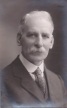
 Little is known about Fred Maitland before he married (Edith) Adeline Smith in 1920. Apparently he had known Adeline for some years – and had admired her from afar – but how, and where, they met is unknown.
Fred’s first wife was Louisa and, according to the Census of that year, they were both living in Beckenham in 1911. They had nine children: Lionel (1881), Violet (1883), Oswald (1884), Herbert (1886), Winifred (1890), Dorothy (1893), Cyril (1894), Norman (1896) and Alfreda (1899).
Fred was a merchant, dealing mainly – as far as has been established – with gloves, both the finished product and the materials with which they were made. He died in South Croydon in 1930.
Scotland By Water
A trip taken by Fred Maitland
August 12th 1882
HOLIDAY 1882
Where shall I spend my holiday? This had been a question, in full discussion, which occupied my mind for some time during the year 1882. And I eventually arranged to go, with two other young men, to Scotland – and also to go by water.
I was fortunate in knowing one of the traffic managers of the General Steam Navigation Company and he kindly arranged for our party to berth in the saloon cabin, which is the roomiest in connection with the vessel and, after settling other preliminaries, we waited patiently for the day.
The morning of August 12th began dull, but soon opened up with a fine day. By 10 o’clock, I was on board the SS Virgo, to meet my friend Captain C. By him, I was introduced to the captain of the Virgo and, afterwards, shown over the vessel. I then accompanied him, as far as London Bridge, in his small boat, looking over one or two other steamers en route.
After a brief visit at home, and something to eat, I was back on board again by 12.00, where I met my companions. We were soon clear of the landing and on our way down the river, passing Greenwich and Woolwich and on to Gravesend, where the river broadens very considerably. The Essex coast now became conspicuous by its monotonous flatness.
Unmistakable pangs of hunger, however, soon drew our attention away from the shore and we were considerably cheered by the sound of the dinner bell. Our party of three decided to contract, that is, we each paid a lump sum for all our food during the journey, and took what came. We were very glad afterwards we had done so; I expect the steward was ‘sorry, Sir’!
We sat down, seventy in number, to a very magnificent dinner and I can vouch that ample justice was done all round. In fact, this was the case throughout the journey, for about an hour after every meal, we began to get hungry again.
I, for one, felt quite satisfied, at the end of the journey, that the sea air agreed with me and think the steward must have thought so too, Sir!
During dinner, we had passed to the mouth of the Thames and we were up in time to see Southend and Sheerness, between which we rode into the open sea. Our course after this continued along the coast, but at some distance from it, and the falling shadows of evening soon hid it from our view.
Quite satisfied with our experience so far, we turned in to our berths but, probably on account of the novelty, did not sleep until the following day had commenced. We arose next morning at 6.00 and had coffee, breakfast not being served up till 9am.
We were, at this time, crossing the Wash and out of sight of land. Some little time before breakfast, we saw Flamborough Head, the commencement of the Yorkshire coast. This, I was enabled to see well through the captain’s glasses, which he kindly lent me. The cliffs were easily distinguishable, with their white streaks, caused by the mixture of chalk and marl, this being the only place on the coast, between Scotland and Essex where the chalk is distinguishable in the cliffs. We passed the lighthouse.
The weather, which had been threatening all the early morning, now gave way to tears, which continued for some time – in fact, the remainder of the day was dull and cold.
During breakfast, we passed Filey and Scarborough and were up in time to see Robin Hood’s Bay. The next object of interest was Whitley Priory, the ruins of which stood out very plainly and we were able to have three different views of it. Whitley and the pier followed.
Some little distance beyond this point, a thickness set in near the coast so that we could not distinguish anything until opposite the Northumberland coast, where Newbiggin church came in view, with the Tynemouth priory looming up in the distance behind it. The heaviness still continued for some time and a few heavy swells, now and again, caused the boat to roll a little, sufficient however, to send some below.
We now passed, in succession, Craster, Dunstanburgh Castle and the Farne Islands, with their ugly, sunken rocks. The weather now cleared up somewhat and objects on the land could be easily distinguished along the coast of Berwickshire. The little fishing village at Eyemouth is very prettily situated, and looked picturesque from the boat. We came next to St Abbs Head – with its lighthouse; this forms a point or promontory in the coastline and was the wildest and grandest object that, up to that time, we had seen.
In the foreground, high up on the rock, was the low-situated lighthouse and, in the rear, the white houses of the coastguard. From this level, the rocks descended, in precipitous and broken magnificence, into the sea. The shadings and colour of the velvety herbage, with which these rocks are covered, is of a brown heathery green making, in all, a wonderfully pretty picture in the fading light. The coast now became more dim and soon faded into a dark outline. We could, however, distinguish the Bass Rock looming out of the darkness as we passed it.
At 11pm, we turned in and slept soundly until 6.00am the following morning. We could hear many were making a move as we turned out and, after swallowing a cup of coffee, walked to Granton station where, after waiting about one and a quarter hours, we caught the 8.20am train to Edinburgh and found, on arrival, that the hotel (Darling’s, Regent) was close by the station, where we had soon engaged our room and made a substantial breakfast.
After writing home, we walked down Princes Street as far as Scott’s Monument – at the foot of which we met Mr Kershaw and found our way to the top, from which a very fine bird’s eye view of Edinburgh and the surroundings may be had. On our way down, we called in at the museum which, among other interesting things, contains thirty-two photographs of the works of the monument.
From here, we walked to the Royal Institution and saw through the scientific gallery. Then on to Charlotte Square, in the centre of which stands the national memorial to Prince Albert. St George’s church, an imitation of St Paul’s, on the west side of the square, was undergoing repairs.
From here, we went to the Dean Bridge, over the Water of Leith – this afforded very pretty views and led on to the Dean cemetery, one of, if not the, finest one we had ever seen. It contains some very fine tombs and monuments – one we noticed was a portion of some ancient pillar; another, a huge red granite pyramid, about 14ft high and 12ft square at the base – another very large monument raised to James Buchanan of Glasgow. The lower portion was solid granite and, at the top, under a dome supported by six large stone pillars, was the bust. I consider the Dean cemetery well worth a visit.
From here, we retraced our steps and proceeded by Moray Place and Ainslie Place and George Street to Carlton Hill; after seeing all that was to be seen here, we walked down to our hotel in Waterloo Place, and recruited the inner man. We next struck off to Edinburgh Castle which, however, we were too late to see thoroughly, the rooms being closed; we were, however, at the top and saw the big gun, called ‘Mons Meg’.
Leaving the castle, we proceeded down the Castle Hill to St Giles church, the outside of which we examined narrowly. We noted the ‘Heart of Midlothian’ in the pavements and John Knox’s burying place, in the rear of the church near to Charles 1st statue in front of the old Parliament House. Continuing on down the high street, we passed the Iron church on our right and John Knox’s house on our left, a little below which is the old tollbooth or court house, and the present police station (into which we saw a woman ‘lugged’ by two policemen).
It has not been my lot before to pass down such a rough street. I should think the very lowest of the low live here. Your nostrils are constantly offended by noxious smells; your eyes by half-clad, dirty people and your ears by shouts and yells proceeding from some of the alleys, or doses which perforate the houses on either side, more particularly, the right.
We eventually emerged into the open space opposite Holyrood Palace, in front of which stands a very beautifully carved stone fountain, erected by Prince Albert. After admiring this piece of workmanship for a few minutes, we passed Holyrood on our left and went straight for the Salisbury Crags.
After nearly reaching the top, I re-joined my friends, who had not made much progress, and together we ascended to the top of Arthur’s Seat. It is a good climb and, although we refreshed ourselves at St Anthony’s Well, near St Anthony’s little, ruined chapel, we found it exhausting. The view from the top, however, fully repaid us for the effort. We could well see the Bass Rock far away.
In the descent, I met with a slight accident – my foot slipped upon a small stone which threw me upon the right knee, tore my trousers and also tore all the flesh from my knee. I did not know I had hurt myself as much until I descended to the Loch and washed it, when I tied my handkerchief around it and limped home to my hotel.
After having had a wash and brush up, we went to Mr Shaw’s house (Mr Handley’s friend) and spent a very pleasant evening with them; we did not have supper till late and it was after 12.00am when we arrived at out hotel.
The next morning, we bent our steps to Holyrood Palace and went all through it. The picture gallery is interesting and Lord Darnley’s room, but the most interesting is Mary, Queen of Scot’s rooms, where we saw the bloodstain upon the floor which is said to have flowed from Rizzio’s veins, and the secret stair, which the conspirators ascended, was also seen.
After leaving the palace, we went through the old chapel, which has evidently been a fine pile in its time. There are a few interesting historical graves and, in the south east corner, is a vault which was the burying place of the kings of Scotland at one period.
After leaving here, we made time for dinner and then took the train to Hawthornden station. The weather as not very promising, however, we walked on past the usual entrance to Hawthornden and entered at Lusswade, after going down a very long and pretty road called Rough Road. So soon as we had got fairly in among the wood, it came on to rain and continued to, with more or less severity, until we arrived at Roslin. Even in this weather, we quite enjoyed the walk through the Hawthornden and could quite understand its magnificence of a sunshiny day.
We kept close down to the paths – or as close as we could, for the path was one continuous ascent and descent and so had full benefit of the beautiful glimpses of scenery that are to be obtained here. From one point, or little way from the path, we had a lovely view, very wild and very rugged. We also came to a well which bubbled from the rocks overhead and saw, on the opposite side of the river, what is called Wallace’s cave, about half way up a very precipitous bank of rocks.
At one time, we were walking up the bed of the river, picking our way by the stones and rocks which offered their resistance to the course of the stream, causing the otherwise placid water to dance into foam, and then the path would wind up a steep ascent, until we viewed the stream from a height of 100ft, or so. In some places, we noticed the banks were literally perforated, like a sponge, ‘where the water rats had worked their way, by many a hole, to the light of day.’
We continued our walk, feeling delighted at the beauty of our surroundings when, suddenly, we came to the old gateway of Roslin Castle and found it a pretty steep climb from the level of the river to the top of the castle. We did not enter, but passed on to the cemetery which has, at one time, been entered from the castle, if not wither its walls. Spending a few minutes in the cemetery, we wended our way up to Roslin chapel: at a farm adjoining, we got some good milk.
The outside view of Roslin chapel is very fine and we were assured, at the first glance, that our journey would not have been unsatisfactory if we had seen nothing else. It is prettily situated and surrounded by historical scenes and associations. On entering, however, the greatest magnificence awaits you in the form of stonework. In fact, Roslin chapel is one magnificent piece of architecture.
The oldest portion of the building is that which is now used as a vestry, the floor of which is 30ft below the level of the chapel. This portion was used as a chapel in the 14th century for the space of forty years, during which Roslin chapel was being built, and is decidedly plain and uninteresting.
One of the most extraordinary features in connection with the Roslin chapel is the varied style of architecture. There are, I think, twelve pillars, no two of which are exactly alike, and the most magnificent being the one known as the Apprentice’s pillar, in connection with which there is a legend to this effect, verified by the heads of the master sculptor, the apprentice and his mother, occupying a place not far from the roof, the apprentice’s face being represented with the gash over the eye. The lady chapel, which is very fine, illustrates the general character of the whole.
The roof is divided into four sections and each section is differently carved and worked. One style of ornaments adopted is that of the Scotch curly green; there were represented around some of the pillars. The apprentice’s pillar is the most marvellous of all, however, being a series of pillars joined together and turned around, the whole is a handsome wreathing of flowers, reaching from the top to the bottom and almost defying you to imagine that it was put on any other way than by being done and laid on after the pillar was complete.
The newest portion of the building is that erected by the Earl of Roslin two years ago and forming the main entrance to the chapel immediately facing the altar. In the centre of the porch, stands the font and, overhead, the organ is in place, so that the new portion forms the porch, baptistery and organ lofts. It is finished, worked and been a fitting part in the general beauty of the whole. We returned to Edinburgh from Roslin station, tired but well satisfied with our day’s outing.
The following morning (Wednesday), I went to the Waverley and bid goodbye to Macarce and Handley, who were going on to the Trossachs. I had made all the arrangements to leave by the 11.30am train but, in consequence of getting my tickets by the wrong route, I was turned out of the train just at the last moment and had to wait until 1.40pm. The meantime I spent by going down to Leith by train and walking about. On my return to Edinburgh, I saw a detachment of the 3rd Dragoon Guards pass up Princes Street, a very fine sight.
I got away at last and went straight to Melrose, where I broke my journey to see the old Abbey. I spent three hours there and quite enjoyed my roam over the old place. A young lady (one of those in charge) was particularly clever in her descriptions and took much pains to show all the most interesting objects and points.
The heart of Bruce lay buried beneath a tablet where the altar at one time stood. And I noticed there, as at Roslin, a Scotch curly green was introduced into the carving. The east and south windows are both very fine – of the two, however, if liked the south. The view from the outside is best when taken from the south-south east point.
After leaving Melrose at 5.30pm I saw, for the first time, the whole and hilly district of the border and fells. After passing Hawick, it is particularly fine and I think, at Riccarton junction, you reach the centre of the fells. I soon after discovered the river Tyne wandering in and out very prettily among the hills.
‘Where the winding Tyne’s continuous sweep
By fertile meadows ‘twere mountains steep’
Before I reached Hexham, the darkness had settled down, so I slept the remainder of the journey and, arriving at a part of the Central station that I was unacquainted with, did not know I had arrived.
The day previous I had written, on today, I would arrive at 9.45pm but, in consequence of my error in the morning, I had to travel by a train that arrived at 10,55pm so, by the time I arrived home, they were gone from the station. I found all well and I saw all except Henry that night – I was glad to get to bed, which I was not until 1.30am.
The following day, I went down to see JHB, but he was not there, so I walked to the Journal office and saw Joe, with whom I spent the evening; I found Janet very well and anxiously waiting to be relieved. Before going on to Lily Crescent, I called and saw Eliza.
On Friday morning, Ian Annie and I went down to Tynemouth. We went immediately to the Longsands and walked by the rocks to the pier, which we went along. On our return, we went up into the castle yard, where Ian Annie had not yet been. In the course of our rambles, we mounted the lighthouse and saw the lanterns, which were remarkable for their cleanness. The lighthouse man very kindly lent us his glass, by the aid of which we could see the Cheviots and Coquet lighthouse and, also, Souter Point and the Rothbury Hills.
After descending, we went to Nelson’s Monument and, from thence, as far as Whitley by Longsands Road, Cullercoats and then on to Rocks. We got back to Nile by 5.00 and Aunt Mary came about 6pm. I went on to Jack afterwards.
On Saturday, I was at Joe’s to dine and, after, I accompanied him to the East End parks. On Sunday morning, I visited Old Brunswick again and heard Mr Grubb, their retiring minister. Mrs Tom asked, very kindly, after you and the family.
After dinner at St Thomas Street, I went up to the 3.00pm services as Jesmond, where I addressed the children at the close of the meeting. JHB then showed me over the new chapel and I then accompanied him to tea. I was astonished to find he had a family of seven. He was particularly good and kind and Mrs Tom was equally hospitable. She wished to be remembered to you and made me promise the next time we came down, to go and visit her.
I again went to Brunswick and heard J H Stephenson and then went home to St Thomas Street after walking over the low end of Ledges with Mr Coverdale.
Monday was a day spent in saying goodbyes. I did not have an opportunity of seeing Harry Padgham after all, as he was away from business, unwell. Had a long conversation with G Bainbridge and bade goodbye to Mr Tom, who took me all over the warehouse, showing me the various alterations and improvements made recently.
Tuesday morning, having arrived, the time for leave-taking has arrived also, and once more, I bid adieu to the old town and new city.
Left Newcastle by the 11.40am train – Aunt Hannah, Tom, Ian Annie, Eliza and her boy, saw me away from the station. The day was fine and bright, so that the picturesqueness of the Waverley route was seen to advantage. Ryton, with its familiar hillside, soon appeared – and passed – Prudhoe castle stood out well, showing to great advantage. It is a very pretty and romantic pile and only wants the pen of Sir Walter Scott to make it – and many other spots in Northumberland – popular and much sought after. The fields looked healthy and well, the crop being well advanced.
Passed Corbridge and saw the roadside house where we stayed and had dinner during the rain, on the occasion of the Orphan House trip to Dilston Castle. I think I have seen Acomb at last, on the left of the line between Hexham and Wall. I saw a church which appeared to be at the head of the village. Near Hexham, the river was very pretty, but somewhat shallow, its course is impeded by large stones and rocks, which were scattered over the bed of the river, making a continuation of small waterfalls and cascades and presenting a scene of wild frolicking and tumbling confusion, which I quite enjoyed.
The country between here and Chollerton is very pretty and, from one point on the line, a beautiful view of the valley of the Tyne is obtained. Chollerton is a one-sided station. At Barrasford, Haughton Castle formed the centre of a very picturesque scene.
After passing Bellingham, the journey continues through a range of hills and fells for many miles; these hills are probably the continuation of the Cheviots and are only useful for pasture, as they are covered by course, green herbage; they are called the Peel Fells. Some of the scenery among the hills after passing Riccarton is grand in the extreme, presenting a constantly changing panoramic view, until we arrived at Hawick.
I had an unexpected opportunity of seeing this town and district. We changed trains here and I was told the Carlisle train would still be twenty minutes, so I walked down the high street and returned in time to find my train gone, so I had to wait two hours for the next. While I was bemoaning the fact, and enquiring where best to spend my time, a gentleman offered to accompany me for a walk, which turned out very enjoyable. After passing through the town along by the river, we ascended a hill from which a good view of the town and surrounding country was obtained. And then we returned by another way along by the banks of the Teviot, a pretty river with a pebbly bottom.
My friend, a Mr Fisher, and a teetotal traveller, took me through Pringle & Sons hosiery factory and showed me the looms. He also interested me very much by an account of the annual ‘March of the Marches’, or town lands, which constitutes a two day holiday – viz, the Monday and Tuesday of the second week in June. At this festival, they always sing an old Hawick song in commiseration of the Battle of Flodden and the taking of a standard from the English – sung by the boys of the town, during the absence of their sires at the battle. The chorus of the song, which is of a wild and savage character, is ‘Tere bus, tere oden’ – and the beauty of the song is that no-one knows what the chorus means!!
The country surrounding Hawick is very fine and it seems a fairly lively town. My friend told me there was a large antiquarian society there and a good parliamentary debating society. Altogether I was very pleased with my mishap.
I caught the 5.17pm train to St Boswells and a gentleman, who was going on to Melrose, promised to drop my luggage on the platform there. From St Boswell’s, I had a fine walk. I found I had not time to see the abbey as, as soon as I had got a little way from the station, I discovered I had to walk nearly eight miles to Melrose and I had only one hour and thirty-five minutes to do it in. I had to walk at a very rapid pace, but I managed it and saw some glorious scenery on the way; one view of the Tweed was particularly good. It was obtained from the side of the road high up above the Tweed, where its windings could be followed by the eye for a distance of about a mile, in the course of which it took three distinct bends, or curves. A pleasant, shimmering sound came up to the ear, although some quarter of a mile away and, in the distance behind the Tweed, rose a dark, wooded hill which found a perfect background to a fine picture of river scenery.
I arrived at Melrose rather warm and just five minutes before the train was due. My haste was repaid by having to wait twenty-five minutes in a cold station. However, the train came at last and, in due course, I arrived in Edinburgh, where I changed trains and went on to Glasgow, arriving there soon after 11pm. I went to the Cobden Hotel, gave instructions to be called at 6.20am and went to bed.
Punctually at 6.20am, the Boots called me and, when I arose and looked out of the window, my enthusiasm was considerably damped by seeing a wet and dull morning. I hesitated but, seeing a slight break in the clouds, took courage, dressed myself and just got to the saloon steamer, Columba, at 7.20am. All this time, it was raining but, by the time I had disposed of a substantial breakfast, the rain had been superseded by a strong north wind, which continued to blow all day.
After passing Greenock, the sun broke through and the scenery, which was very fine, was continually varied by sunshine and shade, including Helensburgh, Gairloch and Loch Long. I think the effect was even better than it would have been if quite clear.
The scenery from here, until quite through the Kyles of Bute, continued to increase in magnificence, of which any attempted description would be out of the question. We arrived at Ardrishaig at noon, having travelled ninety miles. During the trip, I made acquaintance of a gentleman from Leeds and his daughter, who I found very interesting company. She had travelled a great deal in England and was able to declare upon the comparative merits of the Scotch, English and Irish scenery. She proved such an intelligent, sensible girl, I was almost sorry I was not going on to Oban. However, the boat started back at 1.10pm and arrived in Glasgow again at 6.45pm.
I was not particularly impressed with the Cobden Hotel and shall take care not to stop here again on any future visit I may pay to Glasgow.
Having a couple of hours to spare, I went as far as the Glasgow cathedral, which is a wonderful old pile, 319ft long and there are, descending from it, in different directions, old chapels, etc, which are various ages. The crypt, which is under the choir, was founded by Bishop Josceline in 1171. In the south east corner of this crypt is St Mungo’s Well. The choir, all the woodwork of which is sold, dark oak, was also founded by Bishop Josceline. There is also a crypt and chapter house founded by Bishop Lander in 1408; in this building, there are some very fine old oak seats, beautifully carved. There is another crypt, which is more familiarly known as the Laigh Kirk, that was founded by Bishop Blackadder in 1490.
Between the Lady Chapel and the choir, are two enormous stone pillars in the fluted style, which are quite three yards square at base. The stained glass windows, of which I should think there are over a hundred, are very fine.
After leaving the cathedral, I crossed the bridge of the necropolis, the height of which is crowned by a monument of John Knox. I think there is almost a larger collection of fine monuments, vaults, stones, etc, here than at the Dean Cemetery in Edinburgh.
Hurrying to the station, I noticed, among others, a fine granite monument erected to Benjamin Sword Esq, eighty-four years – Merchant, Glasgow.
I left Glasgow at 11.15am for Ballock pier, where I changed on to the boat, which took me up Loch Lomond. We were, at this time enjoying clear, bright sunshine, which continued throughout the day, so that I saw the Trossachs under exceptionally favourable circumstances.
The steam up Loch Lomond did not seem long – we soon reached Luss, having threaded our way through the many pretty islands, which dot the lake here and then crossed to Rowardennan, just beyond which Ben Lomond rose majestically to the height of 3,192ft almost from the water’s edge. We next reached Tarbet, where there is a fine hotel.
After Tarbet, we soon reached Inversnaid, from whence we went to Stronachlachar by coach and got the Loch Katrine boat, which is a similar boat to that on Loch Lomond, but smaller. After another lovely run down this lake, we landed at the Trossach and, as there were not sufficient numbers of coaches, I joined a gentleman and had a charming walk to the hotel.
From there, after waiting about half an hour, we started, by coach, to Callander. This ride takes in the finest views of the whole run but to get the full benefit, you want to ride from Callander on to Balloch. The ride to Callander is a long one and we were not sorry when we arrived.
I went on to Edinburgh, but had to change at Stirling, where I waited quite an hour for my train. When I arrived at Edinburgh, I found the Regent Hotel could not take me, so had to put up at the Waterloo, a very magnificent place, but equally expensive. On Friday, I walked right round the Salisbury Crags, Arthur’s Seat, etc and had a general look round.
On Saturday morning, I went over the Firth of Forth and had a walk along the Fife coast, getting back in good time for my homeward journey in a boat which, after my comfortable quarters on board the Virgo, I did not half appreciate.
This constitutes another of the very cheap and enjoyable trips which the Edinburgh people are favoured. If I may trust my memory, the return fare from Edinburgh is 1/-. This includes 10 miles of railway and about 8 miles of steam boat travelling.
I was back in time to catch my boat and meet my two friends again and a considerable portion of the afternoon was spent in telling each other where we had been and what we had seen since parting.
© VCRT