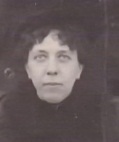
 Grace Marion was born on the July 15th 1870, elder daughter of John Smith II and his third wife, Mary Ann Fowle. For their health, she and her sister were sent to boarding school in Margate in 1885 but, apart from that, they both spent their lives with their parents until the death of their mother, Mary Ann, in 1901.
For the next eight years, the two sisters continued to run the family homes – Sidcup, Wallington, etc – until, in 1909, Grace married, as his second wife, Tasmanian politician, William Micah Williams (1851-1924) and returned with him to live in Hobart, Tasmania. She had been corresponding with him since her school days but did not actually meet until the year of their marriage.
Will and Grace returned to England in 1911 and, as Tasmanian representatives, attended not only all the garden parties at Buckingham Palace that year, but also the Coronation of George V. They also returned to England in 1914 before returning to Hobart in the autumn where Will was elected Mayor of that city.
In June 1915, Grace became ill, but recovered only to be taken seriously ill, on December 20th just after completing their year as Mayor and Mayoress. She died, on December 22nd 1915.
Grace was a concert-standard pianist and gave many recitals.
1909 Journal of Grace Marian Smith
Travelling to Australia after being married to William Micah Williams
of Hobart, Tasmania
ON BOARD THE SS CARONIA
Bound for New York
September 14th 1909
Tuesday
Left Euston at 12 o’clock for Liverpool. Mr Thompson, Volta and Marian met us. The ‘Coronia’ left the landing stage at 5pm but did not sail till 7.30pm, waiting for the tide. The sea was very calm. Had a good night; our cabin is on Deck A – 11, on a line with the drawing room.
Wednesday
Up at 7.30am; two small Irish steamers alongside our steamer. Irish women came along selling lace, shawls, etc; wrote a note home before breakfast, to be posted at Queenstown; stayed outside about half an hour – the boat full of passengers, Mr Marconi being amongst them.
Had a good afternoon sitting on deck, reading; had a warm sea bath but felt seasick after it so went to bed instead of going down to dinner; at night, the sea was rough and the boat pitched and tossed and rolled a great deal, but we had a fairly good night. I avoided being sick by lying quite flat on my back. Will is a good sailor.
Thursday
Not sorry when morning came; had breakfast in bed; got up on deck about 11am and was able to go down to lunch; from Wednesday till today we went four hundred and seventy-seven miles; spent the afternoon sitting on deck and reading; got a good walk round the deck, a constitutional; went down to dinner but am afraid was not ravenously hungry; after dinner, another sharp walk and then sat in the drawing room looking at Illustrated papers; there are good fires in the sitting rooms; just like being in the drawing room of an hotel; the food on board is excellent, such a variety; I get fruit and scones or rolls every morning; Will does not care for my breakfast but goes in for a more substantial one; slept well at night, ship very steady; just a week today since our wedding day; we can hardly believe it is only a week.
Friday
A nice, quiet morning, not at all cold; sitting on deck writing this and I am just going to read over some old letters; Mr Marconi sits at the Captain’s table, I can see him from where we sit; he is very young-looking, with very sharp features, rather lawyer-like to look at. In the middle of the morning, they bring round cups of chicken broth and dry biscuits for anyone who likes it; it has just come on to rain fast but is no inconvenience as the deck is covered over; we have very comfortable chairs with footrests, have to pay 4/- each for the hire of them.
In our cabin, we have a wardrobe and a chest of drawers, besides a sofa and any number of pegs for hanging our clothes up, so we are quite comfortable; my trunks go under the sofa so although we have all our luggage in with us, except one trunk of Will’s, we are not a bit crowded. As I lay in my berth on Friday night, when it was so rough, I thought of Father and Mother’s trip to Naples when they had it so awfully rough as to send the luggage about the room; I am thankful we did not get it so bad as that though we got a fair toss as it was; I find my travelling watch so useful, but every day the clocks and watches have to be altered.
This morning I had to put my watch back half an hour. At first I could not make out why Will and my watches were always wrong, quite forgetting the great distance we had come; every morning a paper is printed on board and in it is news received by Marconigrams; it does seem strange to be able to get news when one is right out in the Atlantic. For days we see no vestige of land; yesterday, Will and I saw such a lovely rainbow, the full arch, it was so beautiful. We find the people at our table quite pleasant to talk to, all Americans but one gentleman. They have just brought round toffee for everyone that likes it; how I wonder what you are doing at home, it will be just lovely to get letters at New York. I am told our letters will go back by the ‘Carmania’ on Wednesday; had a good night.
Saturday
Lovely morning but sea fog later; then we got past it – then ran into fog again; the outlook is rather miserable; the boat rolled a bit but am glad to say I was quite alright; we have been doing about nineteen knots an hour; each day making an average of about four hundred and fifty miles during twenty-four hours; the pace seems to be always the same and the boat is wonderfully steady although we have several days had high winds.
We spent the day in much the same way, having a mile or two walk after breakfast and then writing, reading, talking and, occasionally, a snooze in our chairs after lunch; it surprises me to see the mixture of foods that the Americans at our table can eat; they often have ice cream in the middle of dinner as well as at the end, not to mention tea and, sometimes, coffee. I like trying new things; yesterday I tried some green corn, hardly liked eating it in my fingers but that is the correct way; also tried corn cake, which also is good. The sea was rather rough at night and it was blowing hard;
Sunday
Such a beautiful morning – went our usual walk and then to service in the saloon at 10.30am; just the usual church service read and three hymns sung: ‘New Every Morning is the Love’; ‘Nearer my God to Thee’ and ‘Onward Christian Soldiers’; a collection was taken for the Seamen’s Mission and they took over £10.
In the afternoon, we did some writing and had a nice quiet read; a lot of interest in watching a large German steamer, the Kaiser Wilhelm, coming along behind us. At first she only looked like a mast in the distance but, through the glasses we could see her; hours afterwards, she caught us up and soon passed us on her way to New York. She was travelling five knots an hour quicker than we were. It is very windy tonight and a little rough; we congratulate ourselves we are on a good, big, steady boat; except for the service this morning, today hardly seems like Sunday
Monday
Quite the most lovely day we have had; so warm, brilliant sunshine and no wind more than just a gentle breeze. In the morning, had to stay in a bit to rearrange the luggage ready for tomorrow but, after lunch, we just basked in the sunshine, sitting on deck, reading, talking; the sky and sea were so blue and the whole scene beautiful.
After tea, I had a lesson on how to play Shuffle, a deck game – did not play long enough to do much good at it; some of the passengers play practically all day. At dinner, we found announcements of an entertainment in the dining saloon in aid of the Liverpool and New York Seamen’s Mission – at 8.30pm – and, after that, a dance on deck.
We went down to the concert – the saloon was full and they took a collection of over £28; the captain, Captain Dow, was present and a Mr Everett was Chairman; a Catholic clergyman recited ‘The Dumb Wife’ – very humorous, and had to give an encore; several songs sung and one member of the orchestra (which consists of five men) played violin solos thoroughly well. This was all over about 10pm; we then went up to see them dance; the aft deck was illuminated and decorated with flags, carpets etc, and looked very pretty but not many danced. Slept like a top last night; got up in good time to finish our packing.
Everyone is very busy this morning and luggage all being taken out of the cabins; we have to have lunch at 11.30am and expect to reach New York between 1pm and 2pm. Land in sight for some time past; we have had a delightful trip and I have thoroughly enjoyed it and feel so well. Now we expect a thorough good time in New York and afterwards.
Much to our surprise, and everyone else’s, we docked at 1.30pm; for two hours we stood on the front of the ship as we came up New York bay, watching all the busy life on the waters. Such large ferry boats going backwards and forwards from different parts; on many there is seating capacity for four or five hundred people and cousin Willie tells us that he has seen two thousand persons on one ferry at a time.
Then we saw tugs, sundry steamers, etc and one of the first things we saw in New York was the Statue of Liberty; we were astonished at the rows of docks for the different company’s liners to go into – Cunard, American, German, etc. We stayed on deck a long time until a lot of the luggage had gone off, looking for John. Just as we were coming off the steamer, we saw him; he is almost the same as when I saw him last.
He gave us a real good welcome and helped us get our things sorted out; a man from the Canadian Pacific Railway met us and we gave him charge of eight packets of our luggage, which he sealed and took charge of, sending it on to Vancouver, where it will await us. This luggage did not have to be examined by the Customs’ Officers. It was great fun to see the officers hunting in some of the passengers’ boxes, just as we have seen pictures of them doing at home.
The Custom House hall is an enormous place and all the luggage is sorted out and arranged alphabetically and in 1st, 2nd and 3rd class. I do not really know how long we were there, but a very long time. Presently up came Flora and Emma and cousin Willie; they all four gave us both the heartiest welcome; about 4 o’clock, we reached John’s home, after coming by train, cab, ferry and trolley car – we were a jolly party after the evening meal and speaking very much of Father, Adeline, Trot and others. John sang, I played and we talked hard; Flora had saved some magnificent peaches for us which she had picked out of her own garden; to bed about 11pm.
Wednesday
What we have seen today, I really do not know how to write! We had breakfast before 7.30am and started out with Emma and went on a trolley car (what we should call electric tram cars) after going, by train, from Harrison, right into New York City. You could not possibly call it a beautiful city – it looks so incomplete and the streets are not kept anything like as clean as London, nor in such good repair.
Cars run in all directions, shallow cars with no tops, some very long, some open with seats facing the front and others closed in; there are also motor buses but not many and nothing like as large as ours at home. They have curious cabs, very light built things, more like a barouche than anything; we made for one of the greatest stores – Wanamaker’s – they call nearly all their shops ‘stores’.
This is an enormous shop – drapery, goods, etc, etc, just as Harrods or other of our great shops. We did not see anything which specially attracted our attention to buy and thought all things were very much dearer than in London.
The lifts, or elevators, surprised us for they go at such a rate! Outside the shop looks much like Selfridge’s; we had a good lunch there, and such great ice creams, as much as we really could comfortably eat; Emma went with us this round. We afterwards went by trolley car to one of the other largest drapers, Macey’s; here we went on the moving staircase, it nearly pitched me off when we got to the top because I could not make up my mind when to step off!
About 4 o’clock, we joined Willie at his office in Broadway and he took us round about pointing out places of interest; Broadway itself is fifteen miles long through the City of New York and, after that, it extends far our into the country. You cannot possibly imagine the height of the buildings; one building is forty-eight stories above ground and four below, making fifty-two in all; this is a sold fact.
There is one block of buildings called ‘The Flat Iron’, built in the shape of an iron – narrow in front, just one window for each storey, and spreading out to a good breadth gradually. Cousin Willie very kindly bought us a splendid book of the sights of New York and he is going to buy another to post to Father – also some postcards of places here.
Our cousins have been most attentive and kind to us and are very nice; last evening John and Flora had to be at a wedding (fancy, a wedding at 8pm); Willie and Emma took us out to dinner in Newark, which is the nearest city to Arlington; there are beautiful shops and we thought it looked much cleaner than New York. For, truth to tell, we think New York dirty. It is nothing like London, of course; the one thing that really astonishes you is the height of the buildings and, perhaps, the number of trolley cars and I should say the ugliness and unfinished look of the whole place.
Yesterday, we rode on top of a motorbus down Fifth Avenue, where some of the millionaires live. That part certainly is nicely kept and the Central Park is opposite but it is not to be named by the side of our Piccadilly. We arrived at Willie’s about 8pm and were all tired for it was so fearfully stuffy and hot in New York City and rained a good part of the day. In the evening, John and Flora called in; we went to bed and had a real good sleep.
Arlington is quite countrified – the houses are wooden and painted bright colours, a great many of them yellow. Everybody has a good garden but, with few exceptions, no fences or hedges so there is nothing between the pathway and people’s front gardens. Their grass is very rank and, I think, untidy but the great bushes of hydrangeas and beds of large scarlet salvias look lovely. In Willie’s garden, he grows bushels of black and white grapes – not under glass but in the open. The vines are trained like hops – you can walk underneath them; we have them for breakfast; also lovely peaches, which are quite cheap here. I never saw more beautiful fruits anywhere and so cheap.
Flora’s house is so pretty. You go into a square hall and, on the left, is the drawing room and this leads into the dining room, only a curtain between and then, behind that, is the kitchen – most compact. There is a larder, with a large refrigerator, for everyone has to keep their provisions on ice. She leaves the outer door on a chain and locks the inner door, so that when she is out, the tradespeople just put the things in the larder on the ice. The floors are all polished wood and there are nice, large rugs about. The stairs are polished wood, no carpets, fancy how easy to keep clean.
The house is warmed by hot water pipes but, in cold, dreary weather, they have wood fires in their grates. The first night, we did not sleep much, or rather I did not, for there was such a variety of noises – crickets in the garden and all the noises such as trains and boats on the river are so unusual to our ears. It seemed to me that church bells were ringing in the middle of the night. Trains do not whistle but have bells instead! Flora and Emma, neither of them keep a maid, they just have a dark woman in when they want her, the rest they do themselves.
Thursday
We were not up till about 9am this morning; had to go round to Flora and pack our bag as we intend going to Boston tonight. But first went, with Flora and Emma, into the city and had lunch and intended going in an automobile for a ride round but found there was not sufficient time so we went to see Brooklyn Bridge, and it is a most wonderful sight. The bridge is a suspension bridge and there is, on the outside, a roadway for vehicles; next a rail for trolley cars and the next one is for the elevator trams and, in the centre, a wide road for foot passengers. This is all repeated the other side, so the bridge is portioned up into seven roads. The length of it is immense; it goes far into the city either side. It is so high up from the river that the biggest steamer can come under it; you would be astounded if you saw the number of trolley cars that pass over it, streams of them, only a few yards between each car and we were there in the slackest part of the day.
We went back to Willie’s office and they came to see us off by the 5 o’clock boat to Boston. We travel all tonight and expect to get to Boston about 8 or 9 in the morning. I never saw a boat like this before and do not know how to describe it. It is just a series of covered-in decks. A wide corridor, beautifully carpeted down the centre, and cabins opening out both sides; then you go outside and there are more cabins; we have one with a large window in it. When you come on board, you give up your ticket and receive the key of your bedroom in return. There is a large dining saloon, where we had dinner, and black men wait on you.
As usual over here, they always bring you iced water to drink first. We meant to go to bed early so as to get up early and see whatever there is to see. We are on the east river and as long as it was light, it was very interesting to watch and see, by way of a map we have, what all the places are we are passing. Will is also writing up his diary tonight, so you see we are both fairly industrious. I cannot write well as we have to write on our knees. We return to New York tomorrow evening; we have seen so much that I can hardly believe we only landed on Tuesday and it is only a fortnight today since we were married.
Friday
Had a good night’s rest and got up at 6.20am and were having our breakfast before 7.30am and then a walk round on deck. It is a lovely morning; much to our surprise, we are out in the open sea, out of sight of land. There is sleeping accommodation on this boat for twelve hundred people, that is, there are six hundred cabins. We expect to get into Boston about 9.30am. They tell us it was a bad night, wet and foggy but we had no discomfort at all and slept well.
I forgot to tell you that, on Wednesday, we went in the new tunnel which goes under the Hudson River. The train is similar to our electric tube trains; we stood at the end so as to see the long stretch of tunnel; all through there is a raised passenger way which seemed a great advantage as, if anything went wrong, there would be a proper way to walk out of the tunnel, which is more than we have in the undergrounds. The tunnel has only been open a short time. Every part of the carriage is made of fire-resistant materials; the seats and frame of the carriages are steel and the floor is concrete; the only thing to burn is the straw cushions on the seats. The Hudson terminal station is a grand place; an enormous, lofty hall and, round both sides, many kinds of shops. It is most spacious and imposing; all the walls are white tiles.
Got to Boston about 9.30am and went into the city to find Dr Francis Clarke, the originator of the Christian Endeavour Society. This took us a good deal of time but we succeeded in finding him in. He was in Hobart a few years since, and stayed with Will. He showed us round Boston a bit and we had lunch together. He took us to the public library, where the staircase is all of onyx marble, a yellow marble; there are one or two rooms which form a children’s library, suitable books only, and small chairs. Outside is written, ‘This Library was built by the People’.
We saw fine stores in Boston and the city is far more finished and handsome than New York. There are not any excessively high buildings as in New York. We had to leave Boston at 3pm; the trains travelled at a great rate and we were able to get dinner on board, and a thoroughly good one it was. We arrived at New York soon after 8.30pm. Willie and Jack were there to meet us; we just went straight home; I was delighted to find letters from home awaiting for me, one each from Father, Adeline and Trot.
Saturday
Up at 5.45am, breakfast at 6.30am and off, all six of us, to go up the river Hudson; it was a glorious day and we shall remember it for long. Our cousins pointed out places of interest on the banks; among others, Grant’s monument, apartments where many New York people live – we would call them ‘flats’; the Palisades, a series of very precipitous rocks, beautifully wooded. We went fifty miles up the river to West Point; there were a lot of men of war there in preparation for a great naval review this week to celebrate Hudson’s discovery of the river and also Robert Fulton’s successful navigation of the river by steam boat. Germany, France, Italy, Holland and England were represented but there were naturally more stars and stripes flying than anything else; we passed close to these boats.
The scenery was charming, the banks are well wooded and the autumn tints make them look beautiful. The boat was a large, comfortable one, a large saloon on the upper deck as well as on the second. At West Point is a military academy; we landed and drove up to the hotel and had lunch; as the boat was late, we had very little time to look about. We had to leave again at 2.50pm and did not get in to New York until nearly 8pm.
It was a busy scene; many of the ships were illuminated and, as we passed them, the band on board played the national anthems of each. There was one of the most glorious sunsets I have ever seen, such an exquisite shade of pale green, then the more usual shades of red and yellow and, then, the most lovely blue.
Then, as we neared New York, we saw a lot of the city illuminations in honour of the celebrations. You cannot imagine the effect of those huge buildings all illuminated up to the top and then, in addition, a flag flying on the top, also lit up by a searchlight; the shapes of the buildings were all picked out in electric light. We were a jolly party and every one of us thoroughly enjoyed the trip.
When we landed, we got some supper and went on an automobile sight-seeing car – they hold about thirty people. We did not start until 9pm and, as we stood waiting, it was a sight to see the traffic – motor cars, trolley cars, buggies, motor buses and the lights on the buildings; our ride was to see Chinatown, that is the Chinese colony in New York. We went into a Joss house, smelt strong of incense and there were beautiful carved panels, etc, embroideries, etc. then to a Chinese restaurant where we made a vain attempt to eat chop suey, a concoction of onion, celery, veal, etc all chopped up; then to a Chinese theatre – of course, we couldn’t understand anything and the music was very weird and monotonous. Then into a Chinese store – we were obliged to leave the rest of the party in order to catch the last train to Arlington.
The train was so packed that we all, with quite thirty or forty other people, stand in the baggage van. The engines here have a large bell on the top and they ring this instead of blowing a whistle as we do; the first night we were at New York I thought all the time the bells were ringing for ‘service’. You do have to hurry up getting in and out of trains and trolley cars or they simply leave you behind. The officials are most unceremonious and, I think, rude.
Sunday
As we were all very tired, we had late breakfast; Flora and I stayed home and I did some writing. In the afternoon, Emma and Willie came in; about 6pm, we left to go to a special music service in New York. The church was decorated with bunting and there was a great deal of the colour of the Henrik Hudson and Robert Fulton celebration – that is yellow, blue and white. After hymns, lessons and some collects, the organist (a pupil of the great French organist, Guilmant) played the old national anthem of Amsterdam; the choir then sang extracts from The Creation, including ‘The Heavens are Telling’ and then we had played some part of Handel’s Water Music. Then a solo by a beautiful soprano, ‘He Shall Feed his Flock’ and the bass solo, ‘Why do the Heathen’ from the Messiah’. Then Dvorak’s New World Symphony – or, rather, a part of it was played. Then we had selections from Gounod’s ‘Redemption’. It was a lovely toned organ, beautifully played and the singing was thoroughly good. Thoroughly enjoyed the service and we got home in fairly good time – and off to bed.
Monday
Breakfast at 7am as John has to leave early for business – Will also, and cousin Willie went up to New York early with our luggage; Flora, Emma and I followed later. We all met at the Flat Iron building where we got on a sight-seeing automobile and went for a two hour drive in and out of New York’s principal streets. Particularly interesting was it to go up Fifth Avenue, where so many millionaires live – the Vanderbilts have about five different houses belonging to members of their family; Carnegie, Harriman’s house, etc, etc. they are handsome-looking houses but even they lack the stateliness of our West End houses.
Opposite is the Central Park, through which we drove. It is very extensive and left, as far as possible, in a natural state. We still think the one really remarkable feature of New York is the size and height of its buildings and though, perhaps, we should not say it, the dirtiness and bad repair of its streets. But the busy-ness of the Hudson River we shall never forget and the traffic of ferry boats, steam tugs, pleasure steamers and motor boats on the north river is immense.
It was this river we had to constantly cross to get from New York to New Jersey in which Arlington is. Our cousins tell us each State has its own governor and at the time of electing a new President, the people vote for an elector; and the electors all meet and they elect the President.
The price of everything as far as we have been able to judge, is very much greater than in London. There is nothing under 5 cents – viz 2½d – and when you begin at 2½d, instead of a 1d, you can imagine how everything goes up in proportion.
We really have not seen anything cheap at all and are quite glad we have no necessity to buy anything. Our cousins all came to see us off for Montreal. We slept well, in quite comfortable berths – left New York at 7pm and arrived at Montreal at 9am. So now we are out of America and in Canada. It is nearly 400 miles journey.
Tuesday
After breakfast at the Windsor hotel, we walked about Montreal. There are no very high buildings here and the streets are in worse condition than in New York. We went to see the church, which is said to be a facsimile of St Peter’s, but were not much impressed; Will did not think much of it as he has seen St Peter’s. Then we saw Notre Dame and here we thought the principal altar rather gaudy. It had prints and green gas globes and violet asters in pots beside the gilt of the candlesticks, etc and blue and red carpet on the altar steps. The pulpit, in carved wood, we admired, some coloured windows and paintings. Behind is the Lady Chapel.
After lunch, we went for a drive up Mount Royal, which is a mountain from which you can look all over the city of Montreal. It is really kept as a park for use of the public – you can drive for seven miles on the mountain. The road winds in and out and is beautifully wooded; the autumn tints were beautiful. The maple leaf is the national leaf of Canada – it looked so pretty as the autumn had turned the leaves red. In the evening, we had a walk and then sat in the Windsor hotel and did some writing before leaving for the station to catch the 10.30pm to Toronto. We got to bed soon after coming on board and both slept well.
Wednesday
Arrived at Toronto about 7.30am and went to the King Edward hotel, where we had breakfast and arranged to stay the night. We had a large, good room but could not find any washing stand but, after exploring, found our room had a bathroom belonging to it, fitted with everything anyone could want.
We re-arranged our luggage, reducing our three packages to one kit bag because, after leaving Toronto, we fairly live on trains for the rest of the time till we get to Vancouver and you simply cannot have any unnecessary things, so we just reduced everything as low as we could.
We started out fairly early to do Toronto; we called to see Howard Berry’s eldest son, Walter, who represents his father’s business in Toronto. We had a most interesting time going over an enormous store (Eaton & Co); it covers twenty-five acres of ground and they employ seven thousand people. You never saw such a sight and, for the first time since we landed on this Continent, we saw things at a reasonable price. I will put down a few of the different departments: all sorts of drapery and millinery; chemists’ goods; toys; ironmongery; dairy (making butter); grocery; confectionery; china; ornaments; plated goods; hairdressers; lunch rooms, where you can have a three course lunch for 25 cents, which is 1/½d, soup, meat and pudding; carpets; furniture, etc etc.
They use great trucks for taking parcels from one department to another and every here and there are girls to look after the cash and they also tie up parcels for the assistants. They are many small stalls, just as in exhibitions, where you are invited to taste jellies, porridge, preserves, etc. We regretted that, having just had our lunch, we were not capable of doing this. I really cannot give you any idea of the vastness of this store but it impressed us more than anything we had seen in New York, even including Wanamaker’s.
In Toronto and Montreal, the same custom of no fences or railings to people’s front gardens, give a very unfinished appearance. We have seen such quantities of scarlet salvia; a drive up to one house was just a mass of it on both sides and it grows twice as high as we had it at Bramble Haw and looks perfectly lovely. We drove round about Toronto for about an hour and a half and saw plenty of good houses but only medium-sized.
Trolley cars run all about the city; it is much better kept than Montreal; we went into the city hall and into one of our Methodist churches – a splendid building to seat quite two thousand and handsomely fitted up, a large organ at the back of the pulpit and choir seats; gallery all around. Behind is a large school room, the floor all carpeted with good, green carpet and chairs and large and tiny chairs for the infants. The classrooms have sliding, glass doors so that they can be thrown open into the schoolroom.
We are still amused at the railway stations, at the height of the trains and the peculiar way they have of having no platforms, which means that you have to go up a small staircase to get into a train and, if you don’t hurry up, the train simply goes on.
We are not struck with either American or Canadian manners; you do not come across civil porters and guards as at home, but everyone seems to think it a great nuisance to give you any information.
We have come to the conclusion that we, at any rate, prefer English and Australians; perhaps a bit conceited on our part but, nevertheless, true. After two nights sleeping on the train, we appreciated the extra space in our bedroom and the luxury of baths. We had breakfast about 8am and then went to catch the 9.30 train for Niagara, leaving our bag in the baggage room to pick up again last night. Please excuse the writing but the train jerks!
Thursday
Left Toronto at 9.30 for Niagara and had a truly great day. We had to change trains at Welland and arrived at Niagara (Victoria Park station) at a little after 12 o’clock. We lost no time but went straight off to walk down by the falls. Our first glimpse of them was from the train and we were both disappointed but we soon realised that it was only because we were too high up to see their height.
When we got down on the level, our disappointment changed into wonder; we found a steamer goes close up to the falls – she is called ‘The Maid in the Mist’ and is a very small boat; she takes people out for about half an hour so as to see the falls flow into the water. To our surprise, when we got on board, we found we had to put on waterproofs, take off our hats and put on caps, like fishermen wear – sou’westers; we looked bewitching! It was not long before we found these clothes absolutely necessary for we should have been soaked. The spray was just like pouring rain with a high wind blowing in your face. We were so glad we went for we could then see for ourselves how awfully grand and great the falls are. It was rather rough, as you can imagine the tumult in the water just under the falls.
After coming back, we went on the trolley car, an open, electric car, for about two hours and we saw the falls, rapids and whirlpool from ever so many different points of view. Sometimes the car goes close to the edge of the rock which goes perpendicularly into the boiling waters; I wish I could tell you about it but really cannot. You cannot imagine the grandness and awfulness of the waters. I don’t think I dare look at them by myself.
It was very cold and we were glad we had our big coats on. Anywhere near the falls, you have to put up your umbrella and even then you can get wet. After tea, which we had great difficulty in getting although Niagara itself is a big town, we went for a walk to Goat’s Island and there we saw the waters rushing, leaping along until the great drop, where they fall over. I quite thought it was raining but discovered it was only spray. I send you a map and you may get an idea of where we went.
We had to get back to get the 6.25pm train back to Toronto. We had our dinner on the train; several times we have seen friend frogs’ legs on the menu but, at present, have not tried them but I try most of the new things. We arrived at Toronto at 9.30pm and just fetched our bag and got into the train for Winnipeg, where we arrive on Saturday – and this is Thursday night, so we live, eat and sleep on this train till then.
We went to bed as soon as we got the berths made up and both slept well. I got up at 6am so as to get washed before all the other ladies. It is great fun to see people popping in and out behind their curtains and you meet people in various stages. I am getting dressed quite easily on my berth; it is comical to see Will descend from his in the morning – sometimes you get steps and sometimes you have to climb. The engines are huge on these trains and to hear the bell ringing so constantly is funny. There are lots of level crossings and often we run along ordinary streets, just as a car might do. They give us large paper bags to put our hats in so as to keep them clean.
Friday
Had breakfast and, whilst we had it, the porter shuts up the berths, turning them into arm chairs again. You would be surprised how comfortable it is and we have plenty of room. Just now, we stayed for ten minutes at a small station so got out and had a constitutional up and down the platform. I hope you will be able to read this diary, but it is not easy to write on a train.
We have been amused several times at the length of the tickets we get. Really to go even on moderate journeys, you get a strip between a half and three quarter yards long. It is divided into portions which are perforated for tearing off. We do not appreciate paper money, some of the dollar notes are filthy. Anyhow, they do serve to buy us what we need!
Saturday
About noon, we arrived at Winnipeg, where we got off, put up one bag at the station and started off to see the place. I never saw such wide streets before, and so clean with trolley cars in abundance and motor cars. Hear Eaton has a large store, a branch of the one in Toronto, but not nearly as large, only about two thousand eight hundred employees.
We had our lunch there and then got on a trolley car and went down to the river and there we just made ourselves comfortable for a rest after lunch and, afterwards, walked down to another place where we had a lovely view of the river. Opposite was the Home Park but, as it can only be reached by boat, we did not go but just sat looking at the peaceful scene – the trees with the autumn tints; the calm river and the blue, cloudless sky were so lovely.
We were interested to see at so called hotels, men sitting in arm chairs in the windows, smoking or sleeping. Anyhow, evidently there are rest rooms. I made up my mind that if I should chance to lose Will, I should go and sit in one of these chairs and wait to be called for. We also noticed many labour bureaus, where men were advertised for, for various kinds of work and the prices offered are stated. Such numbers of men about the streets, so healthy and rough looking, nearly all wearing soft, felt hats!
There were far more men than women about and the same thing in Toronto and Montreal. It is a change to be in the minority.
We went to a very large hotel for our dinner and then went for a stroll and back to catch our train at 10.30pm for Banff. We bought ourselves a bit bag of American apples to eat before breakfast and some biscuits to replenish our tea basket. There is two hours difference in the time between here and New York and we get mixed up somewhat and, yesterday, felt doubtful as to whether it was today or tomorrow and, as they count twenty-four hours too, it is rather difficult to know. If it is 8pm, it is 20.00 o’clock. However, we know it is Sunday now! We slept soundly last night and I got up at 7.30 and got my wash before anyone.
Sunday
It is hard to realise this is Sunday but we shall get a good read and do some writing. Nothing very much to write except we had a nice, quiet read and twice, when the train stopped, we got out and had a brisk walk. We, out of curiosity, timed ourselves in walking from one end of our train to the other along the platform – it took three and three quarter minutes, thirteen coaches.
Things are very dear on the train and one has to pay for everything separately and tip the waiter each meal. We went to bed fairly early as we had to get up early to go off at Banff. The scenery was just prairie, very bare and bleak looking. We have, however, passed huge fields of grain and yet it hardly seems right to call them fields because there are no fences or hedges except very occasionally a short stretch of wooden fence which we conclude was only to keep in cattle.
Monday
Up and out of the train just after 6.30am and came straight to the Mount Royal hotel. Finished our toilet and had breakfast. Then went to see the animals in the park – kept in caves: a coyote, badger, bears, wolves, lynx, etc. Then we went in a buggy, which held six, to see these lovely mountains. I shall not soon forget our first glimpse of the Rocky Mountains. Many are over 10,000ft high, some as high as 13,000ft. some are quite bare rocks, others are wooded with fir trees – and, on the tops of many you can see the snow, which is always there. The blue sky, with fleecy white clouds, throwing different shadows on the mountains and the rows and rows of golden poplar trees are sights to make one stop and wonder. The air is most delightfully crisp and fresh.
In the buggy, we drove across a bridge over the Bow river and went into the buffalo reserve. The Canadian government protect the buffalos and keep them to prevent them becoming extinct. They are, we are told, very valuable for their hides and horns. We went close up to them though it would not be safe to walk in amongst them. There were a lot of very young ones which looked like big dogs. The buffalos have enormous heads and certainly look very fierce – the government also preserve moose and elk in the same way.
The horses or, rather, ponies they use in the buggies are turned out from October until April on to the prairies and, when they are brought in again, are so wild that they have to be broken in again. We went to see the famous hot sulphur springs, where people can have sulphur baths. The hottest spring has a temperature of 90° F, and the next 70°. There are two basins which have been formed by the action of the water. It is very buoyant and especially beneficial for rheumatism. The smell we thought horrible but the man in charge says he now cannot smell that at all and that they have to use it for making their tea and coffee as they have no other.
From here, we went to see the cave – we had to go down a dark passage, an old Scotsman going in front with a lamp. Then we came into the cave – years ago, steam had been noticed coming out of the ground and some men determined to find out the cause, so they descended the hole and found a circular cave, the walls covered with stalactites and a spring, of hot, sulphur water, the force of which was so great that six men could not hold a pole down in the hole from where the spring came but, in years after the water found a weak spot in the rock and, gradually, a basin and passage were formed.
It is a curious place, the cave is 50ft high and would be quite dark were it not for a small hole in the centre through which one can see daylight. The heat and smell were not such as to make one want to stay there long. At the bottom of the basin are quick sands; formerly, visitors were allowed to bathe in it but it is not now considered safe because of the quick sands.
These springs are the property of the Canadian government and any person can bathe at the small cost of 25 cents each bath – that is about 1/-. We got back to the hotel about 12 o’clock, so had time for a stroll before lunch. We went up to the Banff Springs hotel, which belongs to this Canadian Pacific railway on
which we are travelling. It is beautifully situated – we intended to have stayed there but mistook the bus. We were very comfortable about Mount Royal although it is not so good an hotel as the other.
After lunch, we went for a three hour drive in a buggy, just ourselves and driver, to see Lake Minnewanka. It was a grand drive amongst the mountains and the lake itself is as blue as Loch Katrine. It is twelve miles long and depth unknown in many parts. A man was there who lives by himself in a little house on the shore and runs a small steamer, which he built all himself. In summer time, he gets plenty of visitors to go on the trip on the lake. We could not go, as it had stopped running for the season, but what interested us most was some of the boats. They are flat, triangular-shaped wood and run on skates and have masts to carry sails. In winter, there is 3ft of ice on the lake and they use these boats and simply fly along the ice at the rate of forty to fifty miles an hour and sometimes, when a squall comes on, they go seventy miles an hour. I did wish we could go and try the effect.
We also passed a large coal mine, heaps of slack lying there which they make into little blocks and use for fuel. We rested till dinner time at 7pm and then did some of our diary writing and off to bed.
Tuesday
Had to get up at 5.30am, to leave the hotel at 6am, to catch the 6.20am train for Glacier. I cannot tell you how those mountains looked, with their snowy tops – it was not yet daylight and there was frost in the air. We enjoyed our short walk and took the chance to eat an apple each to keep us going till we had time for breakfast. As we anticipated grand scenery, we went into the observation car, which is at the very back of the train – a steel platform railed round and has a roof but otherwise is all open so you can imagine what a view we got. It was a bit cold until the sun got up.
We just wound in an out of mountains, sometimes going through long tunnels and coming out to find another glorious view. This went on till about 11 o’clock, when we thought we would go inside for a change and, shortly afterwards, we passed through the most glorious scenes. The train ran along a narrow ledge on the side of a mountain and you just looked sheer down into the valley and up the mountain opposite which, in most places, was simply a mass of golden foliage set off by the dark green and the first and spruce. I have never seen anything like the yellow of the poplars and, more especially, of the tree called the balm of Gilead.
Then we would see a blue swift-running river, or a waterfall tumbling down the mountain. This beautiful scenery continued until we got off the train at Glacier, to stay the night. There are no houses here, only the hotel where we are staying. You cannot see any distance either way for mountains. The railway platform is immediately in front and forms a semi-circle very nearly so the train comes round and goes out round a corner. Two of the mountains here are covered with dark fir trees, another is red with autumn foliage and another is bare, grey rock with snow on top.
After lunch, which we had directly we arrived at 1.15pm, we went up to see the great glacier called the Illecillewaet glacier. I have never seen a glacier before and it was a wonder. We had a fairly stiff climb up for a good hour before we reached it. This place itself is over 4,000ft high, so that where we climbed to must be a good height. It is a huge mass of frozen snow and is said to move 33ft per year. There is an ice cave into which we went – quite six people could get in it at once, and it is so blue. To look at the valley from that height was a sight!
There is a quantity of mountain ash with its scarlet berries and red leaves. This only grows a few feet in height, evidently our trees are home are an improvement on this wild sort. There is water running down the mountain sides. I wish I could make you see these beauties. The glacier itself is truly awful and one could not but think of things read of villages being swept away by these slides of snow and ice.
As we came through on the train, we went through many sort of tunnels made of great beams of wood, immensely strong – they are called snow sheds and are put up to prevent the trains being buried by snow
slipping off the mountains. We got back in time to have a rest and a read by a log fire before dinner and since have both been writing up out diaries.
Wednesday
We have been so comfortable, everything is so nice. We had breakfast about 8.45am after a good night’s sleep. I must say one does appreciate a proper bed and room after sleeping so much on the train. After breakfast, we – and three Australians, who are staying here like ourselves – started to walk up to Mount Marion and a lovely walk it was up a mountain; very steep but a good path. It is called, by courtesy, two miles but is nearer four. It took us an hour to go up and about forty minutes to come down.
The lake itself is small and not much but the view just beyond it, from a place called ‘the Observatory’, is glorious. You see right down into the valley and up into the mountains. The one immediately opposite us was carpeted all over with red, yellow and green and then next to it was one of bare, grey rock and heaps of snow lying on it.
The valley is well wooded with fir trees. Opposite is a waterfall which you can see coming down from the top of the mountain. Then several peaks were hidden in clouds. We just sat and gazed at this wonder of beauty. It snowed whilst we were up there. The air is most exhilarating and makes you feel so well and fresh.
We got down in time to get our lunch before going on the train for Vancouver, where we should arrive at 9am. The time is now an hour different from what it was at Broadview. This is the third time we have had to alter our watches since leaving New York. It is peculiar to find that when you thought you got up at 5.30am, you really got up at 4.30am, but one gets accustomed even to that.
I ought to have told you, when writing about Banff, that there beings the Great National Park of Canada. It was difficult to realise it as a park as it is over five thousand square miles in extent. The animals and reserves of buffalo, moose, etc are all in this park.
Yesterday, in the train, we passed a board called ‘The Great Divide’ and this is the place where Canada ends and British Columbia begins. So now we are in British Columbia! We have enjoyed every hour of our stay in Glacier, it is a most beautiful spot, quite unlike any other I have ever seen.
We expect our train now any minute and have some regrets that this is our last train journey on this great Continent. Our train was an hour and a half late, but made it up on the journey. We went through some fine scenery, past rivers, lakes, cascades; immense lumber stores – they call ‘timber’ lumber over here. We saw quantities floating on the rivers – we suppose it was on its way to market.
We also passed grain elevators – the grain is brought in trucks, by rail, and shot down into the basement of an elevator. Then it is carried, by machinery, up to the top of the elevator and shot along into cylinders. There are numbers of these vertical cylinders until wanted for market. From the first to the last, the grain is not touched by hand. To look at the buildings, you would think they were huge water tanks.
Thursday
We went to our berths about 10.30pm and got up about 7am. Had breakfast on the train and arrived at Vancouver at 9am and came straight to the Vancouver hotel, which belongs to the CPR Co. It is very large – heated everywhere by hot water, which we find the case everywhere. Hot and cold water in lavatory basin in our bedroom – we do not appreciate the warming system as, to us, it is too much like greenhouse heat. I wonder people do not get pneumonia by living in hot houses and going out in to the cold air! Yesterday, I found it rather convenient as I wanted to wash our brushes after the rain dust and was able to dry them on the radiator.
After leaving our bag in our room here, we went down to the boat and to find out whether our luggage had arrived alright. Will had to give the checks to an official who undertook to put all our ten packages in our cabin by this afternoon, when we expect to sail. We were surprised to find the ‘Aorangi’ such a small boat, only one funnel, and after the great liner, her saloon looks quite tiny but we live in hopes of a good passage and, if we get that, can easily put up with her size.
It is a wet and miserable-looking morning today. We walked about the town yesterday but found nothing of any interest. After lunch, we went for a two hour drive on a coach and four to Stanley Park. This is a large park, an island all but a few yards. It is left in its natural state mostly and has fine trees, many hemlock trees among them and plenty of bush. There is nine miles of driving road and twenty miles of pathway in the park. At the highest point, we got off to see the view. It is called Prospect Point and you get an extensive view of the river and, opposite, is a small Indian village.
After leaving the park, we drove in and out of the principal streets. There are some very substantial-looking houses but we saw nothing to excite our admiration in Vancouver. We went into two stores but, after New York and Toronto, they seemed tame and ordinary. After dinner, we went to hear a lecture by Gilbert Hubbard entitled ‘The March of the Centuries’; he appeared to be a popular American from the state of New York. We, unfortunately, were too late to get good seats and could only hear parts of what he said, so we did not stay long. We strolled back to our hotel and off to bed.
Friday
This morning was very wet, cold and cheerless and looked very uninviting to go on the sea but, as we had to go, it was no use to make any bones about it. Our boat was to have started at 2pm. We came on board about 1pm, had our lunch and saw our luggage safe in our cabin, but it was after 4.30pm before the boat was finished loading. We spent a good deal of time in sorting our luggage a bit and seeing what we would need on the voyage and making ourselves as generally comfortable as we can for our three weeks on this boat.
About 11pm, we are expected to arrive at Victoria, where we stop to take up passengers and where we hope to be able to post letters. After that, we shall go to bed.
Saturday
It was 12.30pm before we went to our cabin last night – we waited up to post letters at Victoria. We found our cabin very small after the one we had on the ‘Coronia’ – no cupboard or drawers, but we have the advantage of a porthole. We have room for the trunks that we immediately need. This boat, being so small, only five thousand tons, we hear the thud of the piston very much but, in spite of it, we both slept well – we have got somewhat hardened to noises by sleeping on trains.
We were up for breakfast and then walked and sat on deck till lunch. In the afternoon, we had a game of deck quoits – four of us. My first game, so did not win much, and we played under difficulties as the boat was rolling a good deal. I had a lovely long read of Benson’s ‘At Large’ nearly all afternoon.
Went to wash for dinner at 6.30pm and came up ready but, feeling a bit squanny, I went out on deck instead of going down and the steward brought me some dinner outside. I stayed outside till bed time as, although I was not sick, I felt not any too sure of myself. However, we had a good night although it continued to be rather rough.
Sunday
Up to breakfast about 9am and spent the morning sitting on deck reading. There is no service held this morning. Yesterday, just as we were finishing lunch, the port holes being open all down one side of the salon, the sea suddenly came in and thoroughly wetted all the people sitting near on that side. It was a surprise and made everybody laugh. There are only about seventy 1st class passengers and about a hundred and fifty altogether. We are due to arrive at Honolulu on Saturday. The time is already about an hour different from when we left Vancouver.
A young fellow from Sydney, Mr Gaze, whom we met at Glacier and joined in our excursions there, is on board so we sit at the same table and it is pleasant to have him to talk to. Mr Will Crooks, the Labour member, and his wife, are on board. Also Mr and Mrs Danks, from Melbourne, whom Will knows. Up to the present, there has been no dressing for dinner and we are glad as there really is not room on this boat.
There has been no service on board today. We sit seven at our table, six gentlemen and myself – we sometimes have some interesting conversations.
Monday
Will was very unwell last night – much pain and feverish. We wished ourselves at home, for a cabin is not the most comfortable place on earth, particularly as we hear the thud of the engines so much. We were glad when morning came and we thought it best for him to see the doctor. He thought it was a chill and has been treating him for that. He is still very unwell.
There is really nothing to write for one day is much the same as another. I am thankful I have not been sick – I have kept on deck as much as possible. On Saturday, I had my dinner on deck but otherwise have been down to each meal though. I must admit, not always with an appetite.
Tuesday
Will still very seedy, and under the doctor. Last night the ship rolled very much and we heard sundry smashes of crockery and were again thankful for daylight. Much quieter this morning and it is quite pleasant sitting on deck. We begin to count the time till we arrive at Honolulu and get a few hours on shore. There is a library on board, charge 2/6 for the voyage, and some good books. I have just taken out ‘The Garden of Allah’.
Wednesday, Thursday and Friday
There is nothing to write except to say that now Will is almost well again and we are thankful. He had a nasty turn and it is so much worse to be ill at sea than when you are in your own home. We are looking forward to Saturday and going on land. The sea is no smoother, a constant rolling, sometimes more, sometimes less. We ran into a gale on Thursday afternoon, and then it was a case of rolling ‘more’.
On Thursday, I took part in some deck games but, as they are all quite new to me, I did not score very well. The subscription for ladies games is 10/- and, for gentlemen, £1. Pretty heavy, I think. We had quoits and pull board. In quoits, you have to throw rope rings on to a stick. Whoever gets twelve first, wins. The other, you have to throw small bags of wet sand on to a tilted board marked with squares from 1 to 10. You have to throw a bag on each number in succession.
Saturday
Will is quite well again. Everybody in good spirits, a lovely calm, fine morning and land in sight. After the loneliness of the Pacific for a week, this means a great deal. Most of the gentlemen, including the ship’s officers, came down in white duck suits and the ladies in light frocks. After the cold, it was a change and we soon found our need of lighter clothing. We were all fascinated in watching the coastline as we neared Honolulu. The colours and the cliffs were beautiful and the sea the deepest blue except just near the shore, where it was a deep green.
Honolulu is a port on one of the Hawaiian islands and we reached there just before 1pm but it took so long to get to the wharf. First, we had to take the doctor on board and were all called on deck and he looked at us each in turn, and passed us all alright. It was nearly 3pm when we landed and our boat was to sail again at 10pm so we just made up our minds to enjoy the time as much as possible.
We had an introduction from Willie at New York to a Mr Colley of the Cable company at Honolulu. So first we called there, but found him out, but his clerk telephoned to him and he asked us to call again in half an hour, which we did, meanwhile, looking at the shops and hunting for novelties and curios. We found a number of Japanese shops and many Japs and Chinese about the streets.
When we called again, Mr and Mrs Colley were at the office and they gave the afternoon to us to take us out. We thought it very kind of them. First we went, by tram, to the aquarium. The place, Honolulu itself, seemed to me a veritable fairyland. Huge palms of many fronds I saw; dates growing and picked up some and eat them; coconuts growing and also bananas. As for the flowers, I hardly know how to write – hedges of single hibiscus; quantities of the most lovely purple bougainvillea and then small trees rather than plants of crotons.
The bananas we saw growing on trees and some on much smaller plants in rows and water in the furrows between each row. Reminded me somewhat of our watercress beds at Hackbridge only, of course, the banana plans are some three or four feet high. The houses are so pretty, built with verandas and such pretty porches and stately palms in the gardens and hedges of hibiscus. We were fortunate in having a find day.
The tram went through such lovely roads and, as it was an open car, as in New York, we could see so well. Our first visit was to the aquarium, where we saw the most wonderful coloured fish. Some were exquisite blue, some pink, some canary yellow; some red studded with what looked like white pearls, others silver, some gold and some of the most extraordinary combination of colours. Some of the fish had, instead of ordinary mouths, beaks more like birds. Some of the fish had the colouring of parakeets. I bought postcards of the fish to give you some idea of the colouring but they are not nearly vivid enough. As we came into the harbour, a lot of copper-coloured boys and men (Polynesian) dived into the water after money which the passengers threw to them.
In the town, we saw also the flower sellers. They were selling flowers strung on string, the heads of red carnations strung through the centres; white in the same way. They use them as hat bands. It did look an awful waste of good flowers – I am sure Father would say so.
Mr and Mrs Colley took us into the largest hotel in the place, called the Moana. It is a very pretty building and such a lovely garden of palms and flowering shrubs. Honolulu is a pleasure resort, Americans come there a lot – it belongs to San Francisco.
At the back of the hotel, we went to see the surf boats – curious, narrow and long-shaped boats with an arm on one side which balances the boat on the water. We were surprised to see how quickly the boat rides over the surf.
We had a good walk and these friends had to leave us so we went back to the shops and bought a few novelties to take out and then went and had dinner at the Young hotel. Three Japanese were playing stringed instruments in a gallery and singing to it, the rhythm and a wail at the end of the phrases were very peculiar!
We had a make a call on a relation of someone Will knows in Hobart but found the lady out. By this time, we had to go back to our boat. We had a lemon squash and off to bed, having greatly enjoyed our day.
Monday
We could hardly believe it was Sunday but now we had a service in the 2nd saloon at 10.45am and a collection of £4 odd for the Seamen’s Mission. The rest of the day, we spent reading and writing. It is now quite enjoyable again sitting on deck because it is reasonably smooth and, although it is hot, we get a lovely breeze as the boat travels at a good rate. The next land we expect to see is Fanning Island, about Wednesday
Monday
Another lovely morning, though we had a hot night as our porthole had to be shut. We so far have only been able to have it open one night since we started. Last night, we had the electric fan going all night. We are both very well. I forgot to say that last evening we saw the most glorious sunset. I cannot describe the colouring, the most exquisite peachy kind of red and the faintest shade of blue and such a wonderful light on it all.
Tuesday
A miserable day! We were sitting reading on deck when a sailor said you will get wet if you don’t move and we got up. In about two minutes, the deck was soaking although there is an awning. All day long it blew and poured in sheets of blinding rain and, oh, it was so stuffy and oppressive. Made one feel off colour! Several of us found a sheltered spot on deck and sat there all we could. We did not specially want any dinner but had some and, afterwards, Will, Mr Gaze, Mr Hyde (who sits at our table, and is from Illinois) and I played whist.
Afterwards there was a free and easy concert. A gentleman plays the flute but you can scarcely hear it and it is painfully out of tune; a most foolish man gave what he called an ‘extravaganza’. How any sane man could make such a fool of himself, I fail to understand. The captain sang several songs and his wife accompanied him and two of the officers. Their part of the programme was far and away the best. Then Mr Crooks sang an Irish song which was funny. When this was over, we played another game of whist and went to bed at 11pm.
There are several people on board who can accompany and who can play solos, too – they are more short of singers. I was asked to play but, as I haven’t touched the piano for three months, and as I have no music – and there are many who can do the accompanying, I haven’t played. I shall be ever so glad when I can practise again and am just longing to get my piano.
Mr Hyde interested me very much yesterday in telling me about mining. He is going to Australia to introduce some patent by which the sulphur can be extracted from ore so that it can be smelted more easily. He explained to me how the ore comes into the mines etc. He is chiefly interested in copper and silver mines, and also in flour milling business. He was telling me that the millionaires and the Americans who come over to London are not typical Americans and that you can’t get to know real Americans by staying in hotels – which, doubtless, is true.
Wednesday
Before breakfast, land was sighted. We are stopping off at Fanning Island to land Mr and Mrs Hill and their little boy, who go to live for two years at the cable station. It is an island half a mile broad and twenty-seven miles round in the shape of a horseshoe. We can see some of the houses and the great palm trees and have been watching the cargo being taken off in small boats by the natives. Some men have been fishing while we are still and have caught several fish, some bright pink ones. There are sharks here, but I have not seen one yet.
Fanning Island looks very pretty. It is a lovely morning, a gentle breeze and sunshine. The sea is so blue, then the sand on the beach, behind that the green palms and, just beyond that, a lagoon, where the water looks green. Natives have been on board selling shell baskets made of plaited coconut leaves and green coconuts. These men cut the top off and they are brim full of milk. It is lovely to sit on deck this morning in this breeze.
On Monday, they had a game on the aft deck of marking the pig’s eye. All ladies tried first and then the gentlemen. A big pig was chalked on the deck and then you are blindfolded and have to walk straight and make an eye with chalk. One or two got near but many of us were yards off. I was a long way off.
I am reading ‘Coniston’ by Winston Churchill but at present am not very interested in it.
I am thinking Father would just like to try his hand at getting one of these fish. Have just seen a shark and two great skate.
Thursday and Friday
We have been having much better weather and, although it is oppressively hot in the cabin, there is a lovely breeze on deck and we just sit in our comfortable chairs and talk and read and write. One night we had a game of four-handed bezique with two gentlemen who sit at our table. Will and I have several times had a game to ourselves. These last few nights we get a stroll round on deck by moonlight after dinner and it is delightful.
They had a new game the other day. Soda water bottles placed at short distances and a curved chalk line drawn on the deck. Then a gentleman was blindfolded and had a rope on each arm so as to form a pair of reins. Then a lady had to drive him in between the bottles without knocking any down – and as quickly as possible.
The captain brought up to show us a coconut crab which had been given to him. It had such great claws and climbs trees to get the coconuts and opens them by piercing the eyes of the coconut with its sharp claws. We also saw flying fish; quite small things, look very like swallows.
On Friday, many of the passengers were busy preparing for the fancy dress ball. Most dressed before dinner and received a clap as they came into the room. Then, at 8.30pm, on the aft deck, there was a march past followed by a dance. The 2nd class passengers were allowed to compete. Some of the characters were very good. The captain’s wife was dressed in flags and a model of the Aorangi on her cap. She took 1st prize. Then there was one lady as night, another Pierrot, another a nun, etc, etc. Gentleman came as a fisherman, a jester, a Chinaman, Father Christmas, etc. It was quite a success. Each passenger had a paper to vote for who he thought the most original character and who the best sustained character; prizes were given. The captain’s wife took the prize for the most original costume.
Saturday
This morning, we had the ceremony which belongs to crossing the equator; they had on the lower deck a great bath in a sail by the side a platform and some steps. On the platform, one gentleman dressed as Neptune, another as Britannia and another as the doctor; then one as the barber; a pail of blue wash and a pail of tar paint. In the bath were two or three of the crew.
Then came the first victim, a sailor boy. He was chased round the deck and up the rigging. He was then brought down and dragged to the platform by the doctor, Dr Sawbones listens to the victim’s breathing through a megaphone and then taps him three times with a mallet and takes his temperature. Then he sits on the platform and the barber lathers him with this awful brown mess which is in a zinc pail and is put on with a great white-washing brush. Then he is shaved and, after that, this blue stuff squirted on him with a syringe. Then he is tilted backwards into the bath and the men in the bath duck him and tease him and, finally, allow him to go away dripping wet and all over this horrid mess.
There were eight or nine men put through their facings. It was great fun seeing them chased round the deck and up the rigging. Then, to finish up, Neptune himself, with all his long hair and hairy dress and great boots, was thrown in, followed by the doctor and Britannia herself (a gentleman made up as Britannia). We were lucky to see this ceremony as on many boats it is not allowed because the men get too rough. The sailors undertook to wash the clothes – they were in an awful mess.
In the evening, the man who sang that foolish extravaganza, Dr Fred Bell, gave a lecture entitled ‘Love, Courtship, Marriage, Divorce’ with Mr Will Crooks in the chair. But it was such absolute rubbish and given with so much assurance and conceit that I had not patience to listen to it and came out. Most of the
passengers were of the same opinion. He says he is going to Australia on a lecturing tour – he is a phrenologist, he says. How he will ever get an audience is a surprise to us all.
Sunday
A lovely morning again; service in the 2nd saloon, as last Sunday. Beginning to look forward to Tuesday, when we are due at Suva.
Monday
‘In consequence of crossing the 180th meridian after midnight, it will be considered as Wednesday!’
27th Inst: this notice was put up today – so that we are one day short this week. It does seem queer for Tuesday to be called Wednesday in this arbitrary fashion. Last night, we were not quite so hot in our cabin, there was a slight breeze coming through the porthole. This morning was fine and smooth again.
This afternoon, it has come on to rain. Just before tea, however, they had a very funny game. Two gentlemen sit across a spar and knock one another off with pillows! There were mattresses laid on deck so they did not hurt themselves. If they touched the spar with their hands, they were disqualified. It was great fun to watch though a pretty hard game to play, they say.
We expect to get to Suva early tomorrow morning and the doctor is to be on board at 7am so that will mean early breakfast. An old sea captain was telling me today that he has never had it hotter than this coming through the Suez Canal; it is next to impossible to sit downstairs for long together. Even if you sit quite still, the perspiration stands out in beads all over you.
Today there was a raffle for a Chinese embroidered bedspread, price £10 – tickets are a dollar each. The people who put in for it threw dice, it was won by the barber’s wife – we did not put up for it. Every day they have a raffle or a sweepstake or, certainly nearly every day. A handkerchief with handmade lace border made 25/- the other day.
No Tuesday, so Wednesday
Very early in the morning, we arrived opposite Suva, Fiji. The islands look beautiful from the sea – hills at the back and an abundance of palms. We went off on to the wharf before breakfast and saw such a lot of natives with leaf baskets of white coral; most exquisite pieces and in such variety. The first native we asked the price of a basket said ‘A black coat’. We asked how much money but he still stuck to the price as a black coat. As we had no black coat to barter we offered him a duck coat but that was not good enough for him. So we passed on and then found the prices to be 1/- and 1/6 per basket.
Although we fail to see how to get it home, we really could not help buying some. We naturally picked the best we could and paid 1/6 for it. There are eight pieces in it and we are going to get it home whole, if possible. It is very brittle but so lovely. The natives have to dive for it and break it off and then they wash it in many waters and bleach it in the sun; we saw some of it in its natural state but it only looks like rock.
The Fijians have such bushy heads of hair, some few of them have hair of a sandy colour. They were mostly dressed in native costumes, bare legs and feet, just a cloth round their waists, and a shirt. We went back with our coral and had breakfast and then went off for the day after getting some letters, all from home and one from Mrs Taylor at Brisbane and we received a cablegram of congratulations from Howard and Georgie Berry.
On the wharf, we met Ernest and started to see Suva. He took us to the cable offices and I asked if he could anyhow manage to cable home for me. We did send it to Willie at New York and we hope he will forward it. We saw the messages being received and sent out. It is curious to see the message writing itself down on the moving tape. You will remember Ernest explaining it to us at home.
We went to the Battery room, such a lot of batteries and wires and we saw the end of the cable which comes into the office and how it is connected with the battery.
We then went to the botanical gardens; they are large but not kept very well, rather wild-looking. The thing which impressed me most was the great bushes of red bouvardia , some five or six feet high. We saw pawpaw apples growing; coconuts, breadfruit, granadillias, bananas; oranges and lemons, pineapples and rice. The rice we saw later in the day. It is sown in marshy ground and comes up very thick just as our young wallflower plants. It is then separated and planted out in the same was as our wallflowers, etc; it is a pale green sheath-like leaf. They were planting it out so we were not able to see rice fully grown.
We walked about a good deal, looking at the shops and country and taking stock of everything. There are a great many Indians as well as Fijians and Ernest tells us they hate one another bitterly. We met groups of prisoners, wearing white coats with an arrow on the back, the warder in charge wearing dark blue. The prisoners are principally Indians and get run in for trivial offences though Ernest tells us they often quarrel and sometimes murder one another but, once taken over as prisoners, are quite docile.
No native is allowed in the streets after 11pm and, if one is found, he is run in. They are never allowed to have any intoxicating drinks, though they sometimes manage to get hold of it.
We hunted the shops to find some novelties to buy but were, again, unsuccessful. We certainly saw lots of tapa cloth. It is made from fibre by beating it very thing with sticks. We hesitated about buying some to give as presents but came to the conclusion that it would be of no use and that it really was not ornamental, so did not get any.
We went into the Methodist day school; Will had a chat with the European mistress, Miss Chambers, whom we understand to be a sister of one of our ministers. She shows us the exercise books of some of the boys and we were surprised at their neatness. They appear to have an aptitude for drawing and fancy printing. We expected to see larger premises and schools; we find there is a good-sized Roman Catholic church though our day school does not join our church.
By this time we were fairly tired and hot, though it was nothing like as hot in Suva as we expected – there was a breeze all day, only we could fully appreciate the reason why people do not hurry when walking in tropical climates – and so we thought we would stroll back and have lunch and a rest, which we did at McDonald’s hotel.
Will asked Mr and Mrs Danks (Melbourne people) if they felt disposed to join us in a drive after lunch, which they did. And we had a delightful drive. The country is lovely and every few minutes we found something new to see in vegetation.
We saw lots of mangrove trees – I remembered the pictures of them with their many roots growing out of the water. Glorious hibiscus flowers and we saw and smelt the frangipani, what they make the scent from. It is a single petal flower, white, with yellow towards the centre; the scent is exquisite. A lovely tree we saw had white leaves, something like those scarlet-leaved plants we had at Bramble Haw in the orchid house. The tree itself had green leaves, the white ones formed part of the flower and, above them, was a tiny yellow flower.
There was a flower growing very profusely, whole hedges of it and trails along the ground which I could not get the name of. It was very like our candytuft, only in many colours and a different leaf. We drove up to a native village and went and looked inside the huts and spoke to the women. The first one was just a good-sized room, matting on the ground – a very large bed; the women sit on the ground. It was very clean. The outside was thatched and, over the thatch, which formed the walls as well as roof, were leaves making as it were a second thatch.
We went then in another direction and found some pretty views. You could not describe the scenery as grand but more as very pretty. We called at the Wesleyan minister’s house but found him away. We saw his wife, however, and had a chat with her. Altogether we were out two and a half hours.
Then back to McDonald’s hotel, were we sat in the verandah. Then we went to the shops again and back for dinner at 6.30pm. We had invited Ernest to dinner but, as he was not off duty till 7pm, and wanted to go up to his quarters, he preferred to meet us afterwards.
He was on duty yesterday from 1.30–7pm. The hours are not long but they have to be very exact in their work and, for a single mistake, lose a day’s pay. I believe there is an allowance of one mistake in so many thousand words but, after that, the rule holds good.
In the botanical gardens, we saw blue and pink water lilies. It is usual to always take an umbrella with you and rain comes suddenly and heavily. Just as we got back from our drive, it commenced, so we were fortunate. In the village, we saw a native drum, kept under cover by the side of the street, which his beaten at certain hours to let people know the time; tt is about two yards long, a hollowed out piece of a tree. After dinner, we went up to the Wesleyan native church to the weeknight service. Will and I were the only Europeans. We stayed for two hymns, lessons and a prayer, which the native minister rattled off at a great rate, and also length.
The natives were well dressed and clean-looking. The Europeans sit on chairs in the rostrum and the natives in the pews. We, however, sat with the natives. The church is built of wood; it is new, so the paint looks well, blue ceiling and upper part of the walls. It was weird to hear familiar hymns sung in Fijian and the Lord’s Prayer. They have a debt of over £300.
We then met Ernest again and, after a stroll, walked back to our boat to find them still coaling and still unloading cargo. We did not sail until midnight. It was amusing to meet our fellow passengers as they came back on the ship, all of us quite tired after our walking on shore having been so lazy on board but we thoroughly enjoyed the day and the change – to me it was a treat to have a change to walk once more.
One of the first things Ernest told me was that he had a letter from Father the day before and he kindly let me read it and you can imagine how pleased I was.
Thursday
It was good to wake up this morning and to have it cool after all the heat. A beautiful morning and we are steaming ahead now for Brisbane. Our coral is rather bulky in the cabin. We also bought some shells. As you walk down the ship, you see in people’s cabins coconuts, coral and shells. We could have bought a pair of very large shells like those in the curiosity cabinet at home for 2/- but could think of no means of carrying them.
In the evening, we played whist with Mr Gaze and Mr Hyde. There was another sweepstake in the evening and, afterwards, a lot of drinking. We are disgusted with the gambling and drinking that goes on. There fortunately some few passengers who do not join in but it does seem a shame it should be allowed to such an extent.
Friday
Lovely cool air and our boat is making good speed. She did three hundred and forty knots yesterday. We now sit at the captain’s table, that is the five of our table who remained after leaving Suva. A good few we left there on their way to New Zealand. When writing about Monday, I should have told you what an enjoyable time we had with the conjuring entertainment given by Mr Carter but as Will, I see, has written about it, you will know all about it. It was great fun and we did enjoy it.
Saturday
There is nothing much to write about, one day much the same as another. We continue to have good weather and far less oppressive heat, in fact, the air is lovely now. Some evenings Mr Gaze, Mr Hyde and we play whist. Tonight, Mr Gaze and we two played bezique. There was a euchre tournament and, afterwards, the prizes for the sports were distributed. They were chiefly Hawaiian jewellery – hat pins, brooches, sleeve links; altogether £35 was collected and £5 of this was given to charity. Some went in expenses and some in prizes.
They had a funny game today – cock-fighting – similar to the one the two Antills played at Xmas at the Grand Central. After dinner, we watched the steerage passengers playing the same game and some other clever games. We also played this game. About eight or nine gentlemen had to take off their lace-up shoes and they were all put in a bag and shaken up and then tipped out by the man who ran round quickest from the other side. Each man had to find his own shoes, lace them up and try to get back again to the other side first.
Sunday
A lovely day again – service as before. I did not go as I did not feel very well. We shall be glad to get on shore and walk about again as both Will and I are tired of this lazy life. We are due at Brisbane tomorrow and anticipating it very much. On Friday night, just before dinner, we passed Walpole Island. It is uninhabited and though there really was nothing to look at, it was so good to see land again that quite half the passengers were late for dinner, we felt we must stop and look at it.
I fine it is of no use for me to write home from Brisbane, as it would only catch the same mail as if I wrote from Hobart, so shall wait till I get home. Somewhere back, I said this boat was only two thousand odd ton – I was wrong. It is over four thousand. From what I hear, she is very shortly to be taken off the route.
Journey From Hobart To England 1911
By Grace and Will Williams
Friday, April 21st
We started on our voyage home on Saturday, April 15th 1911, in the Orient liner, ‘Orvieto’. We were timed to start at 4pm and many friends went down to say farewell to us but, on account of the great shipment of apples (twenty thousand cases), the time was put off till 10pm. Several friends came down again to see us. It was 1am before we actually sailed.
We had a most delightfully smooth trip to Melbourne and enjoyed it thoroughly, getting a good rest after all the bustle of getting away. It was pleasant having company in Mr and Mrs Longmore of Perth. We like our cabin very much. It is on C deck, numbers seventy-two and seventy-three; our berths are either side of the cabin instead of over each other. We have a good, big window instead of a porthole and a wardrobe and two drawers and a small boot cupboard. So we are quite comfortable.
We unpacked all that we will want for the present. We got into Melbourne at 12 noon on Monday and found Jim and Maud waiting to meet us. We all went up together – the boys ran to meet us and Lil (Will’s daughter by his first marriage) was waiting for us. After dinner, we all went out to Sandringham, to the beach. On Tuesday, we went up to say goodbye to Howard and Georgie Berry and, on Wednesday, we left again on our way to Adelaide, Lil joining us.
There are seven decks to this boat. We have our own table – that Will, Lil and I and the Rev William Williams, of Melbourne, and his wife. So we are a good company. We did not have too pleasant a trip between Melbourne and Adelaide as there was a nasty swell. We arrived in Adelaide at 7am on Friday and had an early breakfast and went, by train, up to Adelaide, which took nearly an hour. We looked at shops, etc and then back to our boat. She sailed at 1.30pm for Fremantle and it was very pretty to see the streamers and ribbons held by passengers and by friends on the wharf. As we steamed out, the ribbons broke.
Since starting, we are having delightfully calm weather and all our party are on deck. Eight times round the deck means one mile; I do it twice a day.
Saturday
Last night, after dinner, Will and I had a game of bridge with Mr and Mrs Longmore. I came to bed a little before tea as there was a nasty swell on and I began to feel shaky. Got quickly to bed and so kept myself from being sick. We slept well but when we woke, there was a bad swell on, besides some pitching, so Will advised me to have my breakfast in bed, which I did, and afterwards we went up to our chairs and had a good read. Just finished Merriman’s ‘Flotsam’ and enjoyed it very much. Sea much calmer now, and the sun is shining. There are nine hundred passengers on board.
Sunday
A most uncomfortable day: I had to stay on my back in the bunk all day; got up to breakfast but could not stand the rolling and pitching, so had to lie down. Lil had to keep in bed all day, too. We are in the Australian Bight and have not much cause to love it. Service was held in the morning in the first class saloon and at night in the second class saloon – Will attended both, but I could not go to either. It seemed a long, wearisome day in one’s cabin. Towards afternoon, I felt better and so could read. Since coming on board, I have read ‘Flotsam’ by Merriman and ‘The Master of Ballantrae’ by R L Stevenson and have begun ‘The Rosary’.
Monday
Got up to breakfast but could not do anything all day but sit very quietly on deck. This unpleasant swell continues – we wish it would stop, it is most uncomfortable for everybody. I have had meals on deck, the only possible way to eat. Will is such a good sailor that the motion does not upset him; I wish I were as good as he is.
By evening time, we had got round the corner and the sea calmed down and we felt more comfortable and full of expectations for tomorrow when we are due at Perth or, rather, Fremantle. You can tell how rough it was when I tell you the waves broke over the sixth deck up. There are seven decks on our boat.
Tuesday
About 7am, we were alongside the wharf at Fremantle. Directly after breakfast, we went by train up to Perth, which took about half an hour. I do not know what specially to write on Perth except that it is a big city having grand shops, but quite unlike Melbourne or Adelaide. We first went over a very fine shop, Boan’s; a sort of Whiteley’s, but reminding us of an American store; it was so large and very good class stock, too. We looked around at other shops and then Will hired a motor car and we had nearly an hour’s drive round Perth.
We thoroughly enjoyed it – we went through the park, called King’s Park – very pretty overlooking the Swan river. The sun was shining and the water blue, plenty of green trees about. In many of the streets, the pepper trees laden with their red berries looked so pretty. We also saw, here and there, patches of blue plumbago, purple bougainvillea, pink oleanders and scarlet hibiscus but not in any great quantity to excite our enthusiasm as in Honolulu. But what did astonish me was the cheapness of most beautiful grapes; great black ones at only 5d a lb. I just had to go in and buy some and we did enjoy them as soon as we got on board. There were also very long-shaped, large white grapes, 4d.
In Adelaide, you could buy good grapes for 1d per lb. We also saw a different kind of passion fruit to any we had seen before, the shape of a banana, yellow but only about two inches long. We had lunch in Perth and then made our way back to Fremantle (spelt with one E only).
Although we had it warm and sunshiny in Perth, just before we started the sky clouded over and rain fell and our prospects for tonight do not look too good, but we hope for the best. We are now fairly on our way to Colombo, nine or ten days run. We do so hope we may have a good passage and be able to enjoy it.
We have a full boat; counting the crew, they tell us there are quite fourteen hundred persons on board. Our captain’s name is Shelford. Unfortunately there seem to have been some thieves about whilst in port and Mr Williams had a cap and umbrella stolen out of his cabin and, at a previous port, Mrs Fitchett had a set of furs stolen out of her cabin, which is next to ours. So we do not leave things lying about, particularly when we come into port.
It is very much warmer and, although overcast and wet, at present our boat is quite steady. It was delightful to get Father and Adeline’s letters. We had the same great pleasure at Adelaide. Also Father’s papers are very welcome for we have such lots of time to look over them.
Thursday
When I last wrote, we were just leaving Perth. Our hopes of a smooth trip were soon dashed. The wind got up, the rain poured and lightning flashed. For about half an hour, we had a bad storm; it was just rough but, before 10pm, we began to roll and, from that day to this, we have not left off. Sunday was our worst of all day – Lil and Mrs Williams have been in bed almost ever since, they both struggled up on deck for a bit one day but had to go back. And, as for me, I got up to breakfast on Sunday but was sick afterwards so
went to lie down and there I lay all Sunday, flat on my back. I am thankful to say this is the only time I have been actually sick but have felt pretty bad the last three of our days and only by keeping quite still did I manage to keep as well as I have. Will has a bad cold, making him feel seedy.
After breakfast yesterday, I got up and sat inside the lounge of music all day, in an easy chair. Last night, it was very funny at dinner – at lunch, as well, but dinner we had the fiddles on the table. At dinner we had sundry mashes, tumblers, etc, sliding off; I laughed at the poor waiters struggling to stand up and wait on us. As Will’s cold was bad, we went to bed early. All night long we rolled, such big, long rolls, and we are so tired of it. It was such a relief this morning to wake up and find the sea quieter and the boat steadier.
Things have so much improved that all our party are sitting on deck, as pleased as punch. Nevertheless, we had fiddles on the table at breakfast this morning. Today all luggage marked ‘wanted on voyage’ is brought up on deck, put in rows and we can all get to our trunks. It is much warmer today and all our prospects have improved. I have finished reading ‘The Rosary’ and have now got hold of a book on Naples as we intend getting off there, so am reading up a little about it.
Friday
Found the book on Naples somewhat dry, so only skimmed through it. We still had fiddles on the table last night, although the sea was much calmer and, after dinner, we sat in the lounge chatting with Rev Mr Williams. Will’s cold is still very bad so, about 10pm, we went off to bed. I had a lovely, hot, sea bath. We slept like tops and, this morning, all our party are up to breakfast. It is lovely on deck, the boat steady, sea blue and sun shining but just a lovely, gentle breeze. It is now about 11.30am and I have already had a mile’s walk (eight times round) and we have been watching a game the second class were having on deck.
Two men, blindfolded, lay on deck flat on their faces, hold right hand with the other’s left. Each has a long roll of paper. When ready, one says ‘Are you there’. As soon as the other answers ‘Yes’, the first man tries to hit him on the head. The game is to try and make him miss by ducking your head away. This morning a sports committee of first class passengers has met to arrange games, etc.
Will’s cold is decidedly better. It is getting much warmer and we have folded up our big coats so as to look cooler in our cabins but, as yet, it is only pleasantly warm.
Saturday
Feeling A1, all our party just been eating the most delicious ices. The rest of yesterday was delightful, pretty warm certainly, but a lovely breeze. After dinner, the second class had a concert on their deck and the first class a dance on theirs. Will’s cold better – we did not go down to bed until 11pm and slept soundly and this morning we were all down at breakfast.
Afterwards, Will gave us a lesson in quoits – Lil, Mrs Williams, Lady Quick and I. There was great excitement on board this morning because a wireless was received from the Cocos Islands saying five of the Australian States had voted against a referendum, which means the propositions are defeated. Great delight on board.
With this lovely weather, etc, you would hardly recognise us for the same people as last week. Yesterday, Will took Miss Strum and me to see over the other parts of the boat. We went to see the laundry. On this boat, the washing is done on board. The ironing done by electric row and the clothes dried on hot mangles. We went down to see deck G – seven decks down to see the third class accommodation and steerage. Although clean, it was oh, so hot and close, and we felt how much we had to be thankful for that we could travel first class.
We enjoy our meals and now are a united party, five of us and one other gentleman and Sir John and Lady Quick are friends of Mr and Mrs Williams. There are also Dr and Mrs Fitchett, with Miss Elsie Shaw, so we
have a god few of us who can speak to one another. The fact of this referendum being defeated is a great setback for the Labour party and we are all delighted, for the Labour element is so strong out here that they seemed as if they would carry everything before them.
The ship is full of excitement. Here is a copy of the wireless received by How Murray (Premier of Victoria):
‘Referenda defeated huge majority against five states, West Australia in the balance; Victoria nearly a hundred thousand negative majority. Congratulations to all’
Later this morning, Sir John Quick received further particulars – West Australia has also voted against. The majority, for the whole Commonwealth, against first proposition – two hundred and thirty-seven thousand; against the second, two hundred and thirty-eight thousand. Tasmania voted nine thousand against – and, imagine, at home in England there will be rejoicing, too.
It gets warmer every day now and we begin to find cooler clothes. Will wears his flannels but all ship’s officers are in their white uniforms.
Sunday
Last night, after dinner, some people were singing, etc, but, with one exception, we were nearly driven to the other end of the ship; really, what goes under the name of music is depressing. The one who could be listened to with real pleasure is Mr O’Rourke. He sang a great deal in the afternoon and, again, at night. He has a beautiful voice and, moreover, knows how to use it.
This morning, when we woke, it was just steamy hot, foggy and raining and we had to have our fan going while we dressed. We all went to service, which was held in our lounge; we all enjoyed the service very much. – O Come all ye Faithful’, ‘Jesu, Lover of my Soul’ and two others. We intend going to the service tonight in the second deck.
It is very hot now, and we do not walk our two miles quite so briskly. We seem to have wonderful, good appetites and are very ready for our meals as they come along and it is pleasant to have our own party.
Monday
Every day is now thoroughly enjoyable. It is certainly very hot out and we have been fortunate in having some sort of breeze each day, often just the breeze we make going along so quickly. Sports are in full swing; we entered for quoits; a dance and bridge tournament last night – we preferred to sit and watch. It was exquisite on deck to sit and watch the blue sea and feel the gentle breeze. Anything more restful you cannot imagine.
We all seem ready for our meals, and very ready indeed for 11 o’clock ices. Today we have seen no gambling on board, a great contrast to our former trip in that respect. The punkahs and electric fans keep us wonderfully comfortable and we are having a delightfully happy time; today we cross the equator. We had a most glorious sunset on Sunday night. Dr Fitchett preached in the second saloon deck. At nights, we have our window right down and the electric fan going and so are able to sleep well.
Tuesday
Lovely again today; nearly everybody is dressed in white, men and women! Am now reading Victor Hugo ‘Toilers of the Sea’; lots of flying fish this morning. The band, and four players, play at dinner every night for the dances and on deck in the morning and Sunday at odd times.
Wednesday
Breakfast at 7am, all full of excitement for our day at Colombo. We were fetched off the ‘Orvieto’ in steam launches that hold about seventy in each. All round the side of our boat were natives in small boats,
shouting and jabbering. Ten of us went in a party, Will and I, Lil and Dr and Mrs Williams; Mr and Mrs Godfrey Hurst (of Geelong) and their two daughters and a friend of theirs.
On landing, Will went straight to Cook’s to make enquiries about fair prices, etc, and we first of all went up to Mount Lavinia, a seven mile drive. We hired gharries – these are horse carriages, very like a Victoria. The drive was just full of interest; from the moment you set foot on land, you were first full of excitement and felt as if you were in a picture rather than in real life.
The natives are dressed in a variety of costumes according to caste. The majority you see about the streets, men, women and children, have absolutely no clothes except a waist cloth, some coming down to their feet, others only round their waist. How they can walk about in the sun with no hats beats us altogether.
The Cingalese all wear round tortoise shell combs on the top of their heads and very often had more clothes on. Some few natives were dressed in European costume. They carry loads on their heads and we noticed how very well they carry themselves, so upright.
The bullock wagons are most picturesque; the cart itself has a cover made of plaited grass. The bullocks are harnessed far apart and a heavy pole rests on their necks to which the harness is fastened. We were surprised at the small size of the bullocks and also at the peculiar humps on their backs. They seem to travel very slowly.
We saw such glorious trees with scarlet flowers – huge trees, the leaves like acacia trees and the flowers something like a chestnut flower but a really fire read. To look up into these trees and to the blue sky beyond was oh, so beautiful. We also saw the same kind of tree with bright yellow flowers; palms, coconuts, banana trees, mango trees, jack fruit, pawpaw apples, etc, abounding everywhere.
We passed through streets of native huts and shops; the little brown children came running out and offered us sprigs of frangipani flowers and other flowers that, unfortunately, I could not find the names of; then we had to throw them suitable coins. The native huts looked very uninviting, dirty, too – with fruit and vegetables for sale. We were pretty horrified to see in several huts as we drove by women cleaning one another’s heads, just as monkeys do in the zoo. Fancy going near such people!
Will, Mr Williams and I were together in one gharry; beside the bullock carts, there were the rickshaws, as common as cabs. Our carriage is a very light carriage, the shape of a Victoria but two wheels only; long shafts and the native runs between the shafts just as a horse might do. All the natives have bare legs and feet. You can imagine the picturesqueness of the road.
As we went along, a man carrying a basket of ripe mangos passed. We stopped and bought some and our black driver showed us how to eat them. They were delicious. The only way I can describe them like a combination of peach, carrot and orange.
At last, we reached the Mount Lavinia hotel – such a glorious view! We sat out in a sort of summer house in the most comfortable chairs. They were something like deck chairs only had harms to pull out and rest your feet on. There we sat, gazing over the blue sea, cooling ourselves with lemon squash. In the hotel, there was a bazaar, things spread out on the floor and on oriental cloths – vases, silver boxes, pots, beaten brass posts and vases, ivory elephants, ebony elephants, table cloths embroidered, quantities of jewellery.
There are great on jewellery – one of their chief lines is moonstone necklaces and bracelets. It was great fun to hear the bartering that goes on; the sellers sit on the floor to show their goods. They ask very much higher prices than they expect to get and you have to beat them down to get at anything like a fair price. Some of our party bought jewellery – we did not care to risk it.
We had lunch here and, afterwards, drove back to Colombo itself in our gharries, the same delighting us all the way. But in addition, we saw the Cinnamon gardens; the shrubs were about 5ft high – the drivers broke branches and gave to us. We could not recognise the smell until we scraped the bark, which tasted and smelt of cinnamon. We passed the racecourse and Victoria Park. We then went to the Galle Face hotel – it was delightfully cool sitting there and we got the sea breezes.
Whilst we were just sitting about so as to be out of the hot sun, a snake charmer was playing his tricks and very clever he was. He had a cobra snake and a mongoose. He did not do much with these but showed them to us but he did some wonderful things. He took a bunch of cotton and tore some eight or nine short lengths of it. He rolled the little bits together and played about with them and then asked Mr Hurst to hold them in his hand and shut it. He did, so then the man took the pieces of cotton from him and they were all joined up into one whole again. Then he made a mango tree grow – he took a little heap of soil and put a seed into it; he covered it over with a cloth and, in a few minutes, a small shoot appeared. He covered it again and, in a few more minutes, a little tree had grown. He pulled it up, showing us the roots and all – etc, etc.
We had afternoon tea there and then we, all ten of us, went out in rickshaws. It was fun, such a procession of us. Sometimes the men run quite fast and they do plenty of talking amongst themselves while going along. We were out for two hours. It was a novel experience. We saw similar sights to those of the morning only more interesting; we saw many of the wealthy people’s houses – so pretty they were. We passed one of the principal boys’ schools, just as they were going out. It was an interesting sight to see the numbers of rickshaws and carriages waiting to take these boys home. One little boy had as many as three native servants to take him home.
I forgot to say that, in the morning, we had the chance of seeing two of the Anglican schools – state schools. The boys were sitting in a compound – at least, I think that is the proper name for it; a large roofed place with low walls, open above, that on all sides. They were being taught English. After our ride in the rickshaws, it was about 6pm and nearly dark. We went into the garden and the Grand Oriental hotel and sat a bit and then to look at the bazaars. Much the same stock as at Mount Lavinia, only even more variety.
After much debating, I bought a table cloth for a wedding present for Fanny Williams and Will bought a cloth and we bought a few other things. It was so funny the way they have of selling – they ask exorbitant prices and then you argue and argue and, finally, they say, ‘Well, master, what is the highest price you will give?’ Finally you generally get the article at your price but they persist in showing you things, put chairs for you round a table and you have a great job to get out of the bazaars. They all smell of joss sticks.
We saw some beautifully embroideries of different kinds – evening cloaks, etc, etc; a lot of the goods, Will says, are Japanese.
After our shopping, we went back to the Grand Oriental hotel for dinner, and a very nice dinner we had, for a very long price. After dinner, Will, Lil and I went round the bazaars again but did not buy any more. About 10pm, we went to the steam launch to take us back to our boat. It was weird going on the dark waters in this little launch. We stayed up till 12pm, Will and I, watching all that went on and then came to bed all feeling we had had a grand day.
Friday
Unfortunately, Will was taken ill in the night with severe pains and, when I woke up, seeing him so unwell, I sent for the doctor. He had already been called to other passengers complaining of the same feelings and the doctor ordered him milk and egg flip only and to stay in bed. It appears that something we had at Mount Lavinia at lunch caused ptomaine poisoning. The doctor has had no less than fifty patients today, all had been to Mount Lavinia.
Will has been feeling very ill all day but he seems somewhat better tonight, but is still ill. This is a great disappointment – four out of our party of ten are ill. Mr Williams has been very ill, too. The doctor quite hopes tomorrow will find everyone better. I am sure I hope so.
Sunday
Will was very ill all day on Friday and had to stay in bed. The doctor came again in the evening and said he was going on alright. On Saturday, after lunch, he was able to get up and come up on deck but was very weak and only allowed a milk diet still – with a little brandy in it; then, last night, some Bovril. The doctor said Will had been the worst of any of them. I am thankful to say he is very much better today and was able to get up to breakfast.
Everyone seems to have pretty well recovered from their illness. Really I feel very thankful we have got on as well as we have. It has not been a nice experience and, for the future, such a thing as lobster mayonnaise is struck off our list whilst travelling in hot climates.
We were all at service this morning. Tonight Dr Fitchett is to conduct service in the first saloon; there is also a service in the second saloon.
So far we are getting on well through the tropics as we have some sort of breeze we make ourselves. Yesterday, our boat did four hundred and four miles. We leave a pretty lazy life on board. In the tropics, you really cannot exert yourself because it makes you perspire fearfully. We get our walk round and that is enough exercise just now.
Monday
Will is decidedly better today though still feeling very weak – but we are very thankful he has got on so well. As far as we can hear, most of the patients are nearly right by now. Last night, on request, Dr Fitchett conducted evening service in the first saloon. There as a good attendance. He gave an address on God doing wonders. It was appropriate, but he talked for thirty-five minutes, which is too long on board, particularly on a hot night. This afternoon, we have been watching flying fish, lots of them, but so small. It is very hot out but we are fortunately on not having a following wind. We make a lovely breeze as we go along. Will just had a game of quoits – and won! Such a comfort he is nearly all right again.
Wednesday
Not very much to write of yesterday except that in early morning we had a most refreshing breeze – for which we were grateful. At night, though the heat was tremendous, not a breath of wind in the cabin except what the fan gave us. Last night there was a concert and three or four good things, amongst them the playing of a second class lady passenger, Mrs O’Rourke, singing and the captain. Today we are in a great heat and can only sit quite still – now we have a following wind, so lose the benefit of the breeze we make.
We are now in the Red Sea and this morning we entered the Straits of Babel Mandeb – land near us on both sides. Earlier, we saw shoals of dolphins. We hear today that the captain expects to get to Naples on Thursday, 18th. We hear that, as the monsoon season has begun, the ‘Orvieto’ had extra time allowed. We fortunately just escaped one – there had been the first of the season the day before we got to Colombo. So we have much to be thankful for.
All our party are well except that we all feel the heat greatly. We are all pretty careful what we eat during this heat – it is a wonder to me we want anything at all, but we get on well. I have finished a book by George Meredith called ‘Beauchamp’s Career’. Did not care for it much! Am now reading a history of the Indian mutiny for a change, before getting another novel.
All our party get on well together; a Mr Davis sits at our table. We have several to speak to – Mr and Mrs Hurst, and their daughters and their friend, Miss Lewin; Dr and Mrs Fitchett and Miss Elsie Shaw, Sir John and Lady Quick besides are own five. We long for cooler weather but are doing well, nevertheless.
Thursday
Last night, there was a fancy dress ball – about forty dressed for it. The characters were very good, at least, some of them. The first gentleman’s prize was voted for a Rajah; the first lady for a Maori girl and the best lady’s costume made on board was for Mary, Queen of Scots. It was very pretty to see them dancing on deck but how they could dance in this heat we could not understand at all.
Today it is a bit cooler than yesterday as we have not a following wind now and so get the benefit of a breeze we make. There is very little to write now – yesterday we were very interested as we went through the Straits of Babel Mandeb, looking at the different islands. Today, we see no land, only occasionally another boat
Friday
Nothing much to write about except that greatly to our relief, the weather was cooler and, accordingly, we all feel more alive; it was the second class fancy dress ball on our boat deck.
Saturday
Such a glorious breeze, getting quite hungry again and energetic, taking our walks once more. Lil’s birthday, so we had a tea party of friends, eleven in all, and the cake, which was made for her, was exceptionally good.
After dinner, all excitement because we arrived at Suez and expected the doctors on board! About 8.30pm, they came, two doctors and a lady doctor and one servant. The men doctors wore red caps but European dress. All the first class passengers had to crowd into the lounge and drawing room, and then go on deck, one by one, as our names were called out – passing between the ship doctors as we went; it did not seem to us we were even looked at.
It must have been nearly 11pm when the doctors gave us the all clear bill. There was a good bit of fun going on, reminded me somewhat of Noah’s Ark, the animals went in two by two, but in our case, we went out by families. We stayed up till after 2am, expecting we were just going to start. At last, we gave it up and went to bed.
It was a lovely moonlight night, so light that we could easily see the coastline. A busy, busy scene with steamers waiting to enter the canal, and small boats close up against us; with Egyptian merchants and their wares waiting to come on board. Their boats, called dhows, are curious, somewhat like an ordinary boat only having very long poles slanting up.
After the doctors left, it was curious to see these Egyptians climb up these poles on to the decks of our ship and haul their goods up in baskets by ropes. In a few minutes, ever so many of them were on board with their goods unpacked. The most lovely Egyptian scarves, black and white; I was greatly tempted to buy one. All prices they asked from 7/6 to £3 – and more. These men seem quite as bad to buy from as the people at Ceylon. The prices they ask and the prices they take as different as possible.
We entered and looked at a lot but were not satisfied enough to buy any. They also had Maltese and Spanish lace, embroidered bags and cloths, beads, Turkish delight, figs, nougat and silk shawls and lace dresses, albums with pressed Palestine flowers, etc. After a little, the quartermaster turned all of them off, with the exception of one, and his assistant, who were allowed to sleep all night on board.
I could not get to sleep very soon and presently I heard the signal for starting so felt I must get up and look out. It was 1.30am and the first thing I discovered was three Egyptians fast asleep on the deck outside our window. Then sundry passengers passing along, evidently jumped out of bed in a hurry; gentlemen in pyjamas, ditto, with a rug over him, and ditto with an overcoat, etc, etc. I had to bob my head in when anyone passed. Finally, Will woke up and ordered me to bed.
Of course, I could only get a hazy idea by night of the entrance to the canal, but this morning I woke up and found Will peering out of the window so go up and, really, you could not waste time in bed any longer for we were gliding down the Suez Canal. Dry, burning sand on either side of us, occasional mud huts. We dressed as fast as we could between looking out of the window. Most passengers were up early on deck, and no wonder!
Since then (11am) we have seen much: camels, mules, goats, the town of Ismailia. Egyptian men and women and children, many of them running along the banks and crying out for money. It was too far to throw money, so people three oranges and apples and biscuits. The men swam in after them. It was fun to see them slip out of their clothes and run into the canal.
The glare of the sun is tremendous and there are a good few flies bothering us. You could not think it possible that our great boat could go through such a narrow channel. The canal winds about a great deal and here and there you come into lakes. Running parallel is a railway from Port Said to Cairo and a fresh water canal.
As I write, there is nothing at all to be seen but sand, scorching in the sun, a few rows of trees in patches and an occasional camel, with an Egyptian on its back. There are bricks made of sand and they form an embankment in some parts.
It is fairly hot and, as we have simply to creep along; we make no breeze but, even then, it is nothing like the heat we have been through. We expect to get to Port Said his afternoon. No service today, the saloon is turned into a bazaar and people are buying hard. A strange sort of Sunday!
Soon after lunch, we just had to spend all our time looking out. We saw droves of camels and flocks of goats and then, about 2pm, Port Said was in sight. The lighthouse is the highest building, all the other buildings are on a lower level. As we got nearer, we noticed more trees about.
It was after 4pm when we dropped anchor off Port Said. We had to go ashore in small rowing boats, rowed by Egyptians, about seven or eight of us in a boat; crowds of boats and the men, all shouting against one another.
But as soon as we dropped anchor, it was a sight to see the Lumpers coming up in small boats, simply packed, to coal the ship. We were told this is the quickest coaling station in the world – our ship was coaled in three and a half hours – we burn a hundred tons per day. These men were packed about thirty in a boat; unless you have seen coaling, you can hardly imagine the dirtiness of it.
Mr and Mrs Williams went ashore with us and, although it was Sunday, all the shops were open. Such lovely things, similar to those the merchants brought on deck – beautiful carving and some lovely vases of cloisonné work. We walked as far as the beginning of the Arab quarter, where we met such awfully dirty smells that we concluded it was better to turn back.
Then we walked in another direction, along the breakwater to see the statue put up to Alexander Lesseps, the originator of the Suez Canal. In the streets, you meet some horribly dirty-looking Egyptians. Everybody here was clothed but, oh, they seem nothing like as clean as the natives at Colombo.
We saw lots of Egyptians well-dressed in ordinary European costume, all wearing red caps, though and a few Moorish women with veils all across their faces only showing their eyes. We also saw a market of fish
on the shore – the fish were laid on round basket trays. As our boat was to sail at 7.30pm, we did not stay very long and really there is not much to see in Port Said, it is so smelly. People say it is greatly improved, not nearly as dirty as it used to be – well, all I can say, it must have been pretty bad. No-one thinks of getting anything to eat, you just come back to the boat.
Coaling was not quite finished when we got back, so all windows had still to be kept shut. On board, there was one of these Egyptian conjurors like we saw at Mount Lavinia, but I think he was more clever. The way he brought chickens out of his coat – and other people’s, from under bowls, etc, was marvellous. He gave a gentleman a 2/- piece to hold. He was to hold it tight in his folded hand – when he opened his hand, it was turned into a penny – how, nobody knew.
It was 8.30pm when we once more started on our journey; this time, into the Mediterranean. It was a fine night and we passed several dredgers at work. We are told the cost of going through the canal is 8/- per passenger and 8/- per ton of cargo. This toll goes to the upkeep of the canal. We were all ready to go to bed pretty early, you soon get tired on shore after such a lazy life.
When we got back, it was lovely to …………………
PAGE MISSING
Wednesday
This was a day of great interest. To be short, we went through the lovely Straits of Messina. I cannot describe how lovely they were; now we could understand the enthusiasm for the Mediterranean. We were fascinated watching the coastlines of Italy and Sicily – here and there a village nestled down by the hills, many beds of rivers, no water running through. We saw Mount Etna, with snow on the top.
After dinner, there was great excitement as we were to pass Stromboli. We saw the mount a good hour or more before we passed it. We were among the fortunate few who were up on deck in time to see the fire shoot out of side of the volcano. There was quite a shout of excitement. We waited a long time to see another display but only saw a much smaller one.
We were astonished to see how there were numbers of houses close by and Will told me that on the far side of the island there is a good sized town. In the evening, prizes for the game were distributed by Sir A Gould.
Thursday
We were up about 6 o’clock as we were going into the Bay of Naples. We had re-packed our luggage so as to send almost the whole of it on to London by the ‘Orvieto’. We only brought with us on the Continent our suitcase, Will’s hat, boots and a kit bag for Lil – and two mugs and so, if necessary, we can anytime ‘pick up our beds and walk’.
Some fellow passengers asked if they might join us – Mr and Mrs Marks, the Mayor of Suva, Fiji – so our party is five for our Continental trip. We had a good many to say goodbye to on board. We went to shore in a small boat – a man kept asking if he might be our guide and was very persistent but, as he seemed a decent fellow, we engaged him. It was a busy scene in the bay, boys diving for coppers, men in small boats trying to get a job; the coalers busy.
We sent our luggage on to Parker’s hotel, where Will arranged we were to stay and as it was a good, long way, our guide advised us not to go up there but go straight on with our sight-seeing. First of all, we drove to the royal palace – Will hired both carriage guides for the day, so we wasted no time. This royal palace is right in the city and is a temporary abode of King Victor Emmanuel.
It is gorgeous; we were taken through a great many of the rooms and were very much taken with the artistic colour of the decorations and furniture, nothing gaudy. Lovely carpets and curtains; furniture all harmonised so well. The candelabra were a wonder of glass pendants. Some wonderful vases, inlaid tables, the floors of some of the rooms were most beautiful, inlaid wood. Perhaps the most wonderful sight was the marble staircase, all white marble. There were also some very handsome tapestries. We have seen so much since then that I do not feel I can write more about this wonderful palace.
After looking well at the narrow, steep streets of Naples, the fine, wide streets of the principal parts and noticing the fascinating shops with their pink corals, tortoise shells, mosaics, etc, we went to the station to go by train to Pompeii; this took us an hour.
As soon as we got there, our guide advised us to have our lunch first, which we did in what was called Café Suisse. We sat outside in the continental style. The first course served was macaroni with tomato sauce; we did not eat much of this. Then they brought us a really nice omelette, then some beef, dished up with peas and very rich gravy. We did not like many of the things – the bread was sour, the butter tasted like cheese and we ordered tea and coffee but it was such awful stuff, we could not touch it. We had to pay a lot for this precious lunch!
Then we started a most interesting afternoon at Pompeii; to think we were walking in the very streets that the Romans walked in before 79 AD was very pleasing. Our guide was first rate and made our visit most interesting – we saw the great theatre, the small theatre, some houses of the rich men, curious stone kind of coppers, where they used to keep their wines; baths, statues, pillars, etc. it is curious to think that these things have been dug out of 15ft of dust and ashes. Many of the most valuable relics have been removed for safety into the museum.
We spent a lot of time walking through these streets of Pompeii and thinking of Lord Lyttleton’s story. We came back to Naples and drove up to our hotel. We were charmed when we looked out over the Bay of Naples. Parker’s hotel is on a very high hill and you can look out over the city and bay, see Capri and Mount Vesuvius. The volcano has been quiet, we are told, for the past five years and we would not have known it was a volcano at all. So I was glad I had seen Stromboli. We found Parker’s a very good hotel and had good rooms and very good food, thoroughly enjoyed our dinner and our continental breakfast.
Friday
Our guide came for us at 9 o’clock and we started off to see the museum. Here we saw many statues, etc, which had been brought from Pompeii and, afterwards, relics such as bread, cakes – even egg shells, and lots of such things which were actually dug up in Pompeii. Also there were many skeletons, which have been covered with plaster to keep them together; one of a dog and another of a slave and many more. It was impossible for us to see nearly all in this wonderful museum. We also went to the aquarium and there saw the most curious fish: octopus, anemones, jelly fish, fish that looked like beautiful flowers.
When they were touched, they shrank up into what looked just like the stem of a flower. Such beautiful things, some of the anemones were just like lovely chrysanthemums – mauve, the palest green, deep red, etc. Some of the tanks looked just like a group of most exquisite flowers. Except in Honolulu, we had never seen anything of the kind to approach them.
Our guide spoke very good English and we could generally understand but sometimes had to ask him when he would say, ‘I said you’, meaning, I told you. He was constantly telling us to ‘keep time’! We had our lunch in the great arcade, this time a delicious steak. We had to wait so long, though, that we had no time to see the shops, which was a disappointment.
Our luggage was sent on to the station, where we left by a train at 1.50pm for Rome. This took us until nearly 6pm, a journey of a hundred and fifty minutes. We saw the vines ranged from tree to tree, olive
trees, the most lovely views of mountains and valleys. Here and there, a town crowded on the top of a hill, sometimes on the side. The cattle we see are very large and handsome.
When we arrived at Rome, we could not get a porter, so each had to carry some luggage. We got a cab and drove up to a pension to which we had been recommended; Pension Cargill, 23 Via Collina, Via Flavia; this is a kind of private hotel. We have to go up a lot of steps before you get to the place. It is on two floors. We did not care much for the look of it, but found it comfortable. The floors are stone or tiles; no unnecessary furniture; food seems good and is service nicely.
For dinner, at 7.30, they gave us soup, fish (very good); one night we had goat (not bad at all), another time, veal – good; pudding and desert. They called the goat, lamb, and the veal, beef but we knew better. The beds are comfortable. It is interesting to see a pension but, now, to more important things.
Saturday
Set out directly after breakfast to Cook’s. Engaged a guide and landau for the day and began a big day. First, we went to the museum, where we saw the most marvellous statuary. I should imagine we saw statues of all the emperors! Some of them wonderful, only we felt we ought to spend ever so much time over each. One room is full of animal statuary, most wonderful. I cannot describe them, so there is no use trying; there were some huge baths, one marble; two great sarcophagi of red porphyry. These had to be carved with diamonds as no chisel could cut the porphyry.
Among many statues there, I remember one or two young men playing ball. We saw many old statues that had been repaired by Michelangelo. We were not able to go into the other parts of the Vatican but are to go on Monday. We went next to the Pantheon, where we saw the tombs of King Humbert and Victor Emmanuel, the grandfather of the present king.
In the centre of the roof is a circular hole, open to the sky. The reason of this was to leave space for the Gods to fly but, of course, in wet weather, the rain comes in; there are holes in the floor for the water to run away. We were told there is service twice a year in this church.
We also saw the Trevi fountain – very large fountain with three sprays and statues. There is a legend that, if you drink the water and throw in a few centimes, you will be sure to come back to Rome. You see a great many fountains in the streets of Rome.
As we came in the train, we saw the great aqueduct. We were also interested to see the variety of streets, some so narrow and with no pavements, others very wide. The houses are mostly high and have no verandahs; all the windows fitted with sun blinds. The horses have food tied for them on a shaft so that when they are standing, they can eat their dinners.
We saw some lovely horses about, very different from Naples. After lunch, we went to see the church of St Paul; the beauty of it passes all description. All kinds of precious marbles, great columns of solid marble; also on the altars, malachite and another precious stone of a dark purple. Marble slabs decorate the walls – every colour: red, yellow, white, brown, etc. also we saw beautiful alabaster. The roof on the church is most lovely – gold leaf work on white.
You cannot possible describe the richness of this church. It is modern and belongs to the Benedictine monks and is governed by an abbot. The beautiful coloured windows were all broken 11 years ago by an explosion in the arsenal. They are just now beginning to repair them.
It stands on the site of the old church which was destroyed by fire. In a part of the old church which remains, St Ignatius founded the order of the Jesuits. The floor of the church is all marble; there are no seats. There are mosaics on the walls and behind the altars that it seems impossible to believe are not paintings.
The wealth of mosaics, frescoes and tapestries that one is shown make you get quite hard up for a fresh adjective to express your astonishment. We did not know how to leave the church of St Paul, it seemed the most lovely thing we had seen. (In St Paul’s were medallions of all the Popes, very beautiful).
After this, we drove along the Appian Way; we passed many churches, gateways, etc, all of great interest. We drove for miles along this road and then came to the church of St Sebastian and the catacombs. The church smelt horribly musty! Whilst we waited for the monk to take us down, some village, boys and girls came in to be taught their catechism in preparation for receiving their first sacrament. We were shown caskets containing relics and a pair of golden slippers, supposed to contain the footprints of our Saviour.
Then the monk gave us each a taper and down we went. It was very weird and creepy and musty. We saw a few bones and a skeleton or two lying on the shelves. We went down three floors, most horribly dark alleys leading off in all directions. We had to keep close to our guide and monk. Really, I had had quite enough of it by the time we came up again. I am not able to tell you nearly all we saw, for there is so much. We got down out of our landau in the city so as to have a look at some shops. We got back about 7.30pm, pretty tired, truly, but feeling we had had a great day. As we did not care much for our guide, we arranged to have another instead.
Sunday
First we went to St Peter’s: approaching it, we felt as if we had seen it before, having seen so many pictures of it. Somehow, you are not greatly impressed with its vastness and, from the outside, it even seemed to me that St Paul’s cathedral, as you come up Ludgate Hill, looks larger. But the moment you enter, you realise it’s vastness.
We were fortunate in being able to go to high mass in one of the chapels. I will just put down the things that we chiefly noticed: the priests’ and bishops’ vestments; the burning of incense; the mumbling of the rest of the priests as they sat in their stalls, with shut eyes, folded hands and moving lips; the singing of the choir.
Afterwards, we were taken into the Sacristy, where the vestments are kept and where there are beautiful frescoes on the walls. To stand under the great dome and look up gives you some idea of how huge a place it is. On the floor are marked the relative sizes of the principal churches and cathedrals in the world, St Paul’s cathedral being the next biggest.
We saws the bronze statue of St Peter in sitting position and the shining foot, the bronze having become highly polished by people kissing his toe. A priest and a woman came while we were watching and most reverently kissed St Peter’s toe. The front of St Peter is surrounded by lamps, always burning; you go down steps and are shown, in a silver gilt casket, where all Peter’s remains are kept. A lamp is kept burning in front of this, too. There is, at the foot of the stairs, a small stem supporting a lamp of pure alabaster which they show you by putting a light behind it.
The remainder of the tomb of St Peter consists of an altar, with candles, under a canopy supported by twisted columns. We saw so many wonderful tombs, carved in precious marbles, and also frescoes which were copies of pictures by the greatest artists and which are kept in the Vatican. You could not possibly know these were frescoes unless you were told – they look just like lovely pictures.
The walls of St Peter’s are covered with stucco made to look like marble. We had not nearly long enough even to walk round the whole of it. We could easily have stopped half a day there. Everything we looked at seemed of great interest.
After leaving St Peter’s, we went to the Capitol; here we say het more wonderful statuary; amongst others, the dying gladiator, Hercules, etc. Skeletons in sarcophagi, teeth perfect, rings and ornaments on bodies just as when they were buried.
The Capitol is on the smallest of the seven hills of Rome. Here we saw the statue of Venus – this they turned round for us to see the beauty of form. You cannot imagine the beauty and truth of these statues; even the muscles are shown and the expressions on some of the faces are marvellous. One of the very noted statues is one of the wolf nourishing the twins Romulus and Remus.
PS I forgot to write about the Holy door in St Peter’s. As you go in, on the right is a door with a cross upon it which is only opened by the Pope himself and then only once in twenty-five years. He taps upon it with a special hammer. We saw a similar holy door also in the church of St John Lateran, the cathedral of Rome.
After lunch, on Sunday, we went to the royal palace in Rome, where Victor Emmanuel lives. We were shown all the state rooms – they were gorgeous. In most of the rooms, the furniture, curtains and covering of the walls were all made of the same material; one, a vivid blue, another red; one yellow, one all white brocade and this one had a number of mirrors and is called the Mirror Room. In each room, the framework of the furniture is gilt. The chandeliers and glass pendants are wonderful. Some of the glass as in the Naples palace – the prisms were beautiful and some of the Venetian glass. There is a smaller and larger dining room with some lovely carpets; a portrait of the Queen Dowager Margharita and the present king when only fourteen years old.
After we had seen this, we went to the Palatine Hill and the Forum. Here we saw ruins and many great houses, etc and got a wonderful view of Rome looking down from this height. We walked a mile or more in and out of these ruins, listening to our guide’s explanations. He had a peculiar way of beginning by saying, ‘This is to remember to do this’ so and so. He was a capital guide, very agreeable and very well up in everything. Wish I could read particulars of these ruins but I really cannot remember. I daresay, as one reads about Roman history in future, many of these details will come back to us; I hope so.
After seeing all this, our guide gave us quite a change by taking us to the Pincio Gardens, which seemed to be the Hyde Park of Rome. At any rate, there were streams of carriages and motor cars filled with highly fashionable people. The hats and feathers astonished us. It was very pretty in this park, high on a hill, a good band playing. We were told these people were returning from some great races. It was interesting to see a little of modern Rome and a rest after so many statues and ruins.
We got back about 7.30pm for dinner and did not go out again. It certainly was very unlike our usual Sunday but, being in Rome for so short a time, we felt we must see all we could.
Monday
We went back again to the Vatican, where we were on Saturday but this time to see the Sistine chapel. Really, I think this, perhaps, was the most wonderful sight of all, to see the glorious paintings of Michelangelo. Our guide explained the principal subjects: occupying all one end of the room is the picture of the Last Judgement; the walls and ceiling are full of the most exquisite pictures – those on the ceiling representing the Creation. In this chapel are pictures illustrating the Old and New Testaments. The pictures on the walls you need hours to see.
Each picture you feel you must stop and gaze at but, when you only have a few days, this is quite impossible and you just have to get a general idea. The faces are marvellous – the expressions so real. It is of no use to try and describe any of them but the longer you look at any one of them, the more full of wonder and admiration you are. You marvel at the gifts vouchsafed by God to man that he should be able to do these glorious things.
I think Rome, of all places, makes one feel the most insignificant, not only on account of the genius you see on every hand but also it seems as if one had learnt scarcely anything – were so ignorant. Anyhow, we must be thankful to have the power to enjoy these wonders. After all, God is our Father and only expects from us what we have the ability to perform and He will give to us the power to fill, faithfully, our own small niche in the world, as these great ones on the earth filled theirs.
I must not forget the tapestries either side of the long corridor leading to the Sistine Chapel; also pictures and statues which look exactly like bas-reliefs. In some of the churches, we saw the most lovely bas-reliefs, some cut our of carrara marble. I know I ought to be able to write lots more of the Sistine Chapel but cannot do it as we were not able to see the picture gallery as it was closed on Mondays.
We saw many of Raphael’s pictures, one in particular stands out: ’The Annunciation of the Virgin Mary’. One figure on the right, I think I shall always see – a man in a dark cloak sitting next to Adam and Eve.
After lunch, we started out at 3 o’clock to see the church of St Giovanni. In the quadrangle is a well, which is supposed to be the well where Christ talked to the woman of Samaria. The cloisters of this church have twisted columns and are inlaid in parts with mosaics. We went, also, to the church of the Holy Steps and saw people climbing up on their knees. Here and there, on the steps, is a golden cross and these are placed where the drops of Christ’s blood are said to have fallen. We saw a woman kissing these places as she crawled up the Steps.
There is a Proclamation hung up saying that ‘He who ascends the steps on his knees, meditating upon the Passion of our Lord will have an indulgence for nine years for each step from his appointed time in Purgatory.’ The steps are very worn and, at the top, is an altar. The penitents descend by other steps close by.
We then went to another church where we saw the statue of Moses by Michelangelo, of which you have the bronze statue. It is in white marble, very beautiful. In one church, we were taken down into the Crypt to see a statue of the Virgin Mary and Christ.
Having seen so many churches, by way of a change, we went to see the exhibition. It is a big place but not nearly finished. The part we went to see was that representing different parts of Italy and Sicily; houses built to show the style in Naples, etc. But, being so unfinished, we were disappointed. Possibly it will be of interest when completed. It was something of the same idea as the White City.
We got back about 7.30pm and took leave of our guide. He was very good indeed and we did not grudge him his twenty francs a day. We had to pay thirty francs a day for the Landau and pair of horses. Amongst many other things we saw were the numerous fountains in the streets; the nearly completed memorial to Victor Emmanuel; a colossal statue and fine building behind to be used as a museum. It is to be opened on the June 4th; the statue, in bronze, of Garibaldi on a very high hill from where we got a grand view of Rome, our guide pointing out to us the seven hills and chief places of interest; the arch of Titus; the tomb of Adrian; the bridge of Horatius (only the centre portion remains), etc, etc.
We went in and out of all classes of streets, rich and poor, narrow and wide, many without pavements and clothes hanging out on poles from windows to dry; nursemaids with the prettiest ribbon caps; occasional bullock wagons; curious buses, like miniature trams; fruit kiosks at street corners; fruit sellers with oranges and cherries tide in small bunches; the loveliest bunches of white roses; pink and red carnations, which were being sold in the streets; the gay uniforms of Italian and Swiss soldiers and of the gendarmes and the police; frequently well-dressed women with no hats. We notice Italian gentlemen commonly wear both their gloves; the cafes in the streets; the height of most of the houses, about five stories.
Last night, we went out after dinner to buy some lunch for today’s journey and stood listening to the band playing by one of these cafes; groups of young men, in sailor hats, stand chatting and smoking, etc, etc. so ends a most enjoyable visit to Rome, the first for Lil and for me, the second for Will.
Tuesday
Left today at 8.30am for Genoa. Have been writing on the train so it is rather rough and hard to read – please excuse. It is only written for you to have some idea of our trip and for us to keep to help us to remember. We have brought our lunch with us as we cannot stand Italian food!
The train journey to Genoa took us from 8.30am until 6.40pm but we did not find the time very long. For my part, I wrote up my diary, sorted my home postcards, etc. We had great fun having our picnic lunch. Could not get anything to drink until we got to Spezia, where we bought two sixpenny bottles of wine, which we drank in our medicine glass. This was our afternoon tea; certainly not strong enough wine to go up into your head. The country, as we passed through Italy, was beautiful; very mountainous; houses dotted about on the sides and, occasionally, a fair-sized town or a small village. Lots of vines – I have seen them trained in three ways in Italy – like we train hops on poles leaning towards a centre, very much lower though than hop poles; then trained as we train climbing roses over trellis and trained along strings, with one tied to another. It must be a pretty sight to be here in the grape season.
After we left Spezia, the train skirts the coast for about fifty miles, continually going in and out of tunnels. It was very curious, also the line curves very much and we had some lovely glimpses of the coastline, mountains and, frequently, a village by the sea.
We went straight to the Hotel Continental; this we found very nice – and had a delicious dinner, which we thoroughly enjoyed, more so because we had not liked the food they gave us at the pension in Rome, too much mystery about it.
This morning, we went out to see the great cemetery of Genoa, a most unique place. Although it has only been open for sixty years, there are four hundred thousand persons buried there. There are great long colonnades – or they call them arcades – and shelves on either side where coffins rest, one about the other, in recesses.
They are cemented in and then a tablet or marble put on the front so as to close it all in. People who cannot afford these spaces (cost £40 each) are buried outside and just put with what they can afford. They have to pay a certain sum every year for ten years and, unless at the end of this time they wish to renew for another ten years, the monuments are removed.
In the case of graves for babies, which are all together, a grave can only be kept for ten years after that must be removed. We thought this a horrid custom. The Pantheon (buried chapel) is a circular building with black marble pillars. In the centre an altar and a very high dome, with a handsome ceiling. The building will hold over three thousand people. A few celebrities are buried here, their tablets form the floor – amongst them, the originator of the cemetery.
Outside are some very handsome tombs representing: a spire of Milan cathedral; a spire of Cologne, a tomb in Egyptian style; another in India, etc, etc. In front of many tombs are sprays of bead flowers as well as real flowers. In the colonnades which contain tombs of rich people are some wonderful carvings in carrara marble, stone, bronze, etc.
They show a great variety of ideas: some have statues, life size, of the members of the family standing round the tomb of the dead. The grief depicted on some of the faces is remarkable, in particular, one of a man covering his face with his hand. You cannot see his face but it is astonishing that just the posture of the man can convey such deep grief. He stands by the side of his wife’s tomb.
There is a statue of a priest in a satin robe where you see the actual sheen of the satin. Then there are others with lace and crochet etc; there is a separate part for Catholics and then, again, for Greeks, Jews and Protestants generally. We spent a very interesting hour and a half here but, in that time, could not go nearly all over. We enquired and found the cemetery belongs to the Municipality of Genoa and the money derived from the sale of grave spaces is spent in improvements to the city. We are told it was a very wealthy city. As you look over it, you see washing hanging out from almost every house, which quite spoils the appearance of the city.
We saw a great deal of silver filigree work in the shops, which is sold by weight. We are now on our way to Milan.
Wednesday
Arrived at Milan about 6pm; had a rather hot journey and not anything very much to see between Genoa and Milan. We stayed at the Hotel du Nord and were very comfortable, thoroughly enjoyed our meals and have come to the conclusion that, if you know where to go, it is quite possible to get food which you can eat and enjoy. After dinner, we had a short stroll and then to bed.
Thursday
Started out about 9am to see the cathedral; we were greatly astonished at the wealth of carving all over the exterior, seems as if they must cover every space. The beautiful bronze doors, too, surprised us, a mass of carving, a series of pictures representing bible stories. When you go inside, you are astonished at the length of the cathedral and the great marble pillars and the lovely roof; the work of it looks like beautiful embroidery. We were very fortunate in going there just when people were coming in by hundreds to attend high mass. We found it was the Feast of Ascension – Will and I got close up to the rail dividing the chancel and there we stood for an hour and a quarter and it was worth our while.
I really do not know how many bishops and priests there were taking part of the principal was the Cardinal Archbishop. The choir was in two parts, either side of the chancel. There was a great deal of chanting, burning of incense, intoning; then the singing of the Ascension hymn. After this, the Ascension was symbolised by the raising of a huge painted candle, suspended in a brass vase – this was lit before the mass began. It was drawn up close to the ceiling, the eyes of the whole congregation fixed upon.
The two choirs sang the chants alternately, answering one another – they were placed in galleries either side. We saw some women we thought ordinary nuns but were told they were canonesses. The mass was not nearly over when we had had enough of it and came away. It was very interesting, too, to see an Italian crowd; a lot of quite poor people amongst them. Everyone had to pay 10cents (1d) for a chair – if they wanted to sit down. On the right of the altar there was a quantity of altar plate exhibited.
We then went a climbed up to the top of the cathedral. It is marvellous to look down upon the statuary and to see the lovely workmanship of the cathedral. The climb is fairly stiff but, every here and there, you come outside and can walk along the roof. We went right up into the highest pinnacle. You are greatly surprised to see how large the statues are which decorate the exterior. Naturally, one gets a fine view of Milan, the third largest city of Italy. It is quite unlike Genoa, no clothes hanging out to dry here. There is a constant service of electric trams.
It was not very clear or we could have seen the surrounding mountains better. Milan itself is very flat. Close by the cathedral is the great arcade, built as a memorial to Victor Emmanuel II. It is covered with a glass-domed roof, enormously high; tiled floor, grand shops, cafes every here and there. There were lovely things in the shops.
After lunch, we went by tram out to see Milan cemetery. This was quite different from Genoa cemetery. At Milan, the principal graves are great buildings – it seems as if the richer you are the bigger tomb you must have. Most of them had iron doors, wrought, and we could look inside where we saw, usually, an altar. You could not call these buildings beautiful.
We went to see the crematorium and were shown the ovens into which the whole coffin is put. The doors look like safe doors. Then they showed us the remains in another room. In the crematorium, most of the memorials took the form of urns.
After leaving there, we came by tram back to the city and had afternoon tea in a café, a band playing. They must have put about a teacup of tea leaves in the pot – it was so strong, we had to get two jugs of hot water before we could drink it. We get delicious small cakes in Italy.
Then Will, Lil and I just strolled back to the hotel, the others went by tram. We were very interested in watching the people and looking at what shops were open. Most were closed because of the feast day.
After dinner, Mr and Mrs Marks, Will and I went into the park opposite the hotel as there was a band concert, a very good band, and crowds of people. Altogether, we had a delightful time in Milan. It looks a very clean city and we were able to find our way about quite easily.
There is nothing more – no account as to where they went after leaving Italy or when they arrived in England. For details of their time in England, however, there are the diaries of Grace’s sister, Adeline.
© VCRT